Show Notes
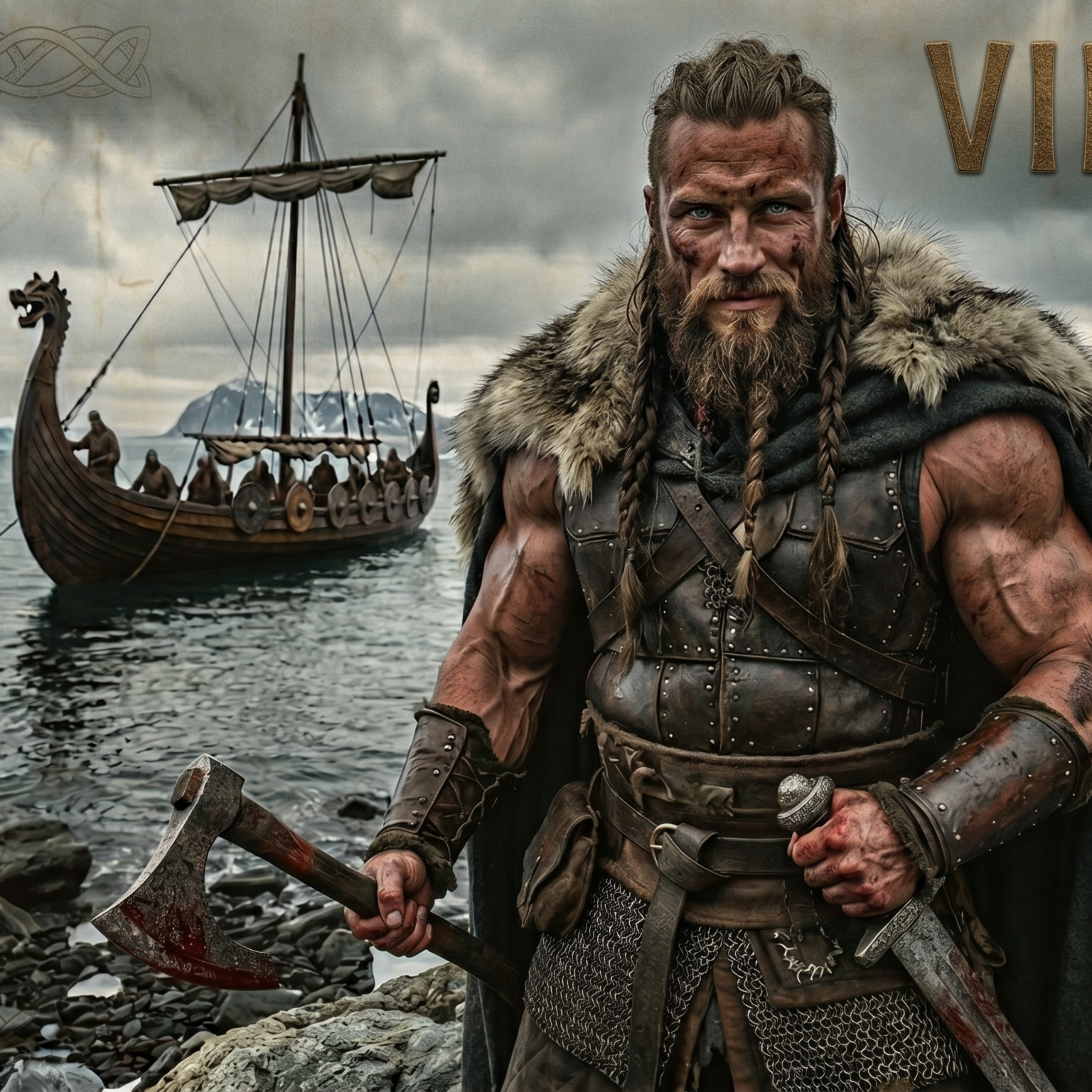
On a June morning in 793, longships appeared off the coast of a small holy island off northeast England — and nothing in Europe would ever be the same again. In this episode, we go deep into the raid on Lindisfarne: who carried it out, why this particular monastery was chosen, and what the terrified monks who survived wrote about it. But more than the raid itself, we explore what it meant — why historians mark this single morning as the opening chapter of the Viking Age, and what it tells us about the world that was about to be shaken to its core. Part of Vikings — The Nordic Saga. Chapter 18 — 845 AD: The First Siege of Paris & the Viking Who Held a City for Ransom In the spring of 845, a fleet of 120 Viking longships sailed up the Seine River toward the heart of the Frankish Empire — and the most powerful kingdom in Europe paid them to leave. In this episode, we tell the story of the first Viking siege of Paris: the raid led by the legendary Ragnar Lothbrok, the terror that gripped the city, and the staggering ransom of 7,000 pounds of silver that bought its survival. We explore what this moment revealed about the weakness of the Carolingian Empire, why Paris became such an irresistible target, and how this single siege set the stage for everything that followed. Part of Vikings — The Nordic Saga. מתאים? רוצה לשנות משהו?
More from Vikings- The Nordic Saga
Emma of Normandy was the most powerful woman of her age. A Danish princess, Norman duchess, and queen of England, she wielded influence over two kingdoms and shaped the fate of a dynasty. In this bonus episode, we trace how one woman secured the Norman legacy, protected her son William the Conqueror, and left an indelible mark on the 1066 convergence that defined medieval Europe.
For nearly 500 years, Norse men and women — the descendants of Erik the Red — lived at the very edge of the habitable world, farming a thin green margin between the ice and the sea. They built churches and farms, elected their assembly, traded walrus ivory with Europe. And then they simply vanished. This haunting epilogue explores the greatest mystery in the Viking story: the slow strangulation of the Greenland colony by a cooling climate, collapsing trade, and isolation — and the debated, poignant question of why they couldn't adapt while their Inuit neighbors thrived. The Vikings who reached the farthest, held on the longest, and left no descendants at all. The final episode of The Nordic Saga.
The grand finale. After 27 episodes — the myths, the leaders, the great events, the legacies — we step back for the final reckoning. Were the Vikings heroes or monsters? What did they really leave behind when the longships rotted? Why do they still grip us a thousand years later? And the deepest question of all: in the end, who really won? We gather every thread of the whole saga — from Lindisfarne to 1066, from Odin to the Danelaw — into a final answer about the meaning of the Vikings, and the beautiful paradox at the heart of their story: they won by becoming us. Thank you for traveling the whole saga. Skál.
There's a Viking king in your pocket right now: "Bluetooth" is named after Harald Bluetooth, and its symbol is his initials in runes. We explore the transformation that ended the Viking Age from within — the conversion of the Norse homelands from Odin and Thor to Christ. The converting kings, Harald's great runestone at Jelling, the two Olafs who forced Christianity onto Norway by the sword, how Saint Olaf won in death what he couldn't in life, the long twilight of syncretism (Thor still rules Thursday!), and the poignant paradox that the dying of the old gods is exactly what preserved their myths forever.
"They took the knife and the eggs, and ran to the window by the gate" — almost every word a Viking gift. The deepest, most lasting legacy the Vikings left anywhere wasn't a battle or a kingdom — it was the Danelaw, the great region of England they settled permanently. We explore the astonishing living inheritance: hundreds of everyday English words that are actually Old Norse (including "they," "take," "sky," and "law"), thousands of Viking place-names still on the map (-by, -thorpe, -thwaite), Norse law and the free peasants, and the Scandinavian DNA of the English. The episode where the terrifying raiders of 793 become the ancestors — and where you discover the Vikings hiding in your own everyday speech.