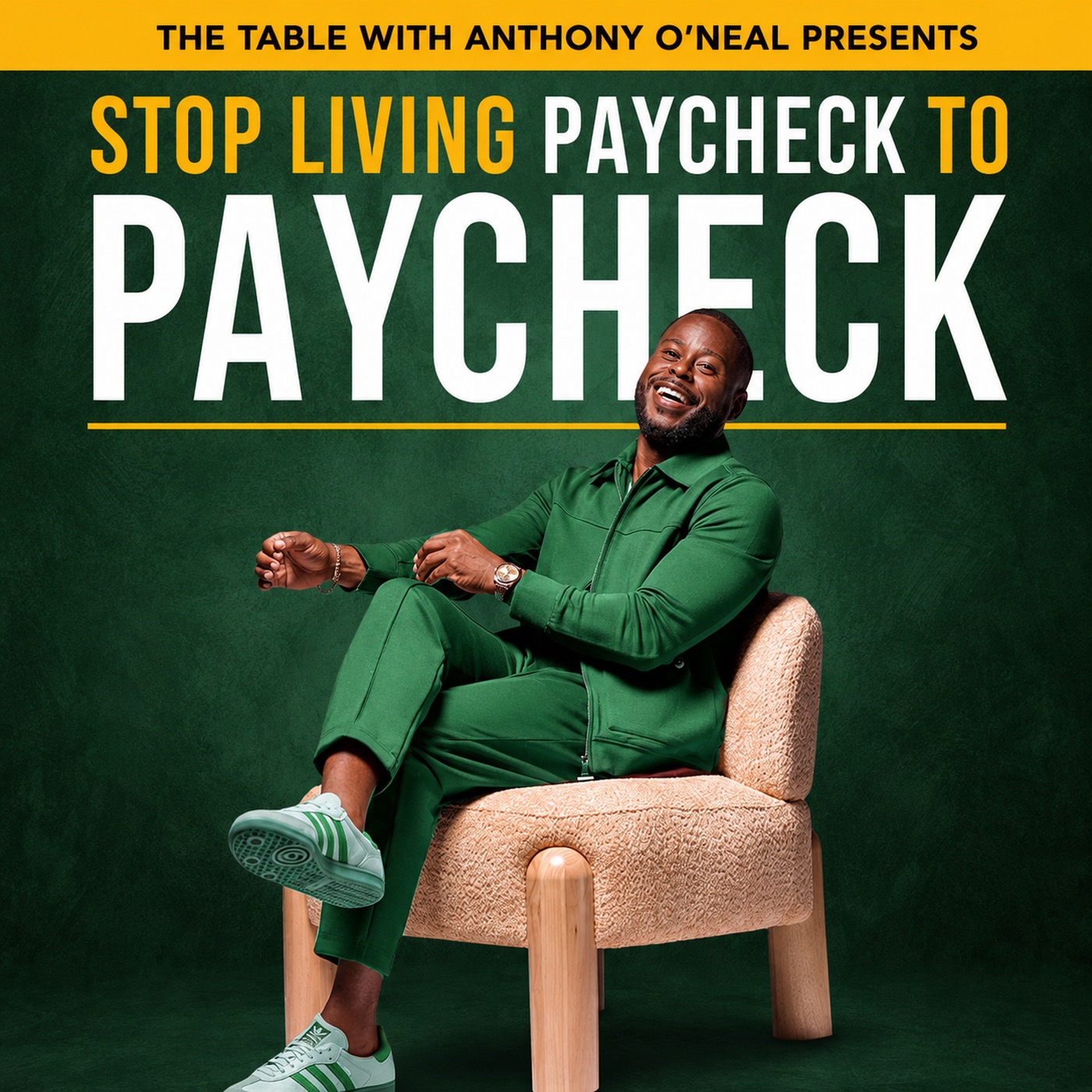
Getting Out of Debt Was the Worst Financial Decision I Ever Made (Here's Why!)
The Table with Anthony ONealShow Notes
I taught debt freedom for 15 years. I was wrong about one thing.
Getting out of debt is not the finish line. It never was.
I sat in my apartment — 100% debt free for the first time in my adult life — and felt completely lost. No wealth plan. No investment strategy. No legacy framework. Just zero debt and zero direction.
Nobody taught me what came next. Not my school. Not my family. Not the financial system. And that silence cost me years.
This episode is for everyone who crossed the finish line and felt empty instead of full. For everyone working toward debt freedom right now, wondering "then what?" For every parent doing better than their parents did — but not sure if it's going to be enough for their kids.
Here's what I break down:
- Why debt freedom is the starting line, not the destination - The 3 Phases of Financial Freedom (and why most people never make it past Phase 1) - The AO Legacy Framework — Protect, Grow, Transfer - Why getting out of debt with a survival mindset will sabotage your wealth every single time - What wealthy families are doing that nobody in our community is talking about - If you build it and don't transfer it, it dies with you.
Your kids deserve better than starting at zero. This conversation is how we change that.
Get the book: https://www.anthonyoneal.com/book Debt Relief Resource: https://www.anthonyoneal.com/debtrelief
ABOUT ANTHONY ONEAL: Anthony O'Neal is a nationally bestselling author, speaker, and host of The Table with Anthony O'Neal. He holds a Bachelor of Science in Finance & Banking and is a professor of Consumer Economics at Virginia Union University. Since 2014, he's helped millions of people get out of debt, build wealth, and break generational poverty. His mission is to help you maximize your income, eliminate debt, and create a life of freedom and legacy.
📅 BOOK ANTHONY TO SPEAK AT YOUR EVENT: [email protected] 🤝 SPONSOR THE TABLE PODCAST: [email protected]
Connect With Anthony: 👉 Website: https://www.anthonyoneal.com 📸 Instagram: https://www.instagram.com/anthonyoneal 🎵 TikTok: @_anthonyoneal
FREE TOOLS & RESOURCES: 📊 Budgeting & Wealth Tracker: https://www.anthonyoneal.com/wealthbudget 🧠 Book a FREE 15-Minute Financial Plan: https://www.anthonyoneal.com/getmyplan 📞 Call In & Be On The Show: (771)-224-8131
TRUSTED PARTNERS:
These tools help you win with money: - SoFi High-Yield Savings (Earn 4.6% APY): https://anthonyoneal.com/savings - Dovly (Credit repair made simple): https://www.anthonyoneal.com/dovly - Kikoff (Build credit the smart way): https://www.anthonyoneal.com/kikoff - MooMoo (Start investing + get 5 FREE stocks): https://www.anthonyoneal.com/moomoo - Ethos Life Insurance (Term life in minutes): https://link.anthonyoneal.com/ethos - BetterHelp (Affordable online therapy): https://link.anthonyoneal.com/betterhelp
Affiliate Disclaimer: Some links are affiliate links, meaning I may earn a commission at no extra cost to you. Many offer special discounts for my community!
⚠️ GENERAL DISCLAIMER This content is for educational and entertainment purposes only. I am not a licensed financial advisor. Please do your own research and consult a certified professional before making financial decisions.
Advertising Inquiries: https://redcircle.com/brands
Privacy & Opt-Out: https://redcircle.com/privacy
More from The Table with Anthony ONeal
What happens to your investments when the stock market crashes? And should you sell everything, hold cash, or keep investing? In this episode of The Table, Anthony O’Neal sits down with investing expert Courtney Hale to break down 5 stocks and ETFs that could help protect your portfolio during a market downturn. From Walmart and Coca-Cola to dividend and utility ETFs, Courtney explains how defensive investing works, why panic-selling can cost you thousands, and how to start building protection with just $100. They also reveal why missing just five of the market's best days could dramatically reduce your long-term returns, how wealthy investors prepare for economic uncertainty, and why protecting your money matters as much as growing it. The goal isn't to predict the next crash. It's to have a strategy before it happens.
A $500 course helped Rodney go from earning $41,000 in healthcare to a $120,000 construction career without a four-year degree, but the investment was only the beginning.
In this episode, Anthony breaks down his five-phase escape plan to get out of the paycheck-to-paycheck cycle, eliminate consumer debt, build your Freedom Exit Number, invest consistently, and ultimately create a legacy. Using the example of a woman earning $60,000 a year with $43,000 in consumer debt, he shows how changing the order of your money can turn $1,700 a month in payments into money working toward your future. If you’re earning money but still don’t feel financially free, Anthony explains the order he believes can help you get your paycheck back, create margin and finally start building wealth that serves you and your family.
What if the financial goal you’re chasing is actually costing you the life you’re trying to build? Anthony O’Neal gets personal about making $1 million in year one, $2 million in year two, and realizing he had no target, no finish line, and no idea what he was really running toward. In this episode, Anthony breaks down how to calculate your own financial number using the 300 rule, determine whether you can realistically get there, shrink the number by eliminating consumer debt, and decide what your life should look like once you reach it. Financial freedom isn’t about chasing more forever. It’s about knowing your number, counting the cost, and building a life where your money gives you back your time, family, faith, and freedom.
A bigger paycheck can make you look successful, but it does not automatically make you wealthy. Anthony breaks down the difference between income and net worth, sharing how he once made six figures and still had nothing left by the end of the month. He explains how lifestyle creep, car payments, and consumer debt quietly eat every raise, then lays out the order for turning income into actual wealth: build margin, create a 3–6 month freedom fund, eliminate consumer debt, and start buying assets that work for you. Financial freedom isn't about how much money passes through your hands; it is about how much stays and what you do with it.