Show Notes
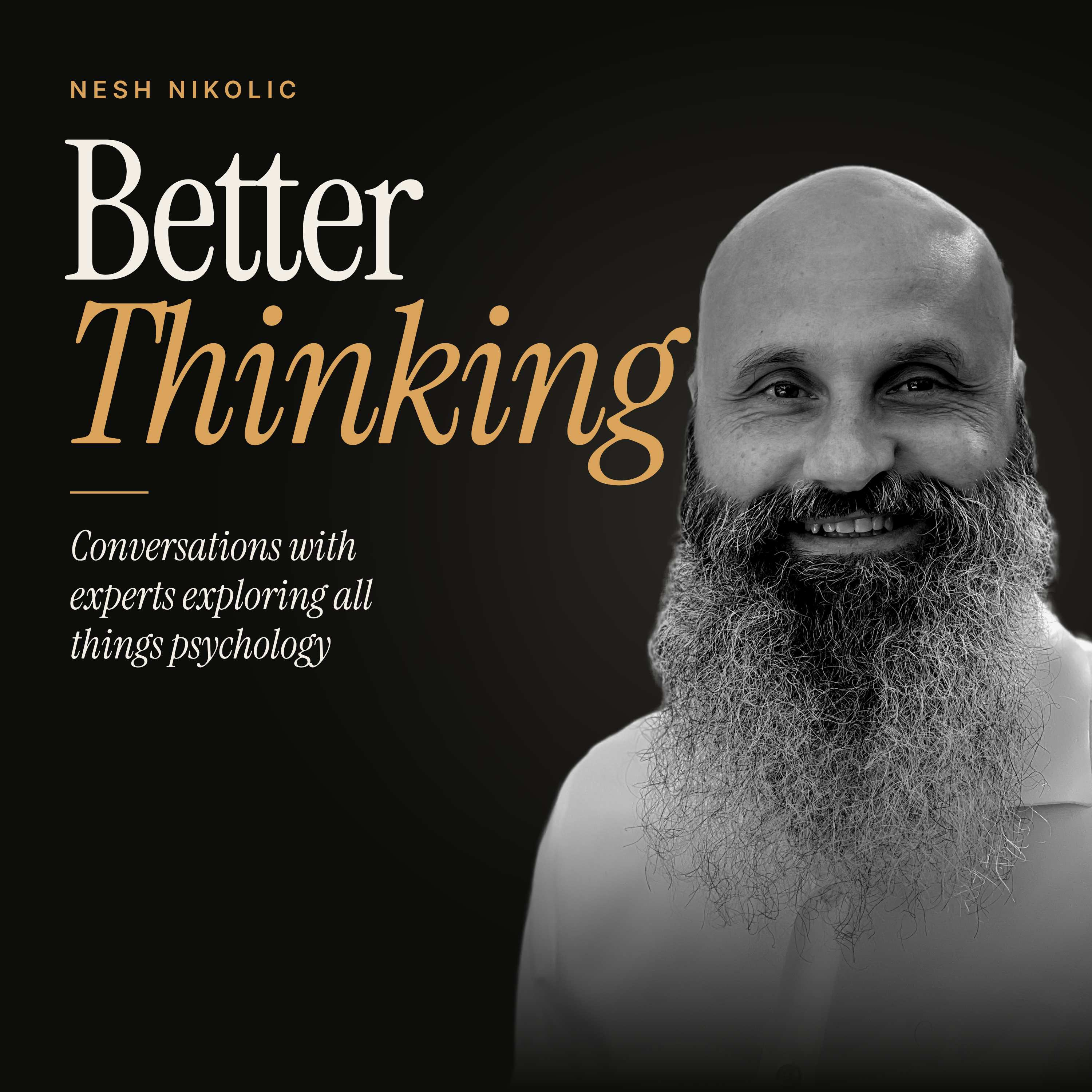
In this episode of Better Thinking, Nesh Nikolic speaks with Ben Newell about the power of behavioral science and the role that psychology can play in motivating individuals and societies to take meaningful action on climate change. Ben Newell is Professor of Behavioural Science in the School of Psychology at UNSW Sydney, and Director of the UNSW Institute for Climate Risk & Response (ICRR). His research focuses on the cognitive processes underlying judgment, choice and decision-making and the application of this knowledge to environmental, medical, financial and forensic contexts. His role in the new Institute is to drive an interdisciplinary research agenda bringing together expertise from behavioural science, climate science, economics and governance to address the risks and opportunities of climate change. He has published multiple articles on the psychology of human judgment and decision making, including those that lie at the intersection of psychology and climate change, with particular focus on the understanding of uncertainty and risk. Ben is lead author of the books Straight Choices: The Psychology of Decision Making, and Open Minded: A Search for Truth about the Unconscious Mind. Ben is a member of the Academic Advisory Panel of the Behavioural Economics Team of the Australian Government (BETA), and the Chief Medical Officer’s advisory group for the National Health and Climate Strategy. Episode link at https://neshnikolic.com/podcast/ben-newell See omnystudio.com/listener for privacy information.
More from Better Thinking
In this episode of Better Thinking, Nesh Nikolic speaks with Professor Nancy Pachana about healthy ageing, finding purpose and well-being in later life, and navigating the transition into retirement. Professor Nancy A. Pachana is a clinical geropsychologist, neuropsychologist and Professor of Clinical Geropsychology in the School of Psychology at The University of Queensland. She is Program Lead of the Age Friendly University Initiative at UQ and co-director of the UQ Ageing Mind Initiative, a focal point for clinical and translational ageing research at UQ. She has an international reputation in geriatric mental health, particularly for her research on late-life anxiety disorders. Nancy is co-developer of the Geriatric Anxiety Inventory, a brief self-report measure in wide clinical and research use around the world and translated into more than two dozen languages. She has published over 350 peer-reviewed articles, book chapters and books on ageing, and has been awarded more than $25 million in competitive research funding, mainly in dementia and mental health in later life. Her research interests include anxiety in later life, psychological interventions for people with Parkinson's disease, nursing home interventions, assistance animals in later life, older adults and environmental sustainability, healthy ageing and retirement, driving safety and dementia, teaching and learning in psychogeriatrics, and mental health policy and ageing. Connect with Nancy LinkedIn: https://www.linkedin.com/in/nancy-pachana-24649630/ UQ profile: https://about.uq.edu.au/experts/967 Books: https://www.amazon.com/stores/Nancy-A.-Pachana/author/B0089DXOZI Talk: Ageism: the longevity thief (TEDxUQ): https://www.youtube.com/watch?v=QCtZnbFrf0s
In this episode of Better Thinking, Nesh Nikolic speaks with Damien Stewart about the impact of intergenerational trauma, how traumatic experiences can influence subsequent generations, and what this means for mental health and wellbeing. As well as an elite level athlete, Damien resigned from a 20-year career as a police Officer in 2012 to pursue a career in psychology. Damien completed two master’s degrees at the University of Queensland: A Master of Philosophy researching the effect of Social Identity Theory on alcohol use within male team sport athletes, and a Master of Applied Psychology in Sport & Exercise Psychology. After graduating in 2014, Damien entered private practice in which he is highly focused on assisting current and previous serving Police and Military personnel suffering from mental health issues as a result of their career (e.g., depression, anxiety, and trauma). Damien also has a special interest in working with clients suffering from chronic pain and injury as well as athletes seeking to enhance performance and gain assistance for mental health and other issues. Damien is a previous National Chair of the Australian Psychological Society (APS) College of Sport & Exercise Psychologists and a previous National Convenor of the APS Military and Emergency Services Interest Group. Damien has lectured in Psychology at the Institute for Social Neuroscience in Melbourne, Australia, as well as at the University of Warsaw. Damien completed a PhD in November 2025 through La Trobe University, in conjunction with the University of Warsaw, on Intergenerational Trauma in Poland following WWII. Damien will soon continue with post-doctoral research at the Centre for Research on Prejudice under Associate Professor Michal Bilewicz at the University of Warsaw, focusing on the effect of trauma on conspiracy thinking. Damien combines his research on intergenerational trauma in Poland following WWII with being the Director of a Polish registered business, Poland at War Tours, a collection of tours designed to educate people on the occupation of Poland, The Holocaust, and Polish resistance during WWII. Damien was also recently appointed Head of Poland for the Polish Australian Chamber of Commerce.
In this episode of Better Thinking, Nesh Nikolic speaks with Niklas Törneke about understanding human behaviour through Acceptance and Commitment Therapy, Relational Frame Theory, and the practical use of language and metaphor in psychological change. Niklas Törneke is a Swedish psychiatrist, psychotherapist and a peer-reviewed ACT trainer. He has written a series of books on how to apply behavioral principles to psychotherapy, such as Learning RFT (2010) and Using Functional Analysis in Psychotherapy (2025). He has wide experience training clinical workers all over the world.
In this episode of Better Thinking, Nesh Nikolic speaks with Dr Ella Moeck about how emotions shape the way people remember the past, think about the future, and respond to uncertainty. Dr Ella Moeck is a Lecturer in Psychology at Adelaide University who researches the intersection between cognitive and social psychology. Ella completed her PhD in 2019 at Flinders University before spending a few years working as a postdoctoral researcher at the University of Melbourne. In 2024, Ella started a balanced teaching and research role at Adelaide University, where she directs the Emotion, Memory and Uncertainty lab. Ella’s research centres around the interactions between cognition and emotion. Broadly, she aims to understand how everyday stressful events shape people's emotions, and ability to manage their emotions. Recently, Ella has been focusing on emotional functioning during uncertain events, like waiting for medical test results, exam grades, or the outcomes of court proceedings. She has also been investigating the association between emotions and social media, with a focus on the occurrence and consequences of seeing negative content online. Ella’s research combines experimental and experience sampling methods, where people complete multiple smartphone surveys each day. This type of method means she researches people in the moments when they experience stressors in their day-to-day
In this episode of Better Thinking, Nesh Nikolic speaks with Stacey Parker about how jobs and careers can be designed to maximise wellbeing, motivation, and performance, and what psychological principles can help create healthier and more fulfilling working lives. Associate Professor Stacey Parker is an organisational psychologist and academic for the School of Psychology, University of Queensland, Australia. Her research aims to help organisations and their employees devise strategies for realising the dual concerns of feeling well and performing well. To this end, she examines how employees manage their energy during work, how employees recover from work stress in off-the-job time, and how jobs and careers can be designed to maximise well-being, motivation, and performance. She also explores the hidden costs of performance management systems. She studies these phenomena using controlled work simulations and field research in a range of high-performance settings (e.g., small business owners, professional musicians, elite athletes, and safety critical work in healthcare and transport industries). Her consulting and advisory work has included tackling issues with selection and recruitment, training and development, career management, work design, change management, and operational safety. She serves on the Editorial Boards for the Journal of Occupational and Organizational Psychology, Journal of Occupational Health Psychology, and European Journal of Work and Organisational Psychology. Her achievements have been recognised by the Australian Psychological Society, with a Doctoral Thesis Award in Occupational Health Psychology (2013) and Early Career Award in Organisational Psychology (2022).