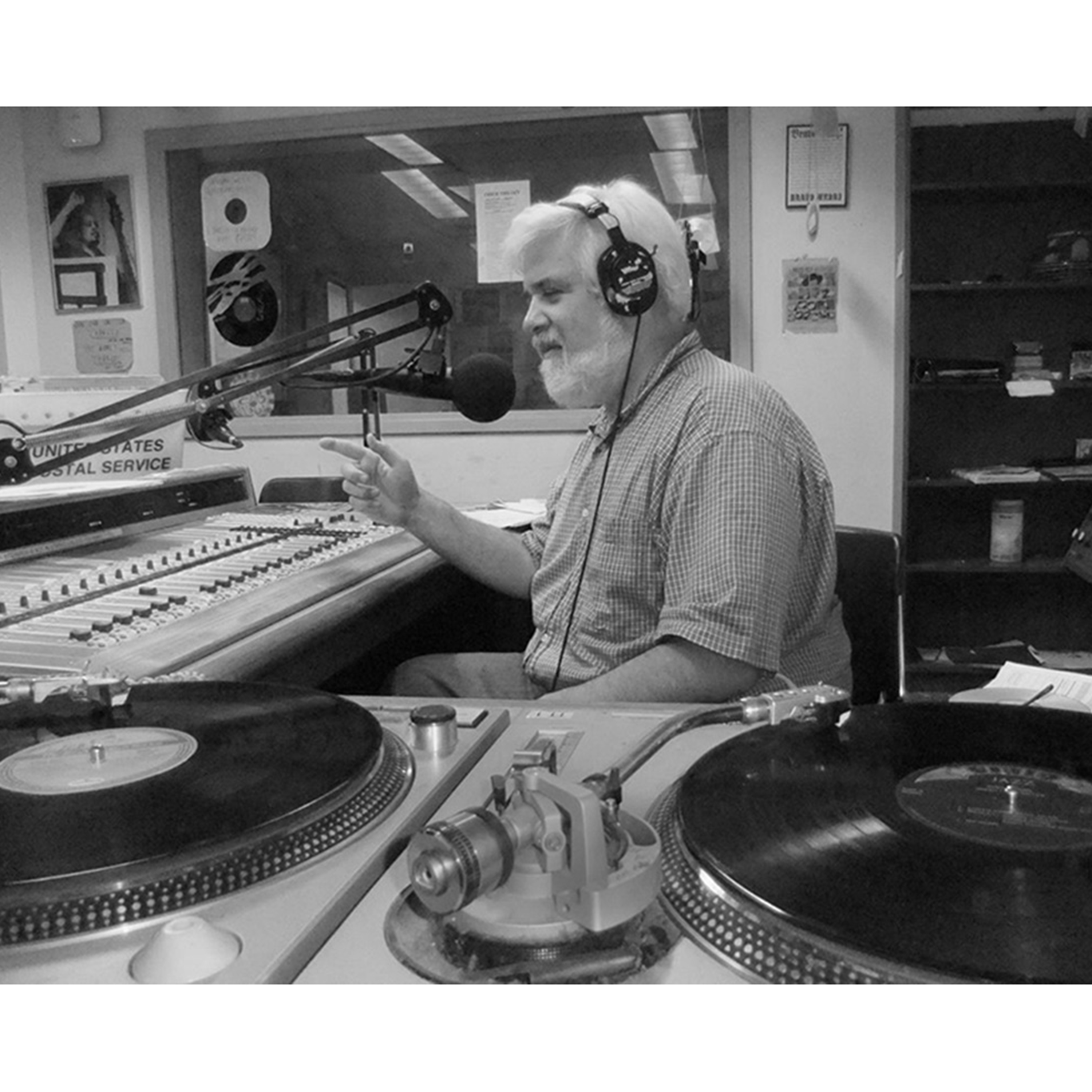
Show Notes
Serge Chaloff was a fleeting star on the baritone saxophone during his brief lifetime, one of Woody Herman’s “Four Brothers” and a bebopping legend as well. He was a sophisticated musician and swinging performer. Serge possessed a lithe, fleet, flowing conception propelled with a lighter tone and nimble execution on the big horn. Raised by his prominent classical musician and educator parents in Boston, Serge Chaloff was born November 24, 1923. His father Julius Chaloff was a pianist with the Boston Symphony Orchestra and ran his own music school; his mother Margaret Stedman Chaloff, revered by her many famous classical and jazz musician students as “Madame Chaloff”, was a long time teacher with her own studio and also at the New England Conservatory and other schools. As a young child his parents taught him the piano, and he received formal lessons on the clarinet. Inspired by Harry Carney he was self taught on the baritone saxophone and began performing in big bands. Chaloff was also influenced by Charlie Parker and informed by the contemporary bebop scene, and he incorporated those styles as a major component of his expression. Chaloff was hired by Woody Herman for the “Second Herd” band in 1947-1949 and excelled as part of its legendary saxophone section memorialized by the Four Brothers song and sound. Unfortunately, Chaloff also absorbed another lesson from the bebop era and many contemporaries, succumbing to heroin addiction. Chaloff was smitten and suffered more intensively than most, harming his physical health and inspiring erratic behavior to an extent that almost cost him his musical career, and his life. Let go by Herman, Chaloff spent the early 1950's basically in local Boston clubs and with some brief prominent spots such as a stint in Count Basie’s octet. He also spent some time on the road with low profile gigging. By 1954, Chaloff began getting some treatment, and friends eventually prevailed upon him to enter an intensive in patient rehab program. Chaloff emerged totally clean and renewed his career with vigor. Highlights included appearances at George Wein’s Storyville nightclub and his record label. The “Fabel Of Mabel” album is a storied endeavor and a cult classic. Chaloff went on significant national tours, appeared on the Steve Allen TV show, and recorded with Capitol Records - two LPs “Boston Blow Up” and “Blue Serge”- that are now considered masterpieces. However later in 1956 Chaloff was stricken with cancerous tumors on his spine and after some initial surgeries that allowed him to endure, the tumors spread and he died in July 1957 at the age of 33. With his short life span and limited body of recordings, Chaloff is not well remembered, but he was a significant figure who deserves lasting recognition.
originally broadcast February 15, 2026
More from The Gone Sounds of Jazz with Sid Gribetz
The "Bird-Prez Birthday Broadcast", a 72 hour (and some years longer) marathon celebrating Lester Young and Charlie Parker around their birthday anniversaries, August 27 and August 29, is a long standing tradition at WKCR, and it is among our listeners' favorites. On the middle, swing, date, August 28, we play mixtures of Bird and Prez. Here’s a 183 minute long shift from the 2026 edition. Included are special segments of a half hour or so of Bird and Prez sharing the stage at the January 28, 1946 Jazz At The Philharmonic concert, and one contrasting their solos in classic big band recordings (Bird with Jay McShann and Prez in the original Count Basie orchestra), 65 minutes. There are also some portions for general listening, among which are a sampling of some Parker features with large ensembles.
Celebrating the great songwriter of Americana, Johnny Mercer, for five hours. The program starts with a review of his early career as an actor and singer. It also includes a look at his impact as a founder of Capitol Records. But of course the essence and core of the show are his hip and magnificent songs that endure forever. As one of my “Jazz Profiles” presentations, the main focus is observing jazz influences on his art. We explore his collaborations with Harold Arlen, Hoagy Carmichael and other great composers, and his legendary pieces which have become jazz standards in addition to their place in the great popular songbook – ranging from Blues In The Night, Skylark, Come Rain or Come Shine, One For My Baby, Jeepers Creepers, Too Marvelous For Words, That Old Black Magic, I Remember You, Laura, I Thought About You, and so many more. The final three hours is a cornucopia of listening pleasure to recordings of Mercer classics by great jazz artists. Billie, Ella, Louis, Dinah, Carmen, Jackie Paris, Johnny Hartman, Aretha Franklin, Cassandra Wilson, Etta Jones, and Etta James, to name just a few. originally broadcast November 15, 2009re-broadcast May 23, 2021
From the August 4, 2026 Louis Armstrong WKCR special on his baptismal birth date, here’s a show with two separate features, about an hour each -- Pops in duets (with Duke, Ella, Bing, Carmen, Billie and Lotte Lenya); and another focusing on Armstrong with the Luis Russell band in the late 1930s on Decca. These two thematic segments are interspersed with some unstudied tracks for general listening appeal.
This program presents the masterwork collaborations of John Coltrane with Miles Davis, in context. It can serve as a history primer “Jazz 101" for the jazz lay person; for the aficionado, it can simply be an opportunity to submerge oneself in five hours of intense musical enjoyment. Miles Davis was a teenage trumpet prodigy who came to fame during the bebop years of the 1940's. Despite this reputation and additional successful endeavors, such as with the Birth of the Cool band and other post bebop ensembles, by the mid-1950's Miles had fallen from popularity and was also in ill health. Saxophonist John Coltrane had some accomplishments as a professional jazz musician but in the mid-1950's was mostly performing around his home turf in Philadelphia and searching to develop his sound. Miles Davis regained notoriety with his captivating performance at the 1955 Newport Jazz Festival. In its wake, he was signed to a lucrative contract by major record label Columbia and was booked for many significant concerts and tours. Assembling a new band for these engagements, Davis hired Coltrane for the saxophone chair, and had the stellar rhythm section of Red Garland piano, Paul Chambers bass, and Philly Joe Jones at the drums. From the fall of 1955 through the spring of 1957 this group performed regularly and made numerous now-classic recordings to finish Miles’s existing Prestige Records obligations. When released to begin fulfilling his new Columbia contract, Davis made sessions to constitute the acclaimed “‘Round About Midnight” album on Columbia. Later in 1957 Miles fired Coltrane and Philly Joe, and he moved on to orchestral projects with Gil Evans and a sojourn in France where he did film scores for Louis Malle. Meanwhile Thelonious Monk combined with Coltrane in their legendary association and six month long Five Spot gig, which helped Coltrane’s musical growth to new heights. In 1958, Miles Davis re-formed his combo, bringing back Coltrane, adding the alto sax of Cannonball Adderley, experimenting with different pianists in addition to Garland, such as Bill Evans and later Wynton Kelly, and drummers such as Art Taylor and Jimmy Cobb, to add further textures and flavors to the ensemble. The 1958 band produced great Columbia recordings “Milestones” and the Green Dolphin Street session with Evans, among others. With their continued advances, and adaptation of “modal” styles, the Davis-Coltrane musical collaborations hit its zenith in early 1959. The Miles Davis group created the most famous jazz album of all time, “Kind Of Blue”. At the same time, Coltrane, preparing to leave Davis and emerge in his own stardom, broke out with his “Giant Steps” LP, and moved on in his own career. Finally, as a savory dessert, Coltrane would reunite with Davis for special concert tours in Europe and elsewhere in 1960, and he sat in on Davis’s 1961 “Someday My Prince Will Come” album.
The "Bird-Prez Birthday Broadcast", a 72 hour (and some years longer) marathon celebrating Lester Young and Charlie Parker around their birthday anniversaries, August 27 and August 29, is a long standing tradition at WKCR, and it is among our listeners' favorites. From the 2026 edition, here's a segment that includes a survey of Lester Young's recordings with small groups during the Big Band years of the 1936-1940 period when he was in the Count Basie orchestra.