Summary
A recent discussion highlights the concept of "overnight success" through the story of country singer Chris Stapleton, who gained fame after a memorable performance at the Country Music Awards in 2015. Despite his sudden rise to stardom, Stapleton's journey began 14 years earlier when he moved to Nashville, where he wrote over 1,000 songs and achieved numerous hits for other artists. His breakthrough moment at the awards show was not a product of luck but rather the culmination of years of hard work and dedication.
The conversation also delves into a biblical context, specifically the greatest commandment as presented in the Gospel of Matthew. Jesus emphasizes the importance of loving God with all one's heart, soul, and mind, and loving one's neighbor as oneself. This principle raises questions about personal commitment to these commandments, prompting listeners to consider whether they genuinely desire to love God and others fully.
To cultivate this love, the discussion suggests starting with small, intentional actions, such as dedicating time for prayer, practicing fasting, and engaging in acts of charity. These practices are framed as essential steps toward developing a deeper relationship with God and embodying the commandment to love. The conversation concludes by encouraging individuals to begin where they are, even expressing a desire to want to love, as a pathway to ultimately giving everything to God.
Show Notes
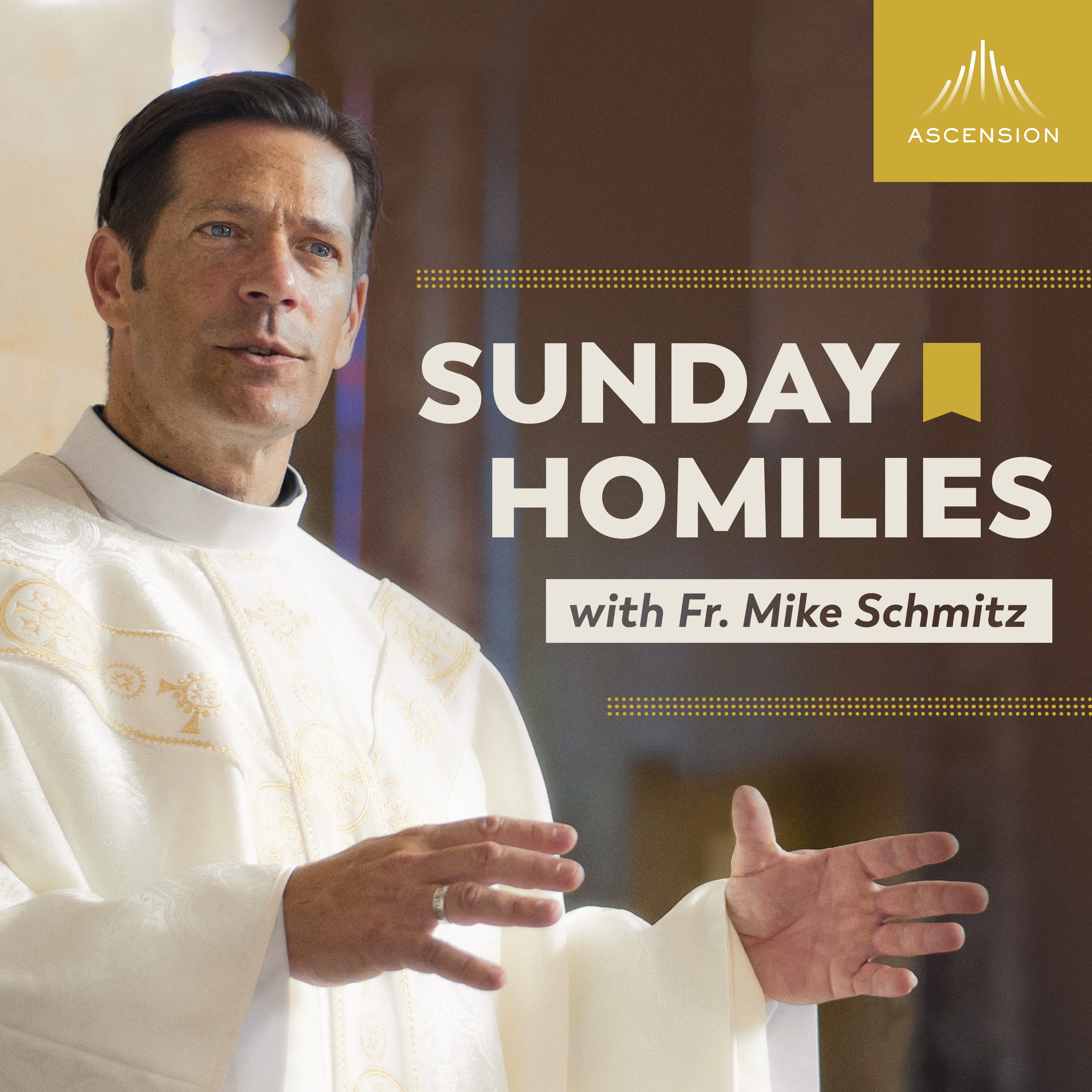
Homily from the Thirtieth Sunday in Ordinary Time. I will not be able to give God everything until I begin giving God the first thing. We are called to love God with all our heart, soul, and mind. But where do we begin? We begin by giving Him something: the first of our time, a small sacrifice, or an intentional act of generosity. These ordinary acts of love over time prepare our hearts for the extraordinary moments when we may be called to give Him everything. Every great act of love begins somewhere: we just have to start. Mass Readings from October 25th, 2026: Exodus 22:20-26 Psalm 18:2-4, 47, 511 Thessalonians 1:5c-10 Matthew 22:34-40
More from Sunday Homilies with Fr. Mike Schmitz
Homily from the Twenty-ninth Sunday in Ordinary Time. That means that it belongs to Him. Jesus tells us to give to Caesar what belongs to Caesar and to give to God what belongs to God. But if a coin bears Caesar's image, whose image do we bear? We were created in God's image and purchased at a price. Before we ever knew Him, we already belonged to Him. We are not our own, and we are not on our own. Mass Readings from October 18, 2026: Isaiah 45:1, 4-6 Psalm 96:1, 3-5, 7-101 Thessalonians 1:1-5b Matthew 22:15-21
Homily from the Twenty-eighth Sunday in Ordinary Time. I believe that God exists, but I do not live as if God exists. Sometimes we become so comfortable with our words, our schedules, and our everyday choices that we ignore God's invitation to a life-changing relationship with Him. God has made Himself ignorable for the sake of love: but love pays attention. The remedy is to invite Him into each and every moment and ask, "God, right now, how would you have me be?" Mass Readings from October 11, 2026: Isaiah 25:6-10 Psalm 23:1-3a, 3b-4, 5, 6Philippians 4:12-14, 19-20 Matthew 22:1-14
Homily from the Twenty-seventh Sunday in Ordinary Time. Concern asks, "What can I do?" Worry asks, "What if?" Worry can feel useful, responsible, even protective. But it keeps us rehearsing futures we cannot control. Concern moves us toward the next right thing. We can do what is ours to do, give God what we cannot control, and choose hope: not because we know what tomorrow holds, but because we know that God will be there. Mass Readings from October 4, 2026: Isaiah 5:1-7 Psalm 80:9, 12-16, 19-20Philippians 4:6-9 Matthew 21:33-43
Homily from the Twenty-sixth Sunday in Ordinary Time Training ourselves to notice the negative. Many of us have a default stance to notice the negative. When it comes to our assessment of ourselves or of any given situation, our default setting can often be complaint. And yet God calls us to rise above, to stop noticing the negative and begin approaching His world with wonder and praise. Mass Readings from September 27, 2026: Ezekiel 18:25-28 Psalms 25:4-9Philippians 2:1-11 Matthew 21:28-32
Homily from the Twenty-fifth Sunday in Ordinary Time. God does not owe me anything. Entitlement does not always look like entitlement. Sometimes, it simply feels like getting what we deserve. Whether it comes from pride or pain, we can believe that we are owed more. But grace is, by definition, an undeserved gift. The cure for entitlement is to stop asking what we are owed and to start asking what God has entrusted to us...and then receive it with gratitude. Mass Readings from September 20, 2026: Isaiah 55:6-9 Psalm 145:2-3, 8-9, 17-18Philippians 1:20c-24, 27a Matthew 20:1-16a