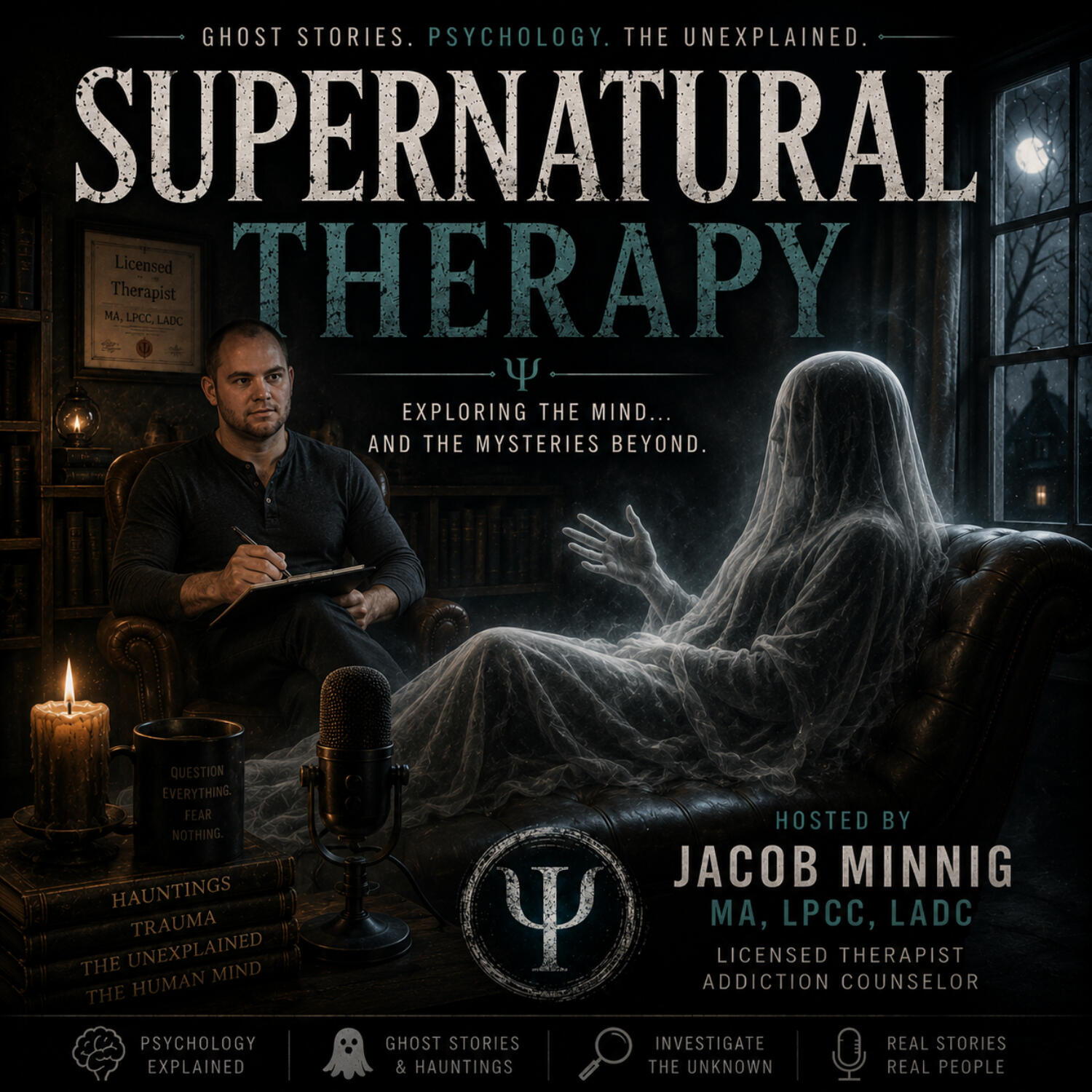
Supernatural Therapy: “Matt Rife Bought the Warren House: A Therapist Reacts to the Paranormal”
Supernatural TherapyShow Notes
What happens when a comedian, a paranormal investigator, and one of the most famous collections of allegedly haunted objects in the world come together?
In this episode, we take a therapist’s perspective on Matt Rife and Elton Castee’s purchase of Ed and Lorraine Warren’s former home and Occult Museum—including their guardianship of the infamous Annabelle doll and hundreds of other allegedly haunted artifacts.
But instead of asking only, “Are these things actually haunted?”, we’re asking a different question:
What happens psychologically when people believe a place or object is haunted?
As a therapist, I’m interested in the relationship between fear, belief, trauma, suggestion, memory, expectation, and the human need to make sense of experiences we can't easily explain.
Does believing a house is haunted change the way we perceive ordinary sounds, shadows, dreams, or physical sensations? Can fear itself create very real physical and emotional reactions? And when someone enters a location already expecting something supernatural to happen, how much does that expectation influence what they experience?
We’ll also explore the difference between respecting someone's paranormal experience and automatically accepting a supernatural explanation for it.
Matt Rife's purchase raises an even bigger question:
What happens when a place associated with fear, death, trauma, and paranormal beliefs becomes an entertainment experience?
Is it harmless curiosity? A way of preserving paranormal history? Or could repeatedly exposing people to frightening environments reinforce anxiety and fear?
And perhaps most importantly:
If someone believes they encountered a ghost, should a therapist tell them they're wrong—or help them explore what the experience means to them?
Join us as we look at the Warren legacy, Matt Rife's unexpected entry into the paranormal world, the psychology of haunted places, and the fascinating intersection between mental health and the supernatural.
Because sometimes the most interesting question isn't whether the ghost is real.
It's why we believe the ghost is there.
More from Supernatural Therapy
What happens when the paranormal meets the therapy room?
This episode of Supernatural Therapy explored the paranormal concept of “unfinished business” and why some ghost stories describe spirits as remaining connected to the living world after death. Discussion focused on common paranormal explanations, including sudden or traumatic deaths, unresolved relationships, guilt, revenge, unfulfilled promises, attachment to a person or location, and the desire for justice or closure. The episode also examined the idea that not every reported haunting is necessarily negative, with some traditions describing spirits as remaining behind to protect loved ones or deliver an important message.
What exactly is a ghost? Are ghosts the spirits of people who have died, residual energy left behind by traumatic events, or something entirely different? In the first episode of Supernatural Therapy, licensed therapist Jacob Minnig explores how different cultures, religions, paranormal investigators, and psychologists have attempted to answer one of humanity's oldest questions.
"Welcome to Supernatural Therapy. I'm Jacob Minnig, a licensed therapist, trauma specialist, and addiction counselor. Every day I work with anxiety, PTSD, depression, grief, addiction, and the incredible resilience of the human mind.