Show Notes
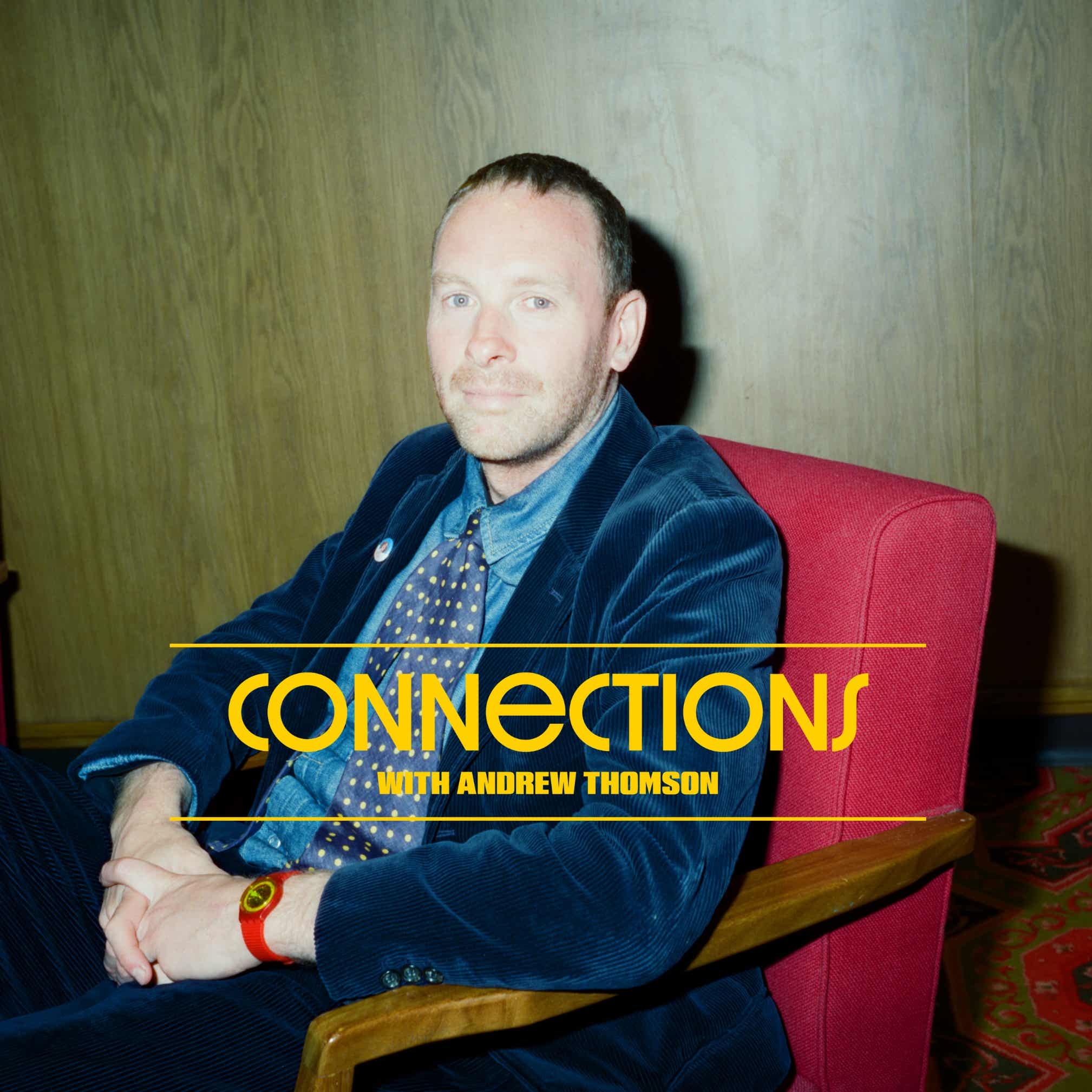
This conversation ties in nicely with the Catherine Liu one as they seem to be ploughing similar furrows at the moment. I’ve followed Darren for a while now and we previously connected to have a chat a few years back but it didn’t pan out and as you’ll hear, I got in my head about it. In the age of binary positions, I like that he will put out points of view that I disagree with as much as he completely nails another one (from my perspective). It’s refreshing to consider why this is the case. I suspect that even in the hot take world, most people still have nuanced opinions on matters - even if there are incentives to be seen as having the correct opinion and social risks for wrong thought. Darren reflects a more honest version of us all, which can be right / wrong / different and he isn’t afraid to show it. Fair f***s to him. Whereas the Catherine chat was maybe slightly more heady about the roots of certain issues, Darren’s work feels closer to home and it was great to bounce around various topics and I was impressed to have a front seat of his quick witted brain in action. In hindsight, I’m now glad that we connected at this point instead, Darren was picking up what I was putting down in a far more effective way than I am able to. I’ve only read his most recent book, Trauma Industrial Complex since recording our chat and can’t recommend his writing enough. One recent insight in relation to this convo - this week I have a post on Instagram which is far more political than I would usually be online, doing numbers. I’m sure it speaks to the algorithm favouring politics, but I can feel the temptation and a pull within myself to continue in this vein, how do I maintain these new followers and what I should post next to get even more attention? At the risk of being Captain Obvious, this mindset explains why Woke 1 was crazy, with everyone being constantly incentivised to post more edgier takes and as a result, the recent years have proven that solitary voices competing for attention are doing just that. Look no further than the latest ‘Zohran is a Zionist’ type posts as a perfectly unhinged example. I’m interested on the impact this is having on us at large and this also became a timely good read ~ https://www.publicbooks.org/resistance-or-complicity-the-engineered-paradox-of-digital-activism/
Get full access to Connections with Andrew Thomson at c0nnections.substack.com/subscribe
More from Connections with Andrew Thomson
For most of my adult life, I’ve been in the business of bringing people together, which is beginning to feel more difficult than before. How do you build community in an age of hyper-individualism and fragmentation into tighter identity groups? Why are class struggles largely absent in conversations about intersectionality? Is diversity divisive in practise? Woke 1 truly was crazyyyy and by my count, Glasgow has lost 5(!) venues to purity spirals and self defeating activism. Two could be coincidence, but five is a pattern difficult to ignore. It’s unsurprising the common link is the demographic who these spaces served and politics they shared. More lose out as a result of their closure. I’ve been fascinated to find out more about where this is all coming from and it has led me to Catherine Liu, whose accomplished work in academia came on my radar and I have found it hugely relieving to hear someone express thoughts and viewpoints I’ve been forming for a while in such a clear and articulate way - she has great chat too! We tried to arrange a Glasgow leg of the tour for her new book, Traumatized: The New Politics of Public Suffering, but unfortunately it didn’t work out logistically. So for now, we had an advance chat about this book and her widely acclaimed, Virtue Hoarders: The Case Against the Professional Managerial Class, - after reading, makes it almost impossible to unsee examples of the PMC in action across across most forms of music and culture and the roles played by the MANGO class (media / academia / NGO’s) - I’d also expand this group to include funding bodies, publicists, booking agencies, management and seemingly friendly corporations. As Catherine argues, the PMC uses credentialism to gatekeep authority while expanding a workforce trained to compete for non-existent positions. A striking example came to my attention recently upon learning that 35 people are currently taking a post-grad in Curatorial Practice (Contemporary Art) in Glasgow. With fees ranging between £10k and £26k per year, expectations are high, but where exactly are these 35 graduates going to find employment in the city - or even the country? How will they distinguish themselves from each other? What about the following years grads? This is just one course in one school in one city. You can draw a parallel to the endless DJ workshops and access to music courses. Anecdotally, the amount of people who tell me they are looking for a job in music seems to increase each year. I don’t think these positions have ever really existed in Glasgow and the ones who do hold them aren’t likely to move on any time soon. As a result, they are now more desirable and precarious. This isn’t limited to a city like Glasgow, it’s happening everywhere and there needs to be wider recognition of the complete disconnect between the increasing ‘access’ to arts and the crumbling infrastructure to support the majority of this. I am beyond certain that this is the main source of friction across most cultural sectors as many are left discarded and disillusioned by a neo-liberal system that could never sustain their support in the first place. Symbolic gestures of change have made very little difference, for anyone. To be clear this isn’t personal and very much in the spirit of hating the game and not the player. I have a great deal of love and affection for many who occupy these roles, many do great work and are in it for the right reasons. I’m also grateful to those who have supported me in various ways over the years. At the same time, I have spent a large part of the past two decades trying to help new artists navigate a system that essentially is spreadbetting on their hopes and aspirations, while the PMC play their own status games to carve out a livelihood that will outlast the average musical project. It’s hardly surprising that metrics play such an important role nowadays. By reaching a clearer understanding of these broader structural factors and how they impact ever
2 years on and I’m reposting this in memory of Jack. This was recorded days after his passing and the weeks that followed were pretty surreal. His funeral was easily one of the best days in recent memory, a genuine celebration of a life that was lived to the absolute fullest. It left a lasting impact on me, renewing my gratitude for the people I’ve been fortunate enough to have in my life and reminding me why I got involved in the music scene in the first place. Real human connections that fell back into place as if no time had passed and was a reminder of what has been lost through the passage of turbulent times. It felt like a risk to express some of these feelings publicly at the time. As many also felt similarly, I’ve been curious about why we felt so unable to do so when it mattered.. Jack has been on my mind lately, I recently revisited his old flat to help his brother move, which was a surreal experience packing up memories. Moving in more ways than one! At the same time, I have also been thinking about the work of Darren McGarvey around masculinity and also the vulnerabilities of those in the public eye. While conversations around sobriety and mental health initiatives have increased in recent years, I haven’t seen too much of this type of conversation happening within the music world itself. Jack was elevated to a position of influence because of his ability and magnetic personality. He was well equipped for the emerging age of social media and following him was entertaining - long before content making was even a thing. He often laid bare his insecurities as much as his cocky bravado and as a result, was more accessible and engaged across a variety of scenes than the generations of DJ’s that came before him. With as many hot takes as the proverbial hot dinners, the music media loved him too and had great fun sharing his various antics, cheering on and elevating the same behaviour that they would soon go on to decry. While I don’t wish to minimise or relitigate his actions from the summer of 2018 - something Jack copped to and attempted to make his amends - it is worth looking back on that particular era and what was else was going on in the background. At the time of Trump’s first term, Weinstein, Epstein, Time’s Up!, #metoo, there was a great deal of collective anger and frustration sweeping through the world at large and the idea of being cancelled was still a relatively new concept to grapple with. The worldwide 24/7 football phone-in as we now know it, was only just beginning to hit its stride. Comment is free and incentivised. At the same time, a needed push for female representation meant that the lad culture long upheld by the male-dominated music press suddenly became toxic overnight. And so, Jack was quickly cast aside as an emblem of the straight white privileged male menace by the same press, fans and friends who once adored him and felt betrayed for his inability to be a pillar of virtue and the life and soul of any party. I’ve felt conflicted about this zero-sum framing, as despite his visible success story and his fair share of blame, there was clearly a lot of vulnerability going on, a side of Jack that also made him so endearing in the first place. For better or worse, he displayed his authenticity long before it became a requirement. He seemed to be in awe at my comfort speaking to female friends, which seemed strange as he struck me as being more than socially capable. I realise on reflection, that in many ways he was just a wee guy trying to figure out his way in the world, seeking validation and approval and no less equipped to handle fame, relationships, friendships, substances or life than anyone else. It’s unfashionable to consider complexities and nuance these days, but there is another side to his story that gets overlooked. Jack was a working-class school dropout who lost his mother early and largely grew up relying on the support of his friends. He built his career the old-fashioned way, p
Axel Boman is the best for many reasons and this chat gives you a bit more insight into why. We both could have done without speaking during a busy period, but managed to find a bit of time to catch up - with him sitting in a cafe around from the infamous Studio Barnhus - and me juggling childcare with my son watching a film in the other room. Axel is always great company and we got to some great places without any talking points or questions planned. If you don’t know already, Axel and his Talaboman counterpart, John Talabot are coming back to Glasgow - next Saturday 23rd May - for their third appearance. Musically they have remained impressively consistent and this is sure to be a special occasion as they will be joined by a few new faces to Glasgow - Cashu from Sao Paulo, Dave P from Philadelphia and Loradeniz from Istanbul via Amsterdam. It’s also the first Connections party and you should come. Tickets here ~ https://ra.co/events/2387109 If you can’t make it and happen to be in Berlin this Friday 15th, you can catch another exciting event here ~https://www.berghain.berlin/en/event/81925/
Sally Ann Gross is an academic who - along with George Musgrave - wrote a book called “Can Music Make You Sick: Measuring the Price of Musical Ambition” which was a complete game changer for me in terms of how I see the world, and myself. The book gets into the impact of working as a musician today and explains a lot about how people are affected by operating in a hyper competitive age of abundance. These conditions affect us all as music fans and participants alike and I found it deeply personal and somewhat relieving to put a voice to various feelings and experiences I have encountered over the years. This convo was actually recorded back in late 2023 and I’ve been thinking about it again in relation to the recent Geese chat. As Young Marco hinted at, these practises are also becoming commonplace in the electronic world and the outcry reminds me of the emergence of the influencer DJ a few years ago, buying likes, etc. I’m optimistic - perhaps naively - that this type of revelation will help pop the illusion of ‘anyone can make it’ and highlight again that social media platforms flatten lots of inequality by falsely suggesting we’re all in it together. Technology bringing about the end of gatekeepers was heralded as a good thing, but in our world, it has meant even more are competing for even less opportunities. Don’t hate the player, hate the game and all that, but as a result, I’ve came across a lot of frustration from artists who are struggling mentally in pursuit of something that is out of reach for many - despite being encouraged by the opposite being true. Anyway, Sally Ann wrote a very well researched book on all this and tells it far better than me, she is a fascinating and approachable person to present ideas that might otherwise be a bit lofty or difficult to process - important as there are. Some of the other things we discussed have became even more relevant since, so thought it was worth sharing here. Sally Ann has lots of great stories about her life working in music and it’s well worth you time. Thanks to Ray Philp for introducing me to the book in the first place. You can read it here. For free ~ www.google.co.uk/books/edition/Ca…ick/exoMEAAAQBAJ
DJ Sotofett is something of a mythical figure in certain circles. A production powerhouse who self-releases an insanely high output both in terms of quality and volume. He seems to be as competent making jungle as he is techno, dub, various strains of house, electro and the rest. Musicality shines throughout. Our paths have crossed a few times over the years. I booked him to play at Plastic People and the Sub Club, after I’d caught wind of him playing for less money if he was able to play all night - and took full advantage! After the Sub Club party - where he played tons of his own productions, without ever sounding samey - he agreed to remix a track from the Auntie Flo album and I was impressed with the professionalism in how he conducted himself. It showed a confidence in his abilities to deliver something within a timeframe, and his consideration to how the music should be presented thereafter. It could only be sold on vinyl, etc. In most cases, a remixer would be glad of the fee and would be far less interested in the format their music lands on. As the weeks got closer to his designated deadline, I was getting more and more excited and when it appeared in my inbox, I didn’t really know what to make of it. Not only did it not sound like the original, it didn’t really sound like anything I’d heard before. I still love how undefinable it is. Copies here I’ve been intrigued to dig more into the Sotofett world - full of labels, aliases, collaborations - he’s created for himself. It seems to sustain itself within, yet slightly outside, of the regular music industry. He didn’t disappoint and we had a great chat at CBR the studio last year. Complete with DJ Sotofett post-production, naturally! Big thanks to Bash Man who helped coordinate before the Rush birthday party that night. https://djsotofett.bandcamp.com/