Show Notes
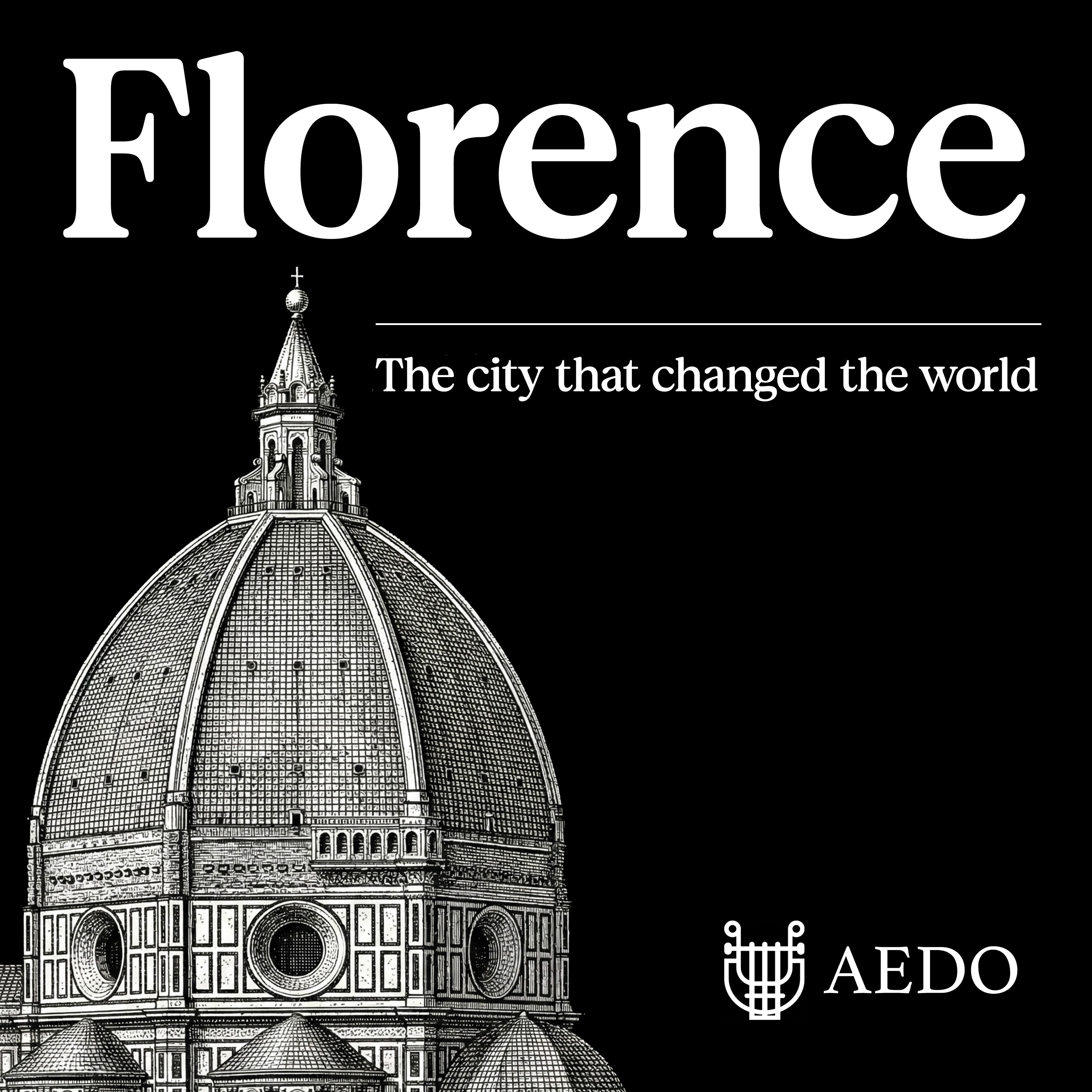
For five centuries, the Piazza della Signoria was where Florence went when it needed to decide who it was. A republic raised its tower here to stand taller than any noble in the city. A conspiracy was punished here — not quietly, but publicly, with bodies in the windows and portraits of traitors painted on the walls for everyone to see. A friar burned books, mirrors, and paintings in an eight-story bonfire. Then, one year later, the city burned the friar in the same spot. The Medici were proclaimed here. And expelled here. The republic was celebrated here. And buried here. The Piazza della Signoria is not the most beautiful square in Florence. It is the most honest one — a place that never chose sides, never romanticized, never hid the traces. It just kept accumulating everything the city was willing to do in public. This is the story of the square, the palace that was a fortress, the sculptures left in the rain, and the small plaque in the pavement you can step on without noticing — marking the exact spot where a man who tried to rewrite Florence was burned by the city he tried to save. — Florence: The City That Changed the World is a series about the city that invented the Renaissance, financed Europe, and left a legacy still present in everything you see, think, and use every day. Don't forget to subscribe, thank you for listening, and if you'd like to support or contribute to the project, reach out through Instagram.
More from Florence: The city that changed the World
There's a story everyone tells about him: a master saw his student's angel, dropped his brush, and never painted again. It's a great story. It's also probably not true.
He arrived in Florence at twenty-one, an outsider from a small city, carrying nothing but a letter asking the head of the government to be kind to him. Leonardo da Vinci was already a legend. Michelangelo had just unveiled the David. There didn't seem to be room for a third genius in the room. Raphael made room. In four years, he absorbed everything Florence had to teach, Leonardo's shadow, Michelangelo's muscle, a full century of tradition, and turned it into something that belonged entirely to him. Then Rome called, and in twelve unbelievable years he redefined what a papal commission, a Madonna, and a portrait could be, all while quietly out-manoeuvring a rival who spied on him, sabotaged him by proxy, and still got painted into his most famous fresco as a tribute. He died on his own birthday, at thirty-seven, with his last unfinished masterpiece propped up beside his body. Rome had never mourned anyone like this before. This is the story of the most likeable genius the Renaissance ever produced, and the four Florentine years nobody remembers when they say his name. - Florence: The City That Changed the World is a series about the city that invented the Renaissance, financed Europe, and left a legacy still present in everything you see, think, and use every day. If you want access to exclusive episodes, subscribe to Aedo Patrons on Apple Podcasts. Thank you for listening, and until next time.
He painted the most reproduced image in art history, and spent his final years convinced it was a sin. Sandro Botticelli went from painting the hanged bodies of traitors on a government wall to painting a goddess rising from the sea, sometimes for the same family. The Birth of Venus and the Primavera made him the most celebrated painter in Florence, full of pagan gods, secret botany, and neoplatonic philosophy disguised as myth. Then a fanatical friar took over the city, his own brother became one of the friar's closest followers, and Botticelli, in a decline historians still don't fully understand, was denounced for a capital crime and forgotten within his own lifetime. It took the Pre-Raphaelites nearly three hundred years to dig him back out. This is the story of the man behind the world's most famous painting of beauty, and the doubt that may have convinced him it was never worth painting at all. - Florence: The City That Changed the World is a series about the city that invented the Renaissance, financed Europe, and left a legacy still present in everything you see, think, and use every day. If you want access to exclusive episodes, subscribe to Aedo Patrons on Apple Podcasts. Thank you for listening, and until next time.
He signed only one work in his entire career, a marble Pietà finished at twenty-four. He spent forty years on a tomb that shrank from a monument with dozens of statues down to a single wall panel. He was forced onto his back for four years to paint a ceiling he never wanted to paint, in a job he took only because a Pope refused to take no for an answer.
Everyone has heard the name. Almost no one stops long enough to actually learn the story behind it. Donatello never had the fame Michelangelo, Leonardo and the generation that came after him would go on to enjoy, and it never seems to have bothered him. What he had was something rarer: the recognition of Cosimo de' Medici, the most powerful man in Florence, who understood exactly what he was looking at, the foundation on which everything else in Florentine art would be built. This is the story of the man who came first, who never needed to be the most celebrated name in the room to be the most essential one in it. - Florence: The City That Changed the World is a series about the city that invented the Renaissance, financed Europe, and left a legacy still present in everything you see, think, and use every day. If you want access to exclusive episodes, subscribe to Aedo Patrons on Apple Podcasts. Thank you for listening, and until next time.