Show Notes
A through-beam photoeye can tell you the beam is blocked. It cannot tell you whether the cartons are wedged tight or already sliding back into single file. That one blind spot is the source of the warehouse "phantom jam," and it is why high-speed sortation keeps halting for blockages that would have cleared on their own. In this deep dive, we trace the shift from the binary logic of through-beam sensors to the spatial and temporal context of the Zebra Iris GTX smart camera, and we get past the hardware spec sheet into the operational cost that rarely makes the business case: false alarms. We look at how alert fatigue quietly degrades response times, and why vision-based detection is really a labor allocation tool, one that keeps associates on productive work instead of walking to a belt that already fixed itself. In this episode:
The 30% throughput claim, decoded. We work through the math behind Zebra's reported gains and show how to estimate a realistic payback period for your own facility rather than taking the headline number at face value. Edge intelligence. How the Iris GTX runs classification on its Intel Atom processor on-device, so you skip the vision PC and the cabinet install that usually come with it. The resolution trajectory. A technical look at how Zebra Aurora software separates a skewed carton that is still moving from a true mechanical jam that risks crushing product. Real-world deployment. Why training the model on a genuinely mixed package profile, poly bags and jiffy mailers included, is non-negotiable if you want it to hold up in production. Whether you are a controls engineer tired of commissioning sensor-based timers or a facility manager trying to protect peak-season labor, this episode lays out a practical roadmap for moving from beam-break timers to vision-based jam detection.
AutomationDistribution.com 1-888-600-3080
Hosted on Acast. See acast.com/privacy for more information.
More from Manufacturing Innovations Today
Can a single-channel safety circuit really reach Performance Level e (PL e) while cutting down panel wiring and installation time? Welcome to How DYNlink Simplifies Machine Safety, your practical guide to building smarter, compliant industrial safety architectures using ABB Jokab technology. Whether you are designing a single guarded enclosure or orchestrating a multi-zone automated production line, machine safety doesn't have to mean miles of dual-channel wiring or cluttered relay cabinets. Hosted for control engineers and safety integrators, this show explores the engineering behind ABB Jokab's machine safety ecosystem, centered on DYNlink dynamic signal technology. In each episode, we break down how to achieve PL e / Category 4 / SIL 3 compliance under EN ISO 13849-1 and IEC 62061 without the traditional wiring overhead. Learn how DYNlink pulses check circuit health 200 times per second, detecting short circuits and faults before a device is even actuated. What Listeners Will Discover: The Magic of DYNlink: How single-channel dynamic signals replace static dual-channel wiring and allow up to 30 safety devices in series on a single controller at PL e. Selecting Safety Logic: How to choose between Sentry safety relays for single functions, Vital safety controllers for single hazards with multiple doors, and Pluto safety PLCs for complex or networked safety zones. Field Device Integration: Best practices for wiring Eden non-contact sensors, Orion safety light curtains, Smile emergency stops, and JSHD4 enabling devices. Network Integration & Software: Connecting Pluto safety PLCs to plant HMI and standard PLCs via PROFINET, EtherNet/IP, and Modbus TCP gateways using free Pluto Manager ladder logic software.
How do you lift fragile glass, porous cloth, or delicate circuit boards without touching them or leaving marks? In this episode, we unpack the mechanics and engineering formulas behind SMC's ZNC Bernoulli gripper series. Discover how high-velocity compressed air creates a localized low-pressure zone to hover and lift workpieces without a vacuum seal.
In this episode, we explore how the IEC 61131-10 exchange standard resolves a long-standing challenge in industrial automation: migrating legacy PLC applications without manually rewriting code and task structures from scratch. We clarify key differences between PLCopen XML and IEC 61131-10, showing how the newer IEC standard expands beyond basic program elements to capture complete application structures, including task assignments, configurations, and overall project organization. Listeners will discover how controls engineers save valuable engineering hours by cleanly importing software building blocks—such as POUs, variable declarations, and user-defined data types—directly into Yaskawa iCube Engineer for the iC9200 controller family. Finally, we walk through the step-by-step migration workflow, explaining how to handle XML imports, map vendor-specific instructions, configure EtherCAT hardware and Sigma-X servo drives, and integrate SIL 3 FSoE safety logic onto a single controller platform.
In industrial automation, the M12 circular connector is the standard interface between sensors, drives, PLCs, and cloud networks—yet improper torque makes it one of the most common single points of failure on the factory floor. In this episode, we dive into how Turck’s redesigned M12 Eurofast® connectivity line eliminates connection guesswork and prevents costly production downtime. What You'll Learn in This Episode: Eliminating Installation Guesswork: How Turck's patented torque sleeve gives installers a clear tactile and audible "click" when nominal torque is achieved, delivering faster, more consistent installations that resist loosening under heavy vibration. Standardizing Line Maintenance: How color-coded torque sleeve accessories enable maintenance teams to establish repeatable, error-proof assembly procedures across every line. Decoding M12 Keying: A practical guide to selecting the exact M12 coding for your signal and power needs—from A-code sensor inputs and D-code/X-code Industrial Ethernet to high-capacity L-code DC powerfast connections. Lowering Total Project Costs: How component consolidation and manufacturing updates reduce bill-of-materials costs on large-volume installations while retaining full IP67, IP68, and IP69K washdown protection. Molded Cordsets vs. Field-Wireable Connectors: How to determine when pre-molded cordsets offer the best sealing and speed versus when field-wireable receptacles are required for custom on-site wiring runs. Whether you are specifying connectivity for a large machinery build or standardizing plant maintenance practices, tune in to discover how smart connector engineering keeps industrial networks reliable.
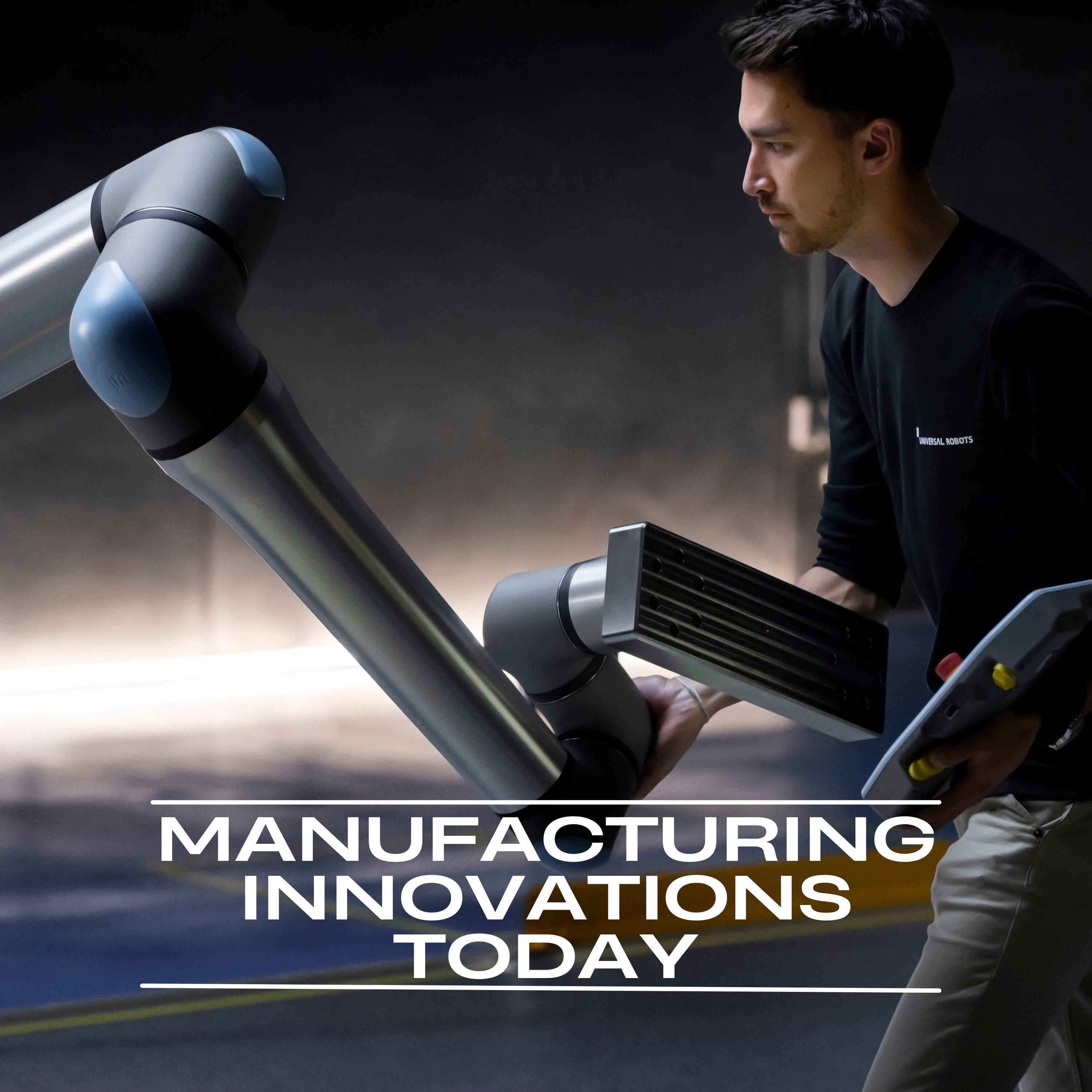
Even highly precise robots—with repeatability as tight as ±0.03 mm—can gradually become scrap generators in automated deburring. A robot’s taught program may never change, but consumable abrasives begin losing diameter and grit sharpness from the first second of contact. In high-value aerospace and medical manufacturing, where edge-break tolerances may be measured in microns, a position-controlled cobot can drift out of specification as the abrasive wears. The result: under-deburred parts, excessive material removal, and costly dimensional errors. In this episode, we examine the drift problem in automated deburring and explain how moving from fixed position control to real-time force compensation helps finishing cells remain within tight tolerance windows throughout the usable life of an abrasive wheel. Key Topics Covered Why static robot programming fails: Robot repeatability describes the arm’s ability to return to a coordinate within its own reference frame—not its ability to maintain a consistent relationship with a changing workpiece surface or a wearing tool. The true cost of drift: Late-stage scrap on titanium turbine blades, orthopedic implants, and other high-value components can erase thousands of dollars in upstream machining, labor, inspection, and heat-treatment value. Real-time force compensation: Replacing “move to coordinate X” with “maintain contact force Y” enables the robot to automatically advance as an abrasive wheel recedes, helping preserve consistent finishing results. Hardware routes to force control: A comparison of built-in cobot joint sensing, such as Universal Robots e-Series force mode; wrist-mounted six-axis force/torque sensors, such as the OnRobot HEX; and force-controlled sanding systems, such as the Robotiq Sanding Kit.