EP08 Farmer Ann On Why Outdoor Education Matters More Than Ever
Amber Waves Farmcast: Growing Better Every Day Through Food, Farming and CommunityShow Notes
Outdoor education fosters curiosity and hands-on learning, allowing children to explore nature and connect with food systems. The program emphasizes experiential learning, integrating classroom concepts with real-world applications, and encourages freedom of exploration. Collaboration with local schools enhances the curriculum, making learning relevant and engaging, while the organization seeks to expand its reach to more children through community support and funding.Chapter Markers0:00 – Building the ProgramStarting from scratch, freedom to create curriculum, and unique opportunities compared to public schools.2:15 – Partnership with Amagansett SchoolWeekly visits, integration with classroom learning, and the farm-to-school connection.4:40 – Engaging Kids on the Farm“Mat chat,” themes, hands-on herb activities, and experiential learning.7:05 – Curriculum in ActionPhenology, worms, soil, compost stew, and kids’ fascination with nature.9:30 – Worm Castings & Farm StoriesMemories from Quail Hill, worm castings as “black gold,” and why kids love soil and poop stories.12:10 – Looking Ahead: Fall SeasonPlans for cooking, soups, sauces, herbs, and preserving the harvest.14:00 – Simple Recipes with KidsTomato sauce and soup as easy ways to introduce cooking and flavor.16:20 – Impact of Food EducationAmber Waves’ unique role, teaching kids from toddlers to teens, and growing lifelong food citizens.19:00 – Freedom & ExplorationLetting children follow curiosity, connect with nature, and learn through rhythm and seasonality.21:15 – Farm as a Living ClassroomHow all sciences—physics, chemistry, math, literature—come alive on the farm.23:40 – Funding & SupportNonprofit model, scholarships, donors, and opportunities for schools and foundations.26:00 – Vision for the FutureEvery school connected to a farm, feeding and educating communities, and scaling the dream.🌾 Learn More & Get Involved📍 Visit us: 367 Main Street, Amagansett, NY or 64 Park Place, East Hampton👩🌾 Apply for our Farm Apprenticeship Program📬 Stay in the loop: Sign Up For Updates💚 Support our mission: Explore Ways to Give
More from Amber Waves Farmcast: Growing Better Every Day Through Food, Farming and Community
This episode breaks down three of the most important—and frequently misunderstood—words in modern agriculture: cultivate, harvest, and regenerate.First, we explore what "cultivation" actually means on an organic farm. While textbook definitions refer to general crop production, in our fields, cultivation is the big umbrella term used for weeding. Because chemical sprays are not utilized, the farm relies on a mix of hand hoing and mechanical tractor cultivation to eliminate weed competition so crops can focus on resources like sun and water.Next, we look at "harvesting". While monoculture grain operations treat a harvest as a singular annual event, a biodiverse farm functions on rolling schedules. From daily tomato picking to continuous "cut and come again" crops like kale and broccolini, harvesting is a constant, dynamic cycle tailored to each plant's life stage.Finally, we tackle the latest buzzword in agriculture: regenerative. Moving past "organic" and "sustainable" practices, true regenerative farming centers completely on soil health and biodiversity. We discuss non-extractive methods like cover cropping to feed soil microorganisms, reducing tillage, and managing water conservation to sequester carbon and grow healthy food.00:00 - Introduction to Farm Lingo00:27 - Defining Cultivation01:14 - Organic Weeding Methods01:54 - Why We Cultivate (Removing Competition)02:44 - Defining the Harvest03:14 - Monoculture vs. Continuous Harvesting03:48 - Daily Tomato and Leafy Green Harvests04:45 - What Does Regenerative Mean?05:46 - Focus on Soil Health and Sequestration07:00 - The Orchestration of Sustainable Farming
And we're back! In this episode, we dive into Amber Waves 101 to discuss what it truly means to operate a production-scale teaching farm. We also share insights into our rigorous apprentice selection process, how our unique coastal climate shapes our extended harvest season, and why more young people than ever are choosing to step away from screens to build tangible skills in agriculture.**Chapters:**00:00 - The Importance of Attitude on the Farm00:16 - Welcome Back & Amber Waves 101: What is a Teaching Farm?01:49 - Selecting the Crew: Our Farming Apprenticeship Program03:56 - Building Farm Culture and Team Morale05:00 - Place-Based Work: Orienting New Farmers05:50 - Geography and Coastal Climate of Long Island07:22 - Addressing the Heritage of Farming in the Hamptons09:05 - Glacial History and Bridgeampton Silt Loam Soil10:02 - Proximity to the City and Why Apprentices Choose Us11:24 - Finding Career Security and Connection Away from Screens
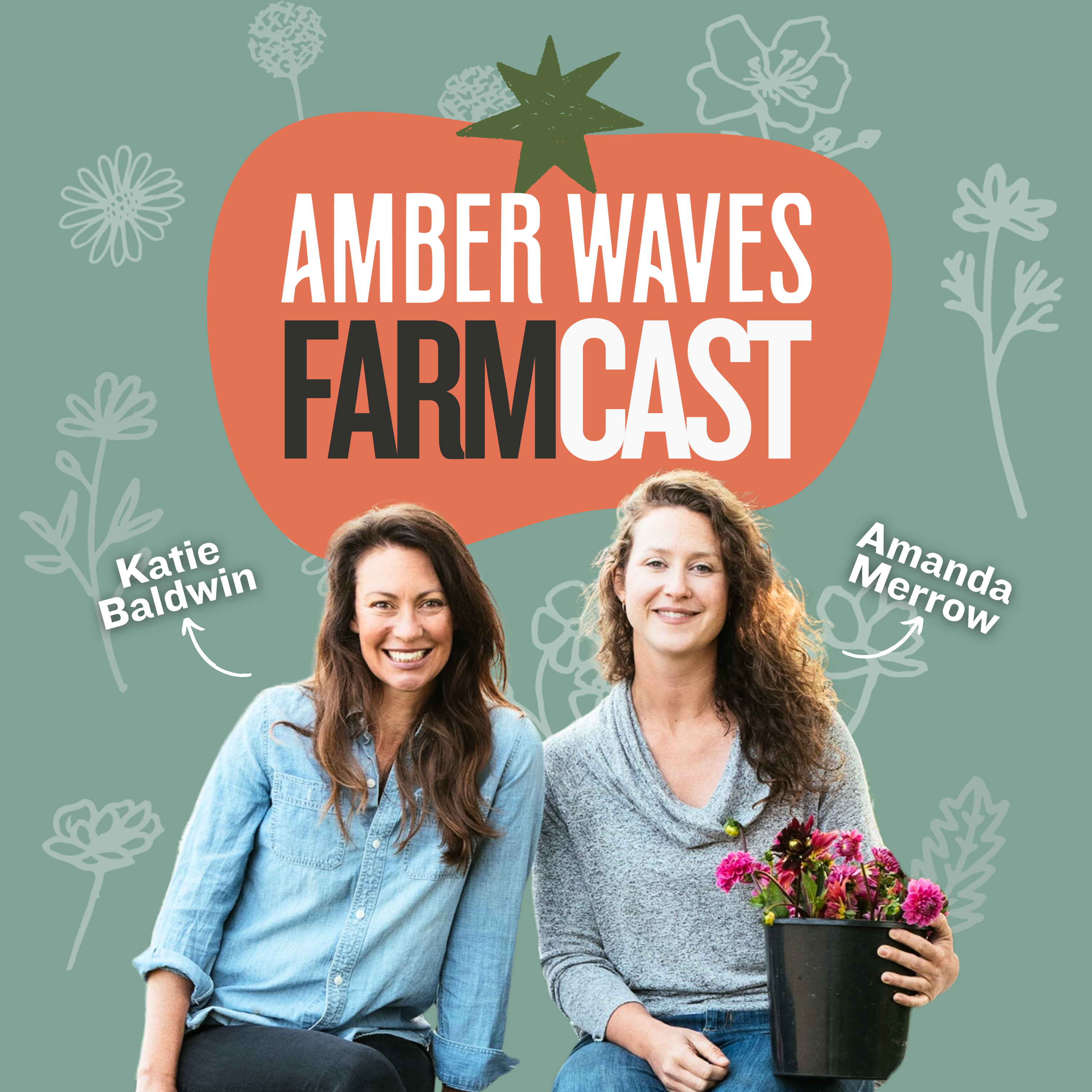
In this episode, Amber Waves co-founders Katie Baldwin and Amanda Marrow kick off the International Year of the Woman Farmer with a wide-ranging conversation on the “invisible work” of agriculture and why getting closer to your food can bring more joy, agency, and resilience.They share how Amber Waves’ apprenticeship program trains the next generation of farmers (overwhelmingly women), why crop rotation and plant families matter, and how moments like COVID made our regional food system suddenly visible.Plus: a brand-new recurring segment, MVP (Most Valuable Produce), featuring winter greenhouse arugula and how to grow it at home in days.**Learn more + support Amber Waves**- Donate / subscribe monthly: https://www.amberwavesfarm.org/giving- CSA info: https://www.amberwavesfarm.org/csa- Website: https://www.amberwavesfarm.org/#AmberWaves #Farmcast #WomenInAgriculture #LongIsland #RegenerativeAgriculture
00:00 - The Long-Term Experiment of Farming00:19 - Welcome to the Farmcast at Amber Waves00:53 - The Concept of Season Review01:19 - Crop Review: Winners and Losers02:25 - "Chef's Choice" Tomatoes and Contentious Conversations03:31 - Emotional Attachments to Tomato Varieties04:40 - Matt's Wild vs. Jasper Cherry Tomatoes05:30 - Long-Term Farm Experiments: Garlic Plastic Trials06:12 - Challenges with Crop Planning Variables06:58 - The Speckled Roman Tomato07:48 - Choosing Crops for Flavor and Biodiversity08:52 - Financial and Intrinsic Value of Crops09:20 - Celery Passion09:42 - Celery and Parsley: Preventing Mistakes11:03 - Celery: The Hardest Crop to Grow12:44 - Systems Review and Apprentice Feedback13:55 - The Apprenticeship Rotation Program14:56 - Inefficiency of Training and Efficiency of Long-Term Ag16:41 - The Future of Farming and Financial Risk18:34 - Success and the Amber Waves Family19:32 - Fundraising: Paying for the Apprenticeship Program21:32 - The Workforce Crisis in Agriculture23:03 - Removing Barriers with Paid Training24:37 - The Scholarship Model25:14 - The Conductor of Plants and PeopleIn this episode of the Amberwaves Farm Cast, farm manager **Amelia** takes you inside one of the most important (and least seen) parts of farming: the **season review**.On our 35‑acre vegetable, grain, herb, and flower farm on Eastern Long Island, season review is where the team gets brutally honest about what worked, what failed, and what needs to change before next year.👩🌾 About the Amberwaves ApprenticeshipAmber Waves runs a **paid, housed apprenticeship program** designed to train the next generation of farmers. Apprentices rotate through all parts of the farm: seeding, transplanting, harvest, flowers, wash/pack, CSA, markets, equipment, and more.The goal: graduates who can step into meaningful roles on other farms or start their own operations with real-world skills, not just theory.**Learn more / apply:**https://www.amberwavesfarm.org/jobs **Amberwaves Farm** is a **501(c)(3) nonprofit educational farm** in Amagansett, NY. Your support helps train new farmers and strengthen regional food systems.**👉 Join the CSA / visit the farm:**Subscribe for more conversations with the people growing our food—and the systems behind what ends up on your plate.
At Amber Waves Farm on the eastern end of Long Island, hiring season is more than sorting résumés. It is a window into who wants to become a farmer in 2026—and what they are running toward.In this episode of the Amber Waves Farmcast, farm manager and hiring lead Amelia sits down in the greenhouse to talk through:- The difference between 9‑month apprenticeships and short‑term field crew roles.- Why applicants are leaving office jobs, marketing agencies, and graduate programs to work in the dirt.- How climate anxiety is pushing 20‑ and 30‑somethings toward hands‑on climate solutions.- What it really looks like to manage a crew of 20+ people, 12 tractors, and 45 acres.- How Amber Waves is building a work culture that’s sustainable for bodies and minds, not just the soil.If you have ever wondered:- Could I really make farming my career?- What does an apprenticeship on a teaching farm actually look like?- How are small farms part of a climate solution?…this episode is for you.👉 Learn more about Amber Waves Farm and the apprenticeship program: https://www.amberwavesfarm.org/👉 Support farmer training and local food access: https://amberwavesfarm.networkforgood.com/projects/261881-2025-end-of-year-gift?hid=NTYxNDk4MDc%3D&utm_campaign=dms_email_blast_4325715👉 Subscribe for more stories from women farmers during the International Year of the Woman Farmer: https://www.youtube.com/@amberwavesfarmNY#InternationalYearOfTheWomanFarmer #WomenInAg #AmberWavesFarm #Farmcast #FarmingApprenticeships