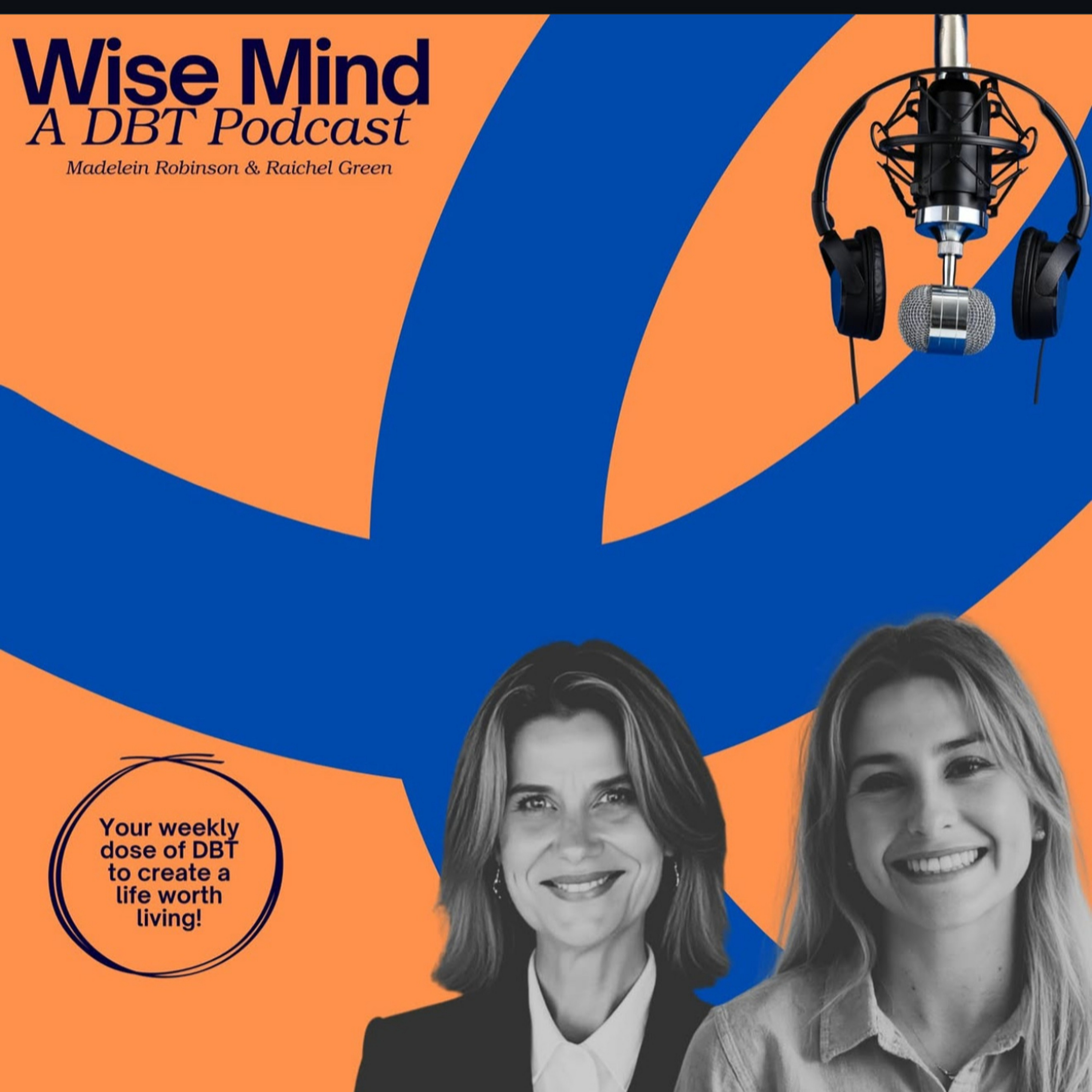
Show Notes
In this episode of Wise Mind: A DBT Podcast, we tackle the “A” in PLEASE skills—Avoid mood-altering substances with curiosity, compassion, and a little humor. Instead of zooming in only on drugs and alcohol, we take a big-picture, Marsha Linehan–style look at addiction, including anything we use to numb out, escape, or emotionally duct-tape ourselves together. We talk about emotional regulation and that familiar inner voice saying, “Okay… get your shit together.” Spoiler alert: it’s not that simple. Using the disease model of addiction, we explain what’s actually going on in the addicted brain, why cravings feel so intense, and why stopping is hard, even when you really, really want to. This episode kicks off our deeper dive into the neurobiology of addiction, breaking down how the brain’s reward system gets hijacked and why willpower alone rarely works. We also bring the hope: recovery is real. We share solid stats, including a 75% recovery rate, and introduce a self-assessment tool to help you figure out your own risk level. If you’ve ever wondered why your brain does what it does and how DBT skills can help you work with it instead of yelling at it or shaming it, this episode is for you. 🎧 Want to know the best way to support us and help us to keep providing free content?! Like, follow, react, comment on Wise Mind - A DBT Podcast on Apple, Spotify and social media!!
Find all details, resources and trainings at : www.wisemindcollective.com.au www.wisemindcollective.com.au www.wisemindcollective.com.au
Contact us: wisemindcollective.com.au Or Instagram + Facebook - Wisemind DBT Podcast
Crisis Support We are not a crisis service, If you or someone you know is in crisis, we encourage you to reach out to: Lifeline – 13 11 14 (24/7) Beyond Blue – 1300 22 4636 13YARN – 13 92 76 (A 24/7 national support line for Aboriginal and Torres Strait Islander people) Emergency Services – 000 (if you are in immediate danger)
Acknowledgment of Dr. Marsha M. Linehan and the Origins of DBT We honor Dr. Marsha M. Linehan, psychologist and professor who created Dialectical Behavior Therapy. It’s thanks to Dr. Linehan that DBT has become a proven intervention for a range of mental health challenges. Wise Mind A DBT Podcast gratefully acknowledges that DBT is Dr. Linehan’s work, not ours, and we honor her legacy.
More from Wise Mind: A DBT Podcast
HOLIDAY MODE | Re-Share: Mindfulness - WHAT & HOW Skills Welcome back to Wise Mind! 🧡 We’re taking a much-needed DBT break! Here in Australia, it’s school holidays and summer is in full swing, so we’re pressing pause on the podcast for the next two weeks to soak up some sunshine, rest and recharge. And a big welcome to all our new listeners! While we’re away, we’re bringing you an oldie but a goodie from the early days of Wise Mind — an episode we think is definitely worth revisiting. So, settle in and enjoy this throwback episode all about mindfulness and our WHAT & HOW Skills. 🧠 And if you’re missing your weekly Wise Mind fix, don’t worry! We’re still releasing new content every week over on Patreon, including bonus content and resources. Head to our website to find the link and join us over there! We’ll see you back here after the break with more Wise Mind, more DBT and more conversations about making sense of our wonderfully messy brains. See you in two weeks!
HOLIDAY MODE 🌴 | Re-Share: ABC Skills Welcome back to Wise Mind! 🧡 We’re taking a much-needed DBT break! Here in Australia, it’s school holidays and summer is in full swing, so we’re pressing pause on the podcast for the next two weeks to soak up some sunshine, rest and recharge. And a big welcome to all our new listeners! While we’re away, we’re bringing you an oldie but a goodie from the early days of Wise Mind an episode we think is definitely worth revisiting. So, settle in and enjoy this throwback episode all about ABC Skills. And if you’re missing your weekly Wise Mind fix, don’t worry! We’re still releasing new content every week over on Patreon, including bonus content and resources. Head to our website to find the link and join us over there! We’ll see you back here after the break with more Wise Mind, more DBT and more conversations about making sense of our wonderfully messy brains. See you in two weeks!
In Part 2, Maddy and Raich from Wise Mind are continuing the conversation around self-harm but this time, we’re getting practical. What do we do when someone isn’t ready to stop? We explore harm minimisation, how to support someone without judgement, and why meeting people where they’re at can be an important part of the work. We chat about what helpful support can actually look like, how to have these conversations safely, and how we can stay connected with someone even when they’re not ready to make a change!! If you enjoy the episode, please like, follow, subscribe, leave a review, and share to help support the podcast. Wanting more weekly wise Mind?! For bonus episodes and exclusive resources every week, join us on Patreon, the link via wisemindcollective.com.au.
In this episode, Maddy and Raich from Wise Mind are diving into a topic that can be difficult, misunderstood and sometimes pretty uncomfortable to talk about self-harm (In all its many forms). We chat about what it actually is, why people might turn to it, and what purpose it can serve. We also share how we approach working with self-harm in our clinical practice and why our approach differs slightly from the way Marsha Linehan talks about it in traditional DBT. As always, we’re keeping it real, compassionate and practical because understanding the behaviour is often the first step towards finding a different way through. If you enjoy the episode, please like, follow, subscribe, leave a review, and share to help support the podcast.
Social Signals & Connection: The Skills That Help Us Connect Why can connecting with others sometimes feel so difficult, even when we really want connection? In this episode of Wise Mind, we explore the role of social signalling the small verbal and non-verbal cues we use to communicate warmth, interest and openness to others. We explore the “flat face” and how our facial expressions, body language and tone can unintentionally communicate disinterest or distance, even when we’re feeling anxious or wanting connection. We unpack the fear of rejection that can make us pull back, avoid eye contact, or wait for others to make the first move. Most importantly, we explore practical skills for creating connection, including noticing our social signals, practising warmth and curiosity, showing genuine interest, initiating conversations and tolerating the discomfort that can come with vulnerability. Because connection isn't always about finding the “right” people sometimes it starts with learning how to signal, “I'm open to connecting.”