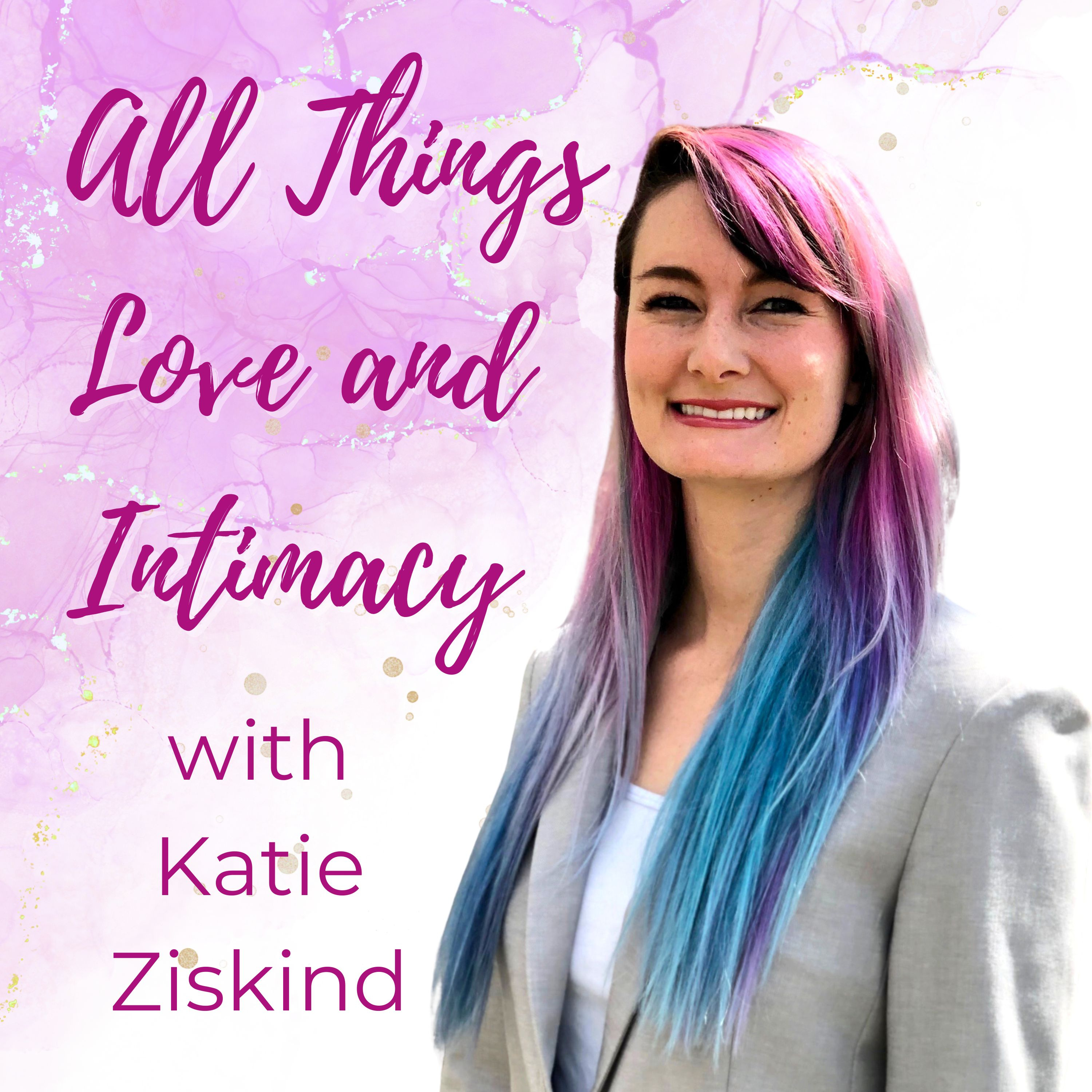
115: Healing the Heartbreak of Betrayal Trauma: A Step-by-Step Guide to Rebuilding Trust After Infidelity and Sex Addiction Via Inner Child Work
All Things Love and Intimacy with Katie ZiskindShow Notes
In this episode of All Things Love and Intimacy, Katie Ziskind, LMFT, RYT500, Certified Sex Therapy-Informed Professional, and Imago Relationship Therapist, explores the deep emotional symptoms of betrayal trauma after infidelity or sex addiction. When infidelity, lying, or sex addiction shatters trust and breaks down your couple bubble, it creates deep emotional pain known as betrayal trauma. In this episode of All Things Love and Intimacy, sex-positive marriage therapist Katie Ziskind, LMFT, shares a compassionate, step-by-step guide to help couples heal after betrayal. Learn how to recognize the symptoms of betrayal trauma—anxiety, intrusive thoughts, hypervigilance, and loss of safety—and how to rebuild trust through emotional honesty and connection. Katie Ziskind explains how Imago Relationship Therapy and inner child healing uncover the root wounds driving disconnection, fear of rejection, feelings of inadequacy, and avoidance. You’ll gain practical tools to restore emotional intimacy, repair broken trust, and reconnect with your partner. Ideal for couples recovering from infidelity, pornography addiction, or sex addiction who want to rebuild a secure, loving bond. Common betrayal trauma symptoms: Intrusive thoughts and flashbacks of the betrayal
Hypervigilance (checking your partner’s phone or social media)
Emotional numbness or detachment
Feeling unsafe, even in familiar spaces
Anxiety, panic, and sleep disturbances
Loss of sexual desire or fear of intimacy
Focusing on betrayal trauma, sex addiction, infidelity recovery, and inner child healing through Imago Therapy, Katie Ziskind helps couples understand the roots of sex addiction, lying, and infidelity. Sex addiction or infidelity often isn’t about sex — it’s about escaping uncomfortable emotions. It’s an attempt to fill an internal void of loneliness, shame, or rejection. In Imago Relationship Therapy, we understand that your partner isn’t your enemy — they are your mirror. The very ways they hurt or trigger you often reflect unmet needs or wounds from your childhood. These wounds drive sex addiction, infidelity, and avoidance behaviors, that perpetuate generational trauma patterns. Invite curiosity, not blame through couples coaching and individual therapy: “Instead of asking, ‘Why did you do this to me?’ try asking, ‘What old wound in you was this behavior trying to protect?’ and, ‘What old wound in me does this betrayal reopen?’” If you or your partner are navigating betrayal trauma, sex addiction recovery, inner child healing, or infidelity, reach out to my team at Wisdom Within Counseling and Coaching. We offer couples counseling, infidelity recovery therapy, and Imago therapy to help you rebuild trust and intimacy. You can learn more at wisdomwithinct.com or listen to other episodes of All Things Love and Intimacy for compassionate, sex-positive relationship healing. Healing from betrayal trauma and PTSD takes time, patience, and a deep willingness to look inward as well as the help of an expert in the counseling and coaching field. The pain of infidelity or sex addiction can become a doorway to transformation when both partners commit to honesty, empathy, and emotional growth. Through Imago therapy and inner child healing with Katie Ziskind, you learn to see each other not as enemies, but as wounded humans longing for connection, approval, love, and safety. Recovery from betrayal and sex addiction isn’t about going back to who you were before the betrayal—it’s about becoming new versions of yourselves who can love with truth, vulnerability, and compassion. With Katie Ziskind's guidance, you can move from the shock of betrayal to a renewed sense of emotional closeness, intimacy, and trust—rebuilding not just your relationship, but your hearts.
More from All Things Love and Intimacy with Katie Ziskind
Have you ever wondered why intimacy feels so complicated, why your marriage has become sexless, or why you struggle to feel safe, confident, and connected in your own sexuality? What happens when the messages you received growing up about sex, gender, religion, and relationships follow you into adulthood and your ability to experience pleasure? In this episode of All Things Love and Intimacy, Katie Ziskind, LMFT, explores the emotional patterns beneath sexual disconnection, low libido, mismatched sexual desire, sexual shame, and intimacy struggles. Strict, conservative religious upbringings, purity culture, traditional gender roles, childhood experiences, and sexual trauma influence the way we approach sex, love, vulnerability, and relationships. Whether you are struggling in a sexless marriage, loving a partner who has survived sexual trauma, or privately questioning the beliefs you were taught about what it means to be a “good” woman or man, this conversation invites you to approach yourself and the people you love with greater compassion. Loving someone who has experienced sexual trauma can bring up feelings of helplessness, confusion, rejection, loneliness, and uncertainty about how to approach physical intimacy. You may miss feeling close to your partner, worry about initiating sex, or wonder whether their lack of sexual desire means they no longer find you attractive. Meanwhile, a survivor of sexual assault, rape, or other unwanted sexual experiences may struggle with PTSD triggers. Katie Ziskind helps couples create emotional safety, honor consent, understand trauma responses, and rebuild trust at a pace that feels right for the survivor. Partners can learn how nurture connection that extends beyond the bedroom. Is your marriage sexless, or are shame and fear getting in the way? A sexless marriage or relationship with mismatched libidos can leave both partners feeling painfully alone. One partner may feel unwanted, rejected, or afraid to initiate sex, while the other may feel pressured, misunderstood, overwhelmed, or disconnected from their own desire. Over time, couples can become caught in a cycle of resentment, avoidance, and silence. This episode explores how traditional beliefs about masculinity, femininity, sexual availability, and relationship expectations can make it difficult to express what you truly want. Women may have been taught to be accommodating, modest, and self-sacrificing, while men may have learned that they should always want sex or hide their vulnerability. These expectations can create shame around desire, difficulty saying no, fear of rejection, and confusion about what healthy, mutually satisfying intimacy can look like. Reclaiming your sexuality, boundaries, and authentic self You deserve a relationship where consent, pleasure, emotional safety, and honest communication matter. You deserve to explore your sexuality without shame and to recognize that healing does not require you to fit into someone else's expectations. Whether you are navigating sexual trauma recovery, low libido, a sexless marriage, religious sexual shame, questioning your sexuality later in life, or rethinking traditional ideas about monogamy and relationships, there is room to explore your needs with curiosity rather than judgment. Listen to All Things Love and Intimacy with Katie Ziskind, LMFT for a compassionate conversation about sexual healing, relationship struggles, trauma-informed intimacy, and the courage to move beyond “good girl” conditioning. You are not broken because sex feels difficult. Your partner is not a problem to solve. With patience, communication, and support, it is possible to build a more authentic relationship with yourself, your body, and the people you love. Ready to take the next step? Learn more about individual therapy, couples counseling, 2+ hour intensives, and intimacy-focused support with Katie Ziskind at www.wisdomwithinct.com. #SexualTrauma #SexlessMarriage #LowLibido
Welcome to episode, "150: Permission to Be You: Rethinking Masculinity, Eroticism, Kinks, Cross-Dressing Without the Shame, Sexuality, Self-Love & Coming Home to Yourself" of the All Things Love and Intimacy Podcast, hosted by Katie Ziskind, Licensed Marriage and Family Therapist, Certified Sex Therapy Informed Professional, 500-hour Registered Yoga Teacher and yoga therapist, and the founder of Wisdom Within Counseling and Coaching. What happens when the man you were taught to be doesn't fully match the person you feel yourself becoming? You grew up in a conservative or religious environment where masculinity was very clearly defined. You were taught that being a man meant being strong, dominant, stoic, heterosexual, emotionally contained, and always in control. You learned that vulnerability was weakness and that certain kinds of pleasure, softness, or feminine expression were something to hide. And then, as an adult, you discover another part of yourself. Maybe you love wearing feminine clothing. It brings you comfort. You feel beautiful or peaceful in a way you haven't allowed yourself to experience before. You have sexual interests that don't fit the rules you were given. Maybe you enjoy forms of sexual pleasure that create questions about your identity. Katie speaks directly to men who may have spent years hiding parts of themselves because of conservative, religious, patriarchal, or traditional beliefs about what it means to be masculine. If you enjoy wearing women's clothing, exploring feminine expression, experiencing softness, or discovering sexual desires that don't fit the expectations you were raised with, you are not alone. This episode explores why cross-dressing can feel both comforting and complicated. Katie discusses how anxious parts can emerge when you begin questioning beliefs you've held for decades, particularly when sexuality, masculinity, religion, and family expectations have been deeply intertwined. Katie also explores the connection between narcissistic or emotionally difficult parenting, childhood conditioning, shame, people-pleasing, emotional suppression, and the masculine mental load. When you've spent your life managing everyone else's emotions, being strong, providing, protecting, and "cushioning" other people, learning to nurture yourself can feel unfamiliar—but incredibly healing. The conversation also addresses sexual pleasure and sexual orientation. Enjoying anal stimulation or penetration does not automatically determine whether a man is gay, straight, bisexual, or another sexual orientation. Sexual behavior and sexual orientation are related but distinct aspects of human sexuality. Katie discusses why discovering new forms of pleasure can nevertheless bring up anxiety, shame, confusion, or fear—especially for men raised in conservative or religious environments. She is a sex-positive, LGBTQIA+-affirming therapist specializing in relationships, sexuality, intimacy, trauma, complex trauma, attachment, and emotional connection. Katie Ziskind specializes counseling and coaching for feminine men, cross dressers, and transgender women in relationships, sexuality, intimacy, sexual abuse, religious trauma, complex trauma and C-PTSD, emotional connection, and the places where our early experiences can shape how we understand ourselves, our bodies, our relationships, and our sexuality. She is deeply passionate about working with men and penis owners who are exploring parts of themselves that they may have spent years hiding—including cross-dressing, feminine expression, sexuality, bisexuality, sexual desires, sexual orientation questions, vulnerability, and the emotional conflict that can happen when your authentic self doesn't fit neatly into the masculine or conservative, religious expectations you grew up with. At Wisdom Within Counseling and Coaching, we can help you understand the difference between what you genuinely desire and what you were taught you were supposed to desire.
What happens when a man enjoys wearing dresses, lingerie, makeup, heels, or other traditionally feminine clothing? Does cross-dressing mean he is transgender? Does it mean he is gay? Does it mean he wants to transition? Does it say something about his attraction to his wife or partner? Or can a man simply enjoy femininity and gender expression while still identifying as a man? In this episode of All Things Love & Intimacy, Katie Ziskind opens up a shame-free conversation about cross-dressing, gender expression, gender identity, sexuality, relationships, and religious deconstruction. Cross-dressing can be a deeply misunderstood topic. For some people, feminine clothing may be connected to creativity, comfort, self-expression, relaxation, sensuality, sexuality, playfulness, or simply the joy of feeling beautiful. Exploring feminine presentation may become part of a deeper journey of understanding their gender identity. There is no single reason why someone cross-dresses, and cross-dressing by itself does not determine someone's gender identity or sexual orientation. We explore the important differences between gender identity, gender expression, biological sex, sexual orientation, sexual arousal, transgender identity, nonbinary identity, Two-Spirit identity, and femininity. These concepts are often blended together, which can create unnecessary fear and confusion. A feminine man can be a man. A person who cross-dresses is not automatically transgender and it does not determine their sexual orientation. Enjoying feminine clothing does not automatically mean someone wants to transition. We also talk about what can happen inside a relationship when a partner discovers that their husband or boyfriend has been cross-dressing. For some wives and partners, the discovery can bring up shock, insecurity, confusion, jealousy, grief, fear, or questions about sexual desirability. You may wonder, “Am I feminine enough?” “Is he attracted to me?” “Does he want to be a woman?” “Does this mean our relationship is changing?” These questions deserve compassion—not ridicule or shame. At the same time, the person who cross-dresses may have spent years hiding this part of themselves. They may have experienced intense gender shame, sexual shame, religious shame, secrecy, guilt, and fear of rejection. Some people describe feeling relief when they finally allow themselves to wear feminine clothing, followed by overwhelming shame afterward. When someone has been taught that gender nonconformity is sinful, wrong, unnatural, or something they should pray away, accepting themselves can become a profound emotional and spiritual process. Religious deconstruction can involve examining inherited beliefs about masculinity, femininity, sexuality, gender, and morality and asking whether those beliefs still align with one's values today. We talk about creating a more gender-affirming and sex-positive approach to cross-dressing counseling—one that does not try to “fix” femininity in men. Whether you are a man who cross-dresses, a wife or partner of a cross-dresser, someone questioning their gender identity, a transgender person, a feminine man, or simply someone trying to understand gender expression, Katie Ziskind would love to counsel you. Topics discussed: cross-dressing, cross-dressing counseling, gender expression, gender identity, transgender identity, nonbinary identity, Two-Spirit identity, feminine men, masculinity, femininity, sexual orientation, sexuality, sexual arousal, relationships, wives of cross-dressers, couples counseling, sex therapy, religious deconstruction, gender shame, sexual shame, LGBTQ+ affirming therapy, gender-affirming counseling, intimacy, authenticity, and reducing stigma around gender expression. Listen to this episode of All Things Love & Intimacy and join me in asking a different question: What becomes possible when we stop being afraid of the parts of ourselves that we've been taught to hide? Start: www.WisdomWithinCt.com
Have you ever told your husband that something hurt your feelings, only to hear, “You're too sensitive,” “You're overreacting,” “You're too emotional,” or “It wasn't that big of a deal”? Maybe you tried to explain why you were hurt, but somehow the conversation became an argument about everything you supposedly do wrong. Maybe you eventually apologized just to make the conflict stop. You walk on eggshells to avoid another explosion. In this episode of All Things Love and Intimacy, Katie Ziskind, LMFT, explores emotional invalidation in marriage and what happens when your emotional experiences are repeatedly dismissed, minimized, criticized, or turned against you. We talk about what it can look like when a husband tells his wife she is “too sensitive,” particularly when she is already navigating the enormous emotional and mental load of motherhood. You may tell your husband, “I'm exhausted. I need help,” and hear, “You're home all day.” You may say, “That comment hurt me,” and hear, “You can't take a joke.” You may ask for emotional support and hear, “You're always complaining.” You may try to discuss something important and find yourself being yelled at instead. Over time, these interactions can leave you questioning yourself. You may wonder, “Am I really too sensitive?” “Am I asking for too much?” “Why can't I just let things go?” “Why does every conversation turn into a fight?” “Why am I always the one apologizing?” We also talk about narcissistic traits without automatically labeling every difficult husband a narcissist. Some people have poor communication skills, grew up in families where emotions were dismissed, struggle with empathy or vulnerability... some relationships involve much more concerning patterns of emotional abuse. Instead of only asking, “Is my husband a narcissist?” you can begin asking: “Do I feel emotionally safe in my relationship?” “Can I express my feelings without being punished?” “Can my partner hear that I am hurt without immediately becoming defensive?” “Can we disagree without yelling or humiliating each other?” “Does my partner take responsibility when he hurts me?” “Is there a willingness to repair and change?” These questions can tell you a great deal about the emotional health of a marriage. Katie also discusses what healthy partnership can actually look like. When you have spent years walking on eggshells, you may not realize that love can feel calm. Healthy couples can disagree without making each other the enemy. A husband can hear his wife say, “That hurt me,” and respond with curiosity rather than defensiveness. He can say, “I didn't mean to hurt you, but I understand why that affected you.” He can apologize. Healthy love means knowing how to move through conflict without destroying each other. Love can feel safe and calm. But there is an important boundary around these tools: you can regulate yourself, but you cannot regulate another adult who is choosing to behave abusively. If you are a woman wondering whether your husband is narcissistic, individual therapy can provide a space to explore what you are experiencing. At Wisdom Within Counseling and Coaching, Katie provides individual therapy, couples therapy, postpartum counseling, trauma-informed therapy, and support for women navigating emotional invalidation, narcissistic relationship patterns, infidelity and betrayal, postpartum depression, postpartum anxiety, motherhood transitions, intimacy concerns, and high-conflict relationships. You are not too sensitive for wanting to be treated with kindness. You are not asking for too much because you want emotional safety. And you do not have to make yourself smaller to be loved. 🎙️ All Things Love and Intimacy is hosted by Katie Ziskind, LMFT, and explores relationships, marriage, sexuality, intimacy, emotional connection, betrayal, trauma, motherhood, and healing. www.WisdomWithinCt.com
What do you do when a conversation with your spouse suddenly turns into yelling, rage, defensiveness, insults, or an explosive argument? What if you find yourself constantly walking on eggshells, carefully choosing your words, monitoring your partner's mood, and trying to prevent the next conflict? In this episode of All Things Love and Intimacy, Katie Ziskind, LMFT, explores the complicated reality of conflict with a spouse who may have narcissistic traits, low emotional intelligence, emotional immaturity, or emotionally abusive behaviors. We talk about what it can feel like when your partner's reactions seem completely disproportionate to what actually happened—and how repeated explosive interactions can leave you anxious, confused, emotionally exhausted, and disconnected from yourself. You may find yourself asking: “Is my husband narcissistic?” “Am I being emotionally abused?” “Why does every conversation become a fight?” “Why am I always the one apologizing?” “Why do I feel like I have to keep the peace?” This episode explores the difference between ordinary marital conflict, narcissistic traits, emotional abuse, and patterns of coercive or controlling behavior. Not every insensitive or defensive spouse is narcissistic, and relationship conflict does not automatically mean abuse. If you regularly feel afraid of your partner's reaction, walk on eggshells, experience repeated criticism or humiliation, have your feelings dismissed, or feel responsible for managing your spouse's emotions, those experiences deserve attention. We also discuss what happens when relationship difficulties overlap with postpartum depression and postpartum anxiety. Becoming a mother can make existing relationship patterns feel more intense. You may desperately need emotional support, reassurance, rest, and connection while feeling that your spouse is insensitive, unavailable, dismissive, or unwilling to share the emotional responsibility of family life. For some women, postpartum stress is further complicated by discovering a partner has been cheating, sexting other women, having an emotional affair, using dating apps, or engaging in other forms of infidelity and secrecy. Katie shares practical de-escalation strategies you can use during conflict, including keeping your language brief, lowering your voice, validating emotions without agreeing with harmful behavior, taking a regulated time-out, setting boundaries, and avoiding the urge to defend yourself against every accusation. This episode also explores boundaries. What does it actually mean to set a boundary with a difficult or narcissistic partner? If you are a woman wondering whether your husband is narcissistic, emotionally abusive, emotionally unavailable, or simply struggling with the transition into parenthood, therapy can help you gain clarity. Couples therapy, when appropriate and emotionally safe, can help partners improve communication, and repair after conflict. At Wisdom Within Counseling and Coaching, Katie offers compassionate, trauma-informed support for women and couples navigating relationship conflict, narcissistic relationship patterns, emotional abuse, infidelity and betrayal, postpartum depression, postpartum anxiety, birth trauma, motherhood transitions, and intimacy concerns. Therapy can incorporate approaches such as the Gottman Method, Emotionally Focused Couples Therapy, Internal Family Systems, somatic therapy, mindfulness, nervous system regulation, and other holistic tools. If you are ready to explore therapy, Wisdom Within Counseling and Coaching offers individual therapy, couples therapy, postpartum counseling, and trauma-informed support. 🎙️ All Things Love and Intimacy explores real conversations about relationships, marriage, sexuality, intimacy, betrayal, trauma, motherhood, emotional connection, and healing. Start at www.WisdomWithinCt.com