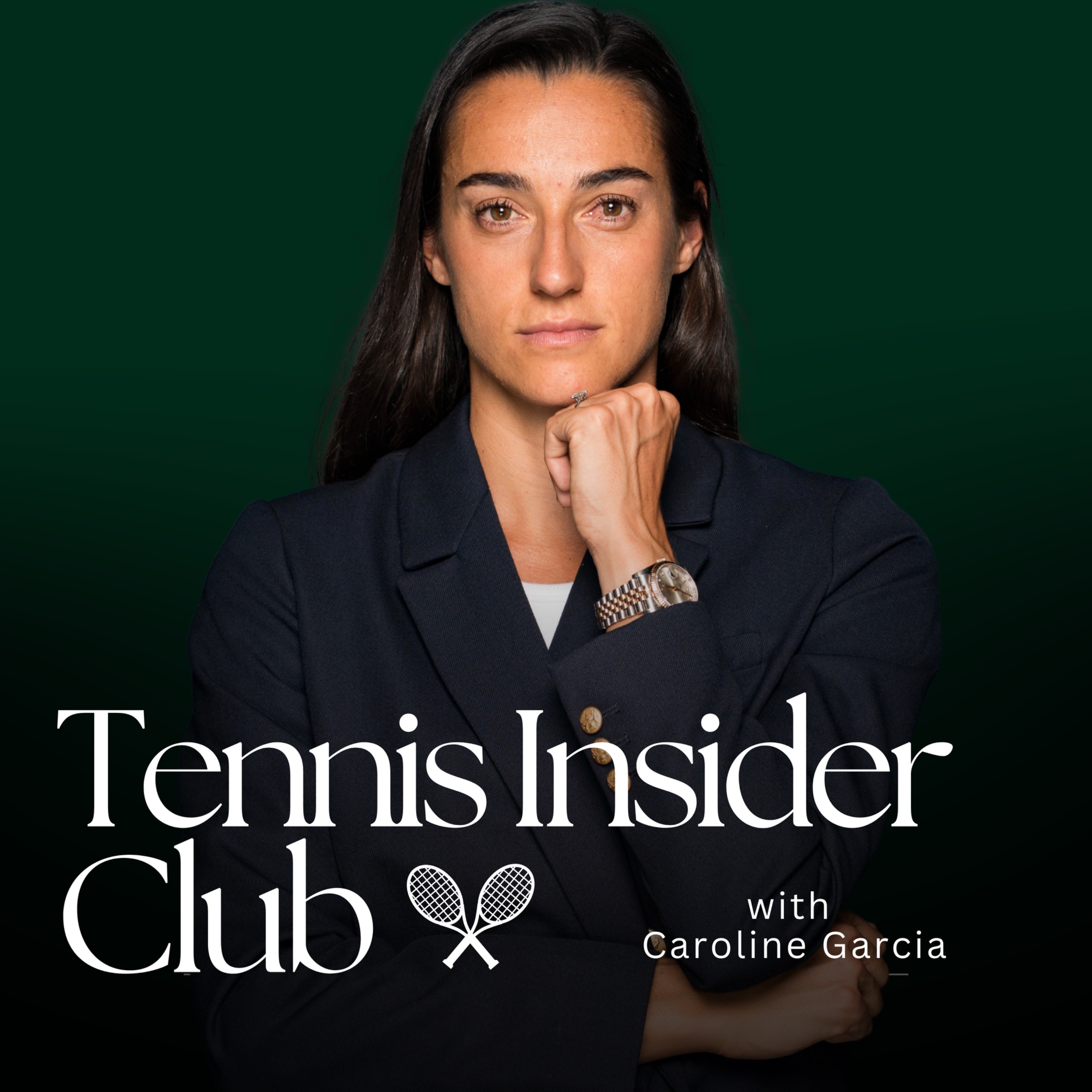
Gavin MacMillan: He Fixed Sabalenka's Serve. Now He's Working With Coco Gauff
Tennis Insider Club with Caro GarciaShow Notes
Gavin MacMillan spent years building athletes nobody expected to make it — boxers, hockey players, tennis pros. Then Aryna Sabalenka hired him, and the tennis world started paying attention.
In this episode, Gavin breaks down the serve transformation that took Sabalenka from 6 double faults in a single final to 6 double faults across an entire tournament. He explains why 99% of strength coaches in tennis are operating on the wrong principles — and why bigger, faster, stronger is the biggest lie in the sport.
He's now working with Coco Gauff. And he has thoughts.
🎾 WHAT WE COVER IN THIS EPISODE
→ Why conventional weight training is actively hurting tennis players → The Federer "toothpick" principle: how elasticity beats muscle → Sabalenka's serve rebuild — the real story, step by step → What Gavin is working on with Coco Gauff right now → Why you can't think your way through a serve under pressure → The coaching lie: "I played it, so I can teach it" → The broken ATP/WTA system — and why nobody's fixing it → Caro Garcia on what she'd change about her career if she started over → Why tennis is the single hardest sport in the world to succeed in professionally
━━━━━━━━━━━━━━━━━━━━━━━━━━━━━━━━
⏱ CHAPTERS
01:00 Gavin's background — 7 sports, hockey, losing his mom at 15 02:00 Narcissistic tennis parents & the crystal ball problem 03:30 Why tennis is the hardest sport in the world to succeed in professionally 06:00 Tennis vs the fight business — the only comparable mental challenge 07:30 Inside boxing: weight cuts, Cotto vs Canelo, and the A-side 10:30 Why conventional weight training is destroying tennis players 12:00 Force vs power — the Soviet training science nobody in tennis is using 13:00 Federer's toothpick body vs Nadal — the real difference explained 15:00 The door analogy — why bigger muscles increase injury risk 18:00 Why there's almost no science in tennis coaching 20:00 Gavin's live analysis of Caro Garcia's game 22:00 Caro's shoulder injury & the 22,000 serves per year problem 25:00 The insane tennis calendar — no other professional sport does this 28:00 Instagram fitness coaches on tour & the science nobody uses 29:00 Technical flaws in the modern game — you cannot hide them anymore 32:00 Federer's on-the-run forehand & why Sampras would dominate today 35:00 The skills gap — why top players still can't execute the basics 37:00 Gavin joins Coco Gauff's team — his exact role 39:00 How long does it really take to change technique on a pro player? 42:00 Coco's serve numbers — the before and after 44:00 The Sabalenka serve transformation — the full story 47:00 The reps math — why "5-minute serve fixes" are for functional morons 48:00 What Freddie Roach taught Gavin about great coaching 51:00 One thing in the corner — simplicity under extreme pressure 56:00 The 70% first serve rule that made Sabalenka unbeatable 1:00:00 Advice to young players: what actually builds a career 1:01:00 The 85% rule — why going 100% loses Grand Slams 1:07:00 Women's tennis marketing — why the tour is failing its own players 1:11:00 Identity, mental health & living and dying with every point 1:18:00 The camera on Sabalenka after a loss — the tour's exploitation problem 1:22:00 Federer's parents — what Gavin learned meeting them at the Australian Open 1:24:00 Coco Gauff at 21 — changing her serve the week before the US Open 1:29:00 Caro: "I would have had a better team" — what she'd change about her career 1:31:00 Every athlete falls to their level of preparation — not one rises above it 1:34:00 George St-Pierre, stars aligning, and the luck factor in elite sport 1:37:00 The unlicensed conditioning industry — and why it's getting players hurt 1:40:00 Injury prevention: the right evaluation every player should have but doesn't 1:42:00 The serve biomechanics breakdown — why Rafter's motion damaged him and Federer's didn't
🎾 TENNIS INSIDER CLUB
The inside story of professional tennis — hosted by Caroline Garcia (former World No. 4, 2022 WTA F
More from Tennis Insider Club with Caro Garcia
Alejandro Davidovich Fokina, the 2026 Shanghai Masters champion, opens up about the pressure that nearly made him quit tennis, leaving his longtime coaching setup, and the difficult decision to take control of his own career. After winning junior Wimbledon, Alejandro struggled with expectations and self-doubt. Years later, despite establishing himself on the ATP Tour, he felt he had little say in the decisions shaping his professional life. In this honest conversation with former world No. 4 Caroline Garcia and Borja Durán, Alejandro reveals what led him to leave his familiar environment after more than a decade, move from Málaga to Monaco, and rebuild his team from scratch. He reflects on one of the toughest periods of his career, how his wife helped him see things differently, and why finding happiness and independence away from tennis contributed to his best season in 2025. From managing anxiety and emotions on court to dealing with public expectations, choosing the right coaches, and learning that tennis isn't everything, this episode explores the personal side of professional tennis that fans rarely get to see. What happens when a professional athlete finally takes control of his own career? CHAPTERS 00:00 The pressure that almost made Alejandro quit tennis 00:45 How Alejandro started tennis with his father 02:10 Winning junior Wimbledon — and nearly quitting 03:50 Breaking into the ATP Top 100 05:45 Battling anxiety and emotions on court 07:20 How routines changed his mentality 09:20 Marriage, happiness and finding balance outside tennis 11:55 Why being obsessed with tennis can hurt your performance 14:25 Why Alejandro deleted social media 16:45 "I had no voice" — the truth about his former team 18:50 Leaving Málaga for Monaco and starting over 20:10 Rebuilding his team and finding success in 2025 22:10 Caroline Garcia shares her own experience 24:00 How taking control transformed Alejandro's confidence 27:10 Why he wanted coaches who had competed at the highest level 30:40 His advice to his younger self LISTEN TO TENNIS INSIDER CLUB Spotify: https://open.spotify.com/show/1SDHHtfQmUS0TyP8wqJEh9 Apple Podcasts: https://podcasts.apple.com/us/podcast/tennis-insider-club/id1721351881 FOLLOW TENNIS INSIDER CLUB Instagram: https://www.instagram.com/tennisinsiderclub/ X: https://x.com/tennisinsidercl Subscribe to Tennis Insider Club for honest conversations with the world's best tennis players, exploring the stories, challenges and experiences behind professional tennis. JOIN THE CONVERSATION Alejandro believes that taking control of his decisions and surrounding himself with the right people helped transform his career. What do you think matters most for an athlete's success: the right coach, mental confidence, or happiness outside the sport? Share your thoughts in the comments. We read them all. #AlejandroDavidovichFokina #TennisInsiderClub #TennisPodcast Hosted on Acast. See acast.com/privacy for more information.
Elina Svitolina opens up about the pressure to win, the fear of losing, and learning that a Grand Slam won’t define her worth. In this episode of Tennis Insider Club, Elina joins Caroline Garcia and Borja Duran for an honest conversation about the expectations that shaped her career—from leaving home at 12 and feeling she needed to win almost every match, to dealing with Grand Slam disappointments and finding a healthier relationship with tennis. She shares the difficult parts of her comeback after pregnancy, how quickly expectations returned with her results, and why she needed to step away when the emotional weight became too much. We also talk about life with Gael Monfils, the advice he gave her about winning a Grand Slam, raising their daughter Skai, representing Ukraine, and finding purpose beyond the tennis court. Elina still believes she can win a Grand Slam. She also believes she can have a great career—and a happy life—without one. CHAPTERS 00:00 The pressure to win: episode preview 00:40 How Elina started playing tennis 02:25 Junior success and the difficult road to turning pro 05:35 Leaving home at 12 and pressure from her parents 09:15 Changing her mindset and coping with painful losses 11:45 Why a Grand Slam won’t define her career 14:45 Working with a psychologist and Gael’s perspective 17:25 What keeps her motivated 19:30 Ukraine, her foundation, and finding balance beyond tennis 23:50 Pregnancy and uncertainty about returning 25:25 The reality of coming back after childbirth 29:35 How success brought the pressure back 31:20 Becoming a more aggressive player 33:00 When tennis became too much—and taking a break 37:10 Recognizing emotional exhaustion 39:30 Learning to listen to yourself 41:15 Life, love, and training with Gael Monfils 44:45 How motherhood changed her priorities 46:45 Would she want her daughter to play tennis? 50:40 Managing expectations around winning a Grand Slam 52:45 The nerves of watching each other compete 53:50 Her advice for young tennis players Which part of Elina’s story resonated with you most? Tell us in the comments. Subscribe to Tennis Insider Club for more honest conversations with the people behind professional tennis. Hosted by Caroline Garcia and Borja Duran. #ElinaSvitolina #TennisInsiderClub #Tennis Hosted on Acast. See acast.com/privacy for more information.
John McEnroe has spent nearly five decades at the center of professional tennis — as a Grand Slam champion, world No. 1, rival, commentator and one of the most recognizable personalities the sport has ever produced. In this episode of Tennis Insider Club, McEnroe joins Caroline Garcia and Borja Durán for a candid conversation about what life at the top really feels like. He reflects on the pressure he experienced from a young age, why controlling his emotions on court was so difficult, and why even winning often brought little satisfaction before his attention immediately shifted to the next challenge. McEnroe also opens up about becoming a father, stepping away from the tour, and the difficult transition athletes face when tennis has become such a large part of their identity. The conversation explores Björn Borg’s sudden departure from the sport, the rivalries that defined McEnroe’s career, and why contrasting personalities remain so important to tennis today. McEnroe shares his perspective on Roger Federer, Rafael Nadal, Novak Djokovic and Carlos Alcaraz — including why Alcaraz’s ability to appear genuinely happy under enormous pressure fascinates him. Caroline also reflects on her own experience of retirement and the years when her results became inseparable from how she saw herself, leading to an unusually open exchange between two generations of Grand Slam champions. They also discuss: • Why McEnroe believes young players are pushed too hard • The role parents play in creating — or destroying — a healthy relationship with tennis • Why he encourages children to play multiple sports • The difficulty of separating self-worth from results • Why retirement rarely happens the way athletes imagine • How becoming a parent changed McEnroe’s perspective • Why personality and rivalry matter to the future of tennis • What McEnroe would do differently looking back A conversation about winning, pressure, anger, identity and learning how to live with — and eventually beyond — professional tennis. Hosted by Caroline Garcia and Borja Durán. Hosted on Acast. See acast.com/privacy for more information.
Jessica Pegula watched players her age break through while injuries repeatedly interrupted her own career. After years outside the top 100, she began to wonder: “Is this not meant to be?” In this episode of The Insight, Jessica reveals why arriving later ultimately became one of her greatest strengths. She opens up about the injuries and comparisons that tested her belief, the moment she decided to take complete ownership of her career, and how building the right team helped transform her trajectory. She also explains why the calm exterior people see on court doesn’t always reflect what she is feeling—and why trying to manufacture emotion only made competing more exhausting. Jessica speaks candidly about becoming too focused on results, the burnout that followed, and how small goals—improving a kick serve or developing a drop shot—helped her rediscover the satisfaction of the craft. She also reflects on finally overcoming the Grand Slam “barrier” and reaching the US Open final, only to discover how quickly professional tennis moves on to the next match. Her biggest realization: success isn’t a single destination. The dream is the journey itself—the difficult weeks, the strange losses, the people beside you and the stories you collect along the way. This is an honest conversation about comparison, emotional authenticity, late success and learning to build a career that truly belongs to you. CHAPTERS 00:00 “Is this not meant to be?” 02:20 Escaping the comparison trap 04:00 Why succeeding later helped Jessica 05:00 Taking control of her own career 08:20 What years of injuries gave her 09:45 The truth behind her calm exterior 13:05 Results, burnout and rediscovering improvement 16:10 Breaking the Grand Slam “barrier” 19:15 Why success disappears so quickly 21:00 Learning to stop and appreciate it 22:00 “The dream is the journey” 23:10 Jessica’s advice to her younger self 24:10 Why the worst weeks become the best stories If Jessica’s story resonated with you, share this episode with someone who feels like their breakthrough is taking too long. Subscribe to Tennis Insider Club for revealing conversations with the people shaping professional tennis. What part of Jessica’s journey changed how you think about success? Let us know in the comments. #JessicaPegula #WTA #Tennis Hosted on Acast. See acast.com/privacy for more information.
Mark Knowles has spent his life around some of the greatest players in tennis — first as a player alongside Andre Agassi, Jim Courier and Pete Sampras, and now as a coach working with Jessica Pegula. In this episode, Mark joins Caroline Garcia and Borja Durán for a deeply honest conversation about what actually separates talented players from the ones who reach their full potential. Mark reflects on why he believes he underachieved in singles, how perfectionism hurt his career, and why he now tells players: “Do not chase perfection.” He also opens up about coaching Jessica Pegula — why her team spent nearly a year convincing her to practice less, why elite players sometimes need less information rather than more, and how they are trying to help her take the final step toward winning a Grand Slam. The conversation also turns to one of the most sensitive subjects in tennis: parents. Mark explains why he believes players cannot reach their full potential until they establish the right relationship with their parents, leading Caroline to reflect openly on how her own father’s involvement affected her confidence, independence and decision-making. They also discuss Jannik Sinner, Carlos Alcaraz, Rafael Nadal, Novak Djokovic, Andy Roddick, player development, burnout, confidence, and why some of the hardest moments in a tennis career can become the ones you miss most once it is over.