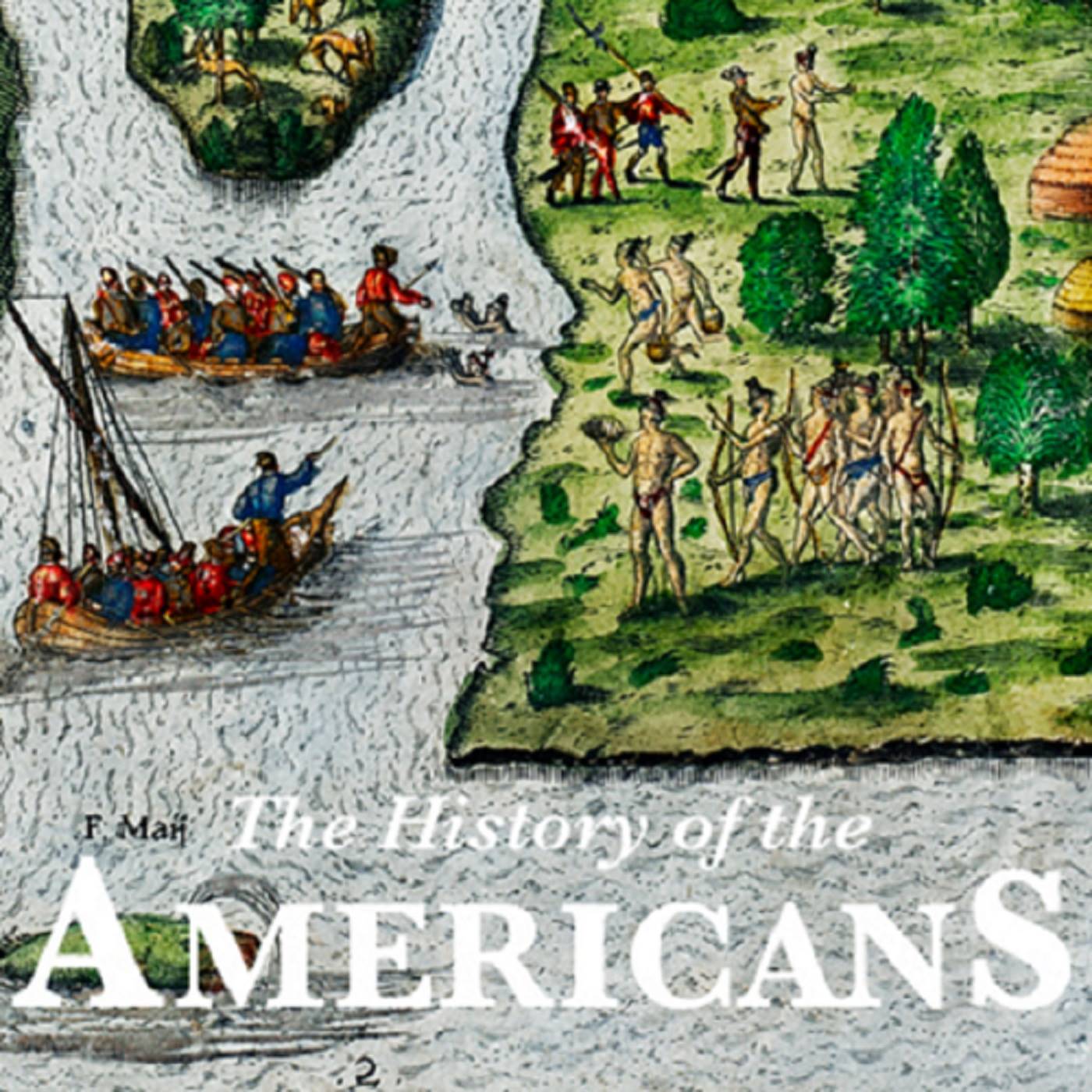
Show Notes
This is the second of three episodes about a daring Dutch raid on the West Indies and the English colonies of North America during the Third Anglo-Dutch War. The extended raid, led by Commander Cornelis Evertsen the Youngest of the Admiralty of the Dutch province of Zeeland and a privateer named Jacob Benckes, was a sideshow in that war, yet its consequences were far-reaching. Among other accomplishments, Evertsen, known to his fans as Kees the Devil, and Benckes, “subdued three English colonies, depopulated a fourth, captured or destroyed nearly 200 enemy vessels, inflicted a serious injury upon the Virginia tobacco trade, wiped out the English Newfoundland fisheries, and caused unending panic in the New England colonies.”
This episode covers the first phase of the "raid on America," in which Evertsen's squadron sails from Zeeland for the South Atlantic, aiming to capture the English East India fleet at St. Helena. Failing that, the squadron sailed for South America and the Indies, eventually meeting up with Benckes at Martinique. After capturing prizes and burning down St. Eustatius, the episode ends with Evertsen and Benckes headed toward the rich tobacco fleet then gathering in the Chesapeake.
X/Twitter – @TheHistoryOfTh2 – https://x.com/TheHistoryOfTh2
Facebook – The History of the Americans Podcast – https://www.facebook.com/HistoryOfTheAmericans
Selected references for this episode (Commission earned for Amazon purchases through the episode notes on our website)
Donald G. Shomette and Robert D. Haslach, Raid on America: The Dutch Naval Campaign of 1672-1674
Map of the land campaign against the United Provinces in the Third Anglo Dutch War:
Third Anglo-Dutch War (Wikipedia)
Cornelis Evertsen The Youngest (Wikipedia)
The Fifth Column Podcast
More from The History of the Americans
This factoid-rich episode is a major rewriting of one of the earliest and most popular episodes of the podcast, Introduction to the Columbian Exchange, which originally aired on February 12, 2021 and then again in a revised form as episode #166 on October 11, 2024. This version includes lots of new aspects of the Columbian Exchange, and more recent scholarship on several of the topics discussed in the old episodes.
It is the 1670s. Robert Cavelier, Sieur de La Salle, having returned from exploring south of Lake Erie, made common cause with the flamboyant and visionary new governor of New France, Louis de Buade, Comte de Frontenac. Together they hatch a plan to get permission from Louis XIV to build a string of forts in the Great Lakes region and explore and settle the Mississippi River Valley. La Salle travels to France twice, and enlists the King’s first minister, the great Jean-Baptiste Colbert, to support a mission to find the mouth of the Mississippi so that France might establish a base there for the purpose of better harrassing Spain. Along the way La Salle builds a huge fort at the eastern end of Lake … Ontario, survives the second of five assassination attempts, and Frontenac demonstrates a great flair for diplomacy with the Iroquois.
It is time to get back to New France and the exploration of the middle of this beautiful country of ours. Our vehicle will René-Robert Cavelier, Sieur de La Salle, known to both his contemporaries and to history as “La Salle.” You’ve heard his name, especially if you live within driving distance of the Mississippi, but do you know what he actually did? This and the next few episodes tell La Salle’s remarkable story.
It is the spring of 1681. The “exclusion crisis,” an insurgency in Parliament proposing to exclude the king’s brother, James, Duke of York, from the line of succession, was reaching its climax. Even so, on March 4 King Charles II found time to grant William Penn a vast territory extending from the west bank of the Delaware River to a longitude equal to the then western border of Maryland. It was now William Penn’s role, as sole proprietor of Pennsylvania, to fill it up with people. He would do a remarkable job, especially under the challenging circumstances, relying heavily on his … pen. Along the way he would write a practical and moral defense of English colonialism at a time when many of the movers and shakers in London were arguing against it.
With Sir William Penn’s passing in 1671, and his deathbed admonition that his son stay true to himself, young William Penn was both financially independent and liberated from worrying that his own activism on behalf of the Quakers would hurt his family. William now owned lands that generated income of around 2000 pounds a year, or roughly the wages of 100 laborers of the time.