Show Notes
Two IRA men – John Crawley and Martin Ferris – are caught with seven tons of ammunition on their boat, just off the coast of Kerry. They are sentenced to 10 years in prison.
Meanwhile, the IRA take their fight to the British mainland with renewed vigour. Bombs explode in Brighton, Hyde Park, and Manchester, killing thousands of innocent civilians and… nearly, Margaret Thatcher.
But, behind closed doors, Sinn Féin politicians and their British counterparts take the first, faltering steps towards peace.
A decade after his arrest, Martin Ferris is released from prison to a changed political landscape. He decides the time for armed struggle is over, and becomes a prominent Sinn Féin political activist.
All seven episodes of From Bomb to Ballot are available now. Follow us on Instagram @dmgnewmedia. Follow us on TikTok @dmgnewmedia Follow us on X @dmgnewmedia Email us [email protected] Text us 020 7938 6000.
Host: John Lee Producers: Artemis Irvine Assistant Producer: Sally McLennan Production Manager: Vittoria Cecchini Sound Design: John Scott Script Consultant: Liam Thompson Executive Producer: Bella Soames
A Daily Mail podcast. Seriously Popular. Hosted on Acast. See acast.com/privacy for more information.
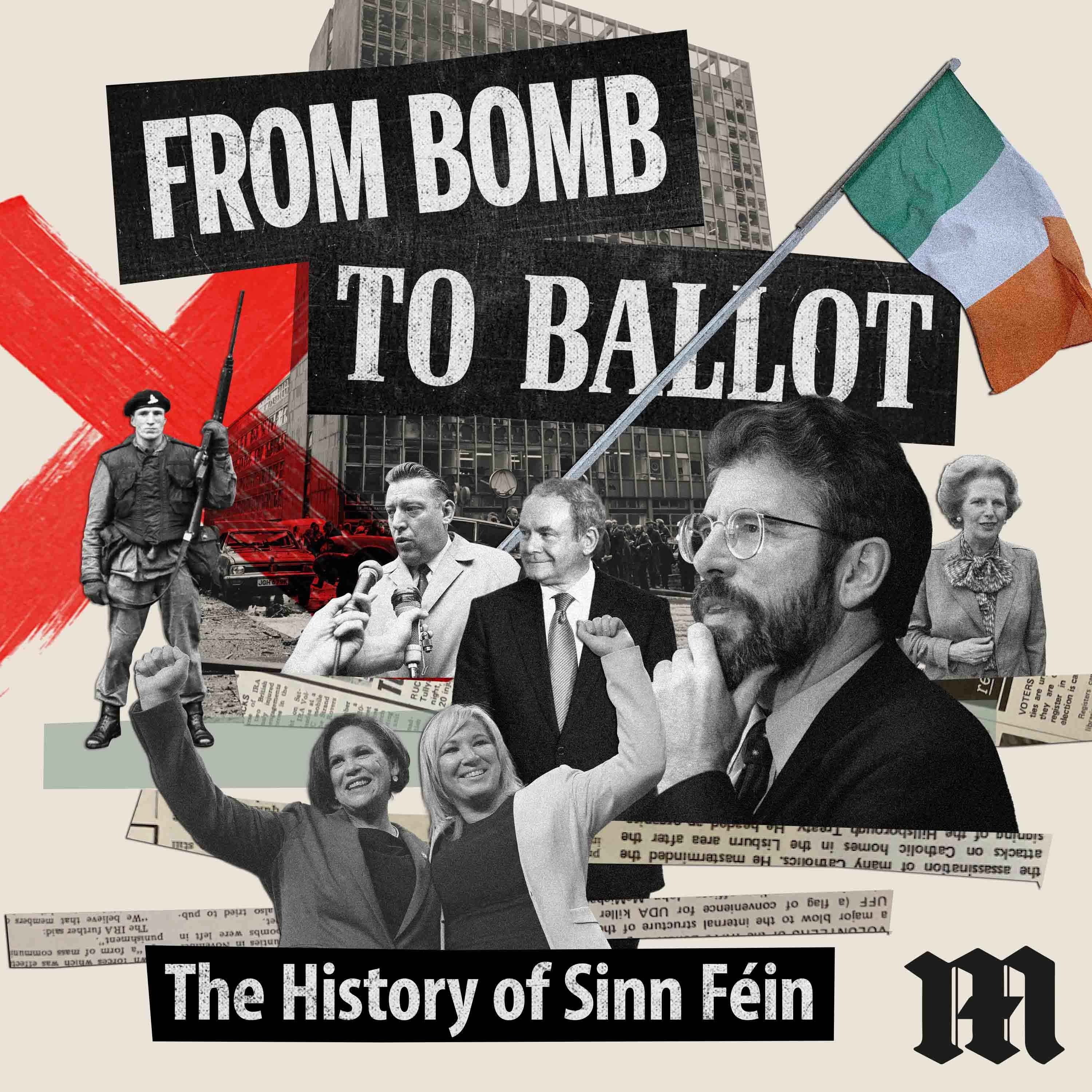
More from From Bomb to Ballot: The History of Sinn Féin
Gerry Adams stands down as the President of Sinn Fein and is replaced by Mary Lou McDonald, a middle-class Dubliner with no personal connection to the Troubles.
In Omagh, a car bomb kills 29 people, including two unborn children. It is the biggest single atrocity of the Troubles and comes just four months after the Good Friday Agreement is signed.
The Provisional IRA end their ceasefire in spectacular fashion, and the scale of the bomb detonated in the middle of Canary Wharf sparks renewed attempts to end the Troubles.
Ten young men starve themselves to death in a prison outside Belfast. One of them – Bobby Sands – is an elected MP. Their deaths bring widespread sympathy to the Republican cause and the Provisional IRA’s little-known political wing, Sinn Féin, is bolstered by increasing electoral success. Two years later – at the height of the hottest summer on record – Gerry Adams, widely believed to be a former leader in the IRA (something he denies), is elected to Westminster. Militant Irish nationalism has gone political.
The Provisional IRA run a disciplined and efficient operation and prove capable of bringing bloody war to the British Army. A cat and mouse game on the streets of Belfast and Derry intensifies with each passing week, each side becoming further entrenched in a brutal cycle of violence that will define the 1970s.