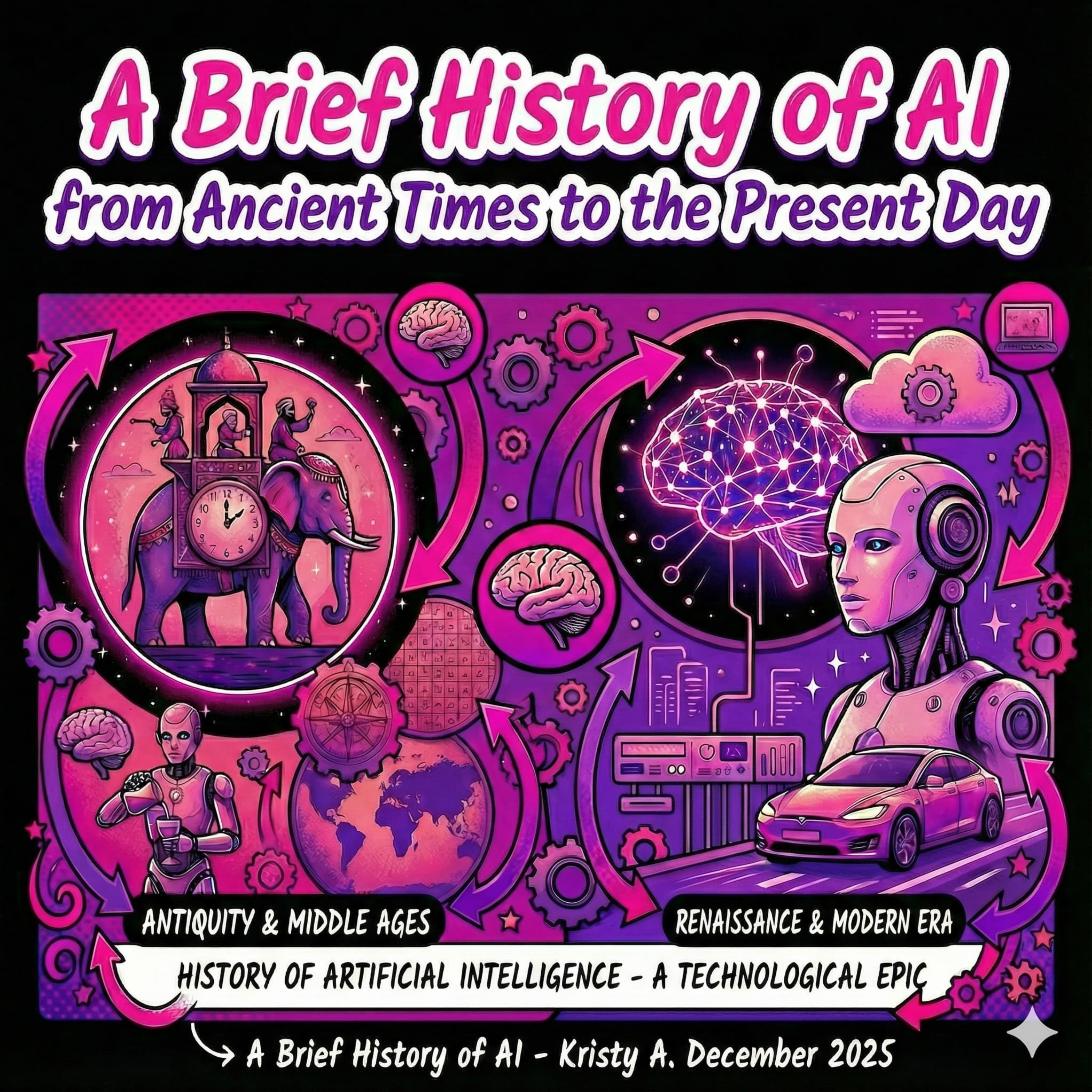
Show Notes
Gardens of the Desert: How Necessity Made Innovation Bloom in the Middle East
No one expects flowers in the desert. Yet that is where they grow fastest — when the rain finally comes.
In 1954, a six-year-old country undertook to build a computer. Israel had just emerged from its war of independence. The borders were hostile. The economy fragile. The advisory committee included Albert Einstein — skeptical — and John von Neumann — enthusiastic. Some candidates had lost their diplomas in the Holocaust. In 1955, the WEIZAC executed its first calculation.
Lotfi Zadeh was born in Baku, grew up in Tehran, emigrated to the United States. In 1965, he invented fuzzy logic — that way of representing vague concepts that humans handle intuitively. Americans were skeptical. The Japanese seized upon it. Today it is in your air conditioners, washing machines, cars.
Unit 8200 — the Israeli equivalent of the NSA — became, without intending to, the world's greatest startup school. Gil Shwed built the first firewall there. Check Point, Palo Alto Networks, CyberArk — so many cybersecurity giants founded by its veterans.
ICQ — "I Seek You" — was born in a Tel Aviv apartment in 1996. Four young Israelis invented instant messaging. AOL bought it for four hundred million dollars.
Waze and Mobileye revolutionized navigation and autonomous driving. The "Startup Nation" exported eleven billion dollars in cybersecurity in 2021.
The desert has bloomed. Necessity became invention.
More from A brief history of AI from ancient times to the present day
What the Deep Learning Revolution Teaches Us: Conclusion and opening toward the future
Archipelago of Innovation: How Australia seeks its place in the AI revolution
Silicon Gardens: How the desert became an artificial intelligence laboratory
Rule and Exception: How Europe regulated AI and made Mistral emerge from the improbable
The New Center of Gravity: How Asia became the beating heart of global artificial intelligence