Season 1, Episode 2: Be Proactive: Mastering Control & Influence in a Reactive World
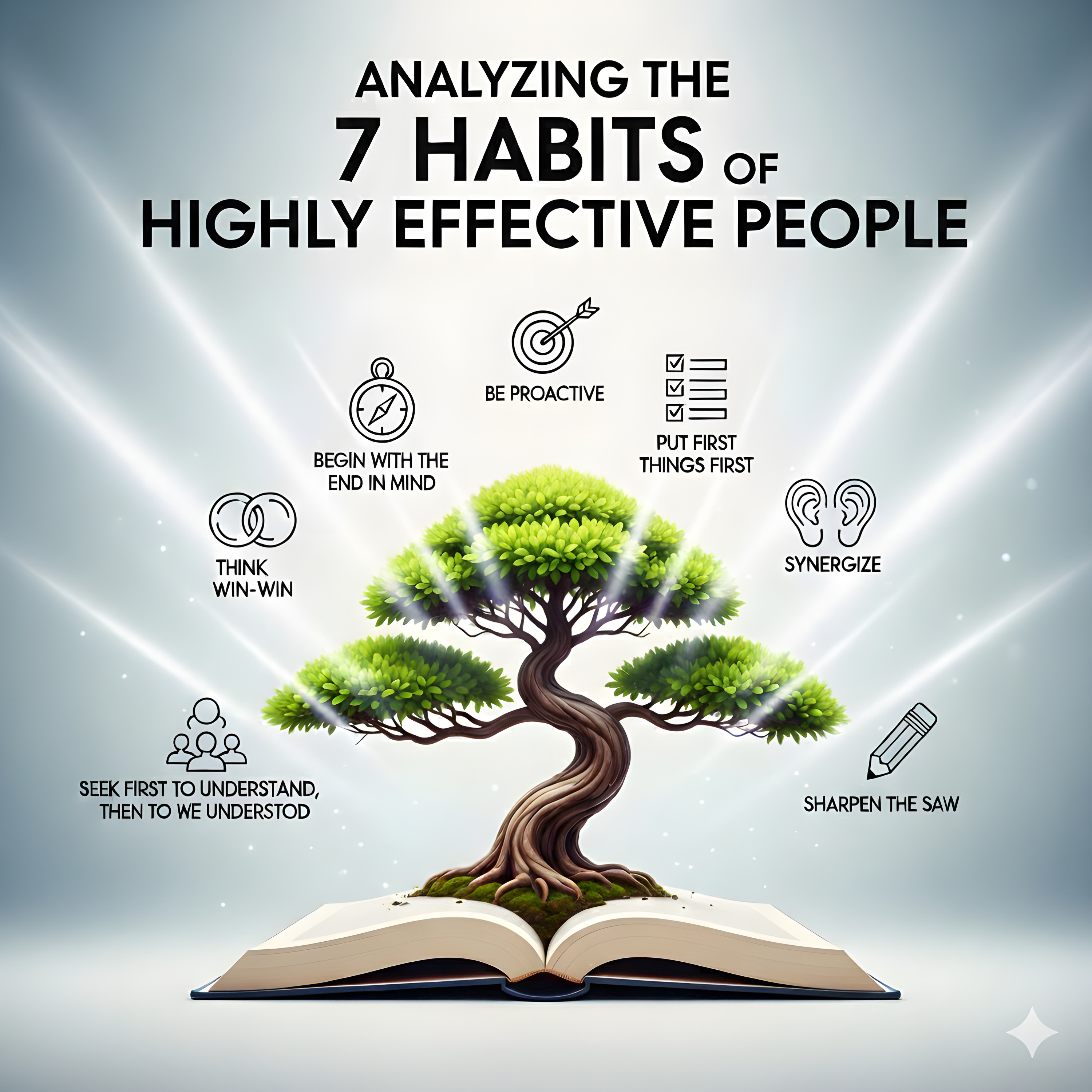
Analyzing the 7 habits of highly effective peopleShow Notes
Do you ever feel like you're simply a victim of circumstances—stuck in traffic, frustrated by a new company policy, or at the mercy of someone else's bad mood? In this episode, we tackle the first and most foundational habit: Be Proactive. This principle is the key to shifting from a reactive mindset to one of profound personal agency. We explore the powerful idea that no matter what happens to you, you always have the freedom to choose your response. You'll learn how to distinguish between your Circle of Concern and your Circle of Influence, and why focusing on what you can control is the secret to expanding your effectiveness and putting yourself back in the driver's seat of your life. Episode Notes & Key Takeaways: The Proactive Principle: This habit is about taking responsibility for your own life. Proactive people recognize that their actions are driven by their own conscious choices and values, not merely by external conditions, impulses, or feelings. The Freedom to Choose: Drawing on the profound experience of psychiatrist Viktor Frankl, we discuss the "last human freedom": the power to choose your attitude and response in the space between stimulus (what happens to you) and your reaction. Two Circles of Focus: A key tool for proactivity is understanding where you focus your energy: The Circle of Concern: This encompasses everything you might care or worry about, from global politics and the economy to the weather and other people's behavior. The Circle of Influence: This smaller, inner circle contains the things you can directly affect through your choices and actions, such as your skills, your attitude, and your personal habits. Where to Invest Your Energy: The central insight is that when you focus on your Circle of Influence, you generate positive energy and your influence actually expands over time. Conversely, focusing on the Circle of Concern generates negative energy and can cause your sense of agency and influence to shrink. Listener Challenge: This week, become a detective of your own language. Pay close attention to how you frame your tasks and interactions. Each time you catch yourself saying or thinking "I have to," consciously try to reframe it as "I choose to" and observe the subtle but powerful shift in your mindset.
More from Analyzing the 7 habits of highly effective people
In our Season 2 finale, we bring it all together. This episode unpacks the entire 7 Habits framework as a single, cohesive system for a life of purpose and effectiveness. We'll trace the journey from the "inside-out" approach of the Private Victory—mastering yourself first—to the collaborative power of the Public Victory. This is your ultimate recap, designed to solidify your understanding and provide a clear blueprint for how these timeless principles work together to help you build a life of sustainable success and fulfillment. Episode Notes & Key Takeaways: Recap: The Inside-Out Approach: The journey always begins with your inner self—your character, your paradigms, and your motives. Lasting change is an inside job. The Private Victory (Habits 1-3): This is the foundation of self-mastery. Being proactive, beginning with the end in mind, and putting first things first are the habits that allow you to move from dependence to independence. The Public Victory (Habits 4-6): Once you have mastered yourself, you can achieve effective interdependence. This involves thinking win-win, seeking first to understand, and synergizing to create outcomes you couldn't achieve alone. The Engine of It All (Habit 7): Sharpening the saw is the habit of renewal that makes all the other habits sustainable and fuels the upward spiral of growth. Final Challenge: As we conclude the season, the ultimate challenge is to not just know these principles, but to live them. Choose one habit to focus on and consciously practice it, making it a true part of who you are.
Is personal growth a final destination or a continuous journey? In this powerful episode, we explore the concept of the Upward Spiral. Learn why the 7 Habits are not a one-time checklist but a framework for lifelong improvement. We'll show you how the process of "Learn, Commit, Do," fueled by the habit of self-renewal, allows you to revisit the principles at ever-higher levels of understanding. This is the key to moving beyond simple knowledge and turning the habits into an integrated, powerful force for growth in your life. Episode Notes & Key Takeaways: Beyond the Checklist: The 7 Habits are not a set of tasks to be completed once. They are principles to be revisited and integrated more deeply over time. The Upward Spiral of Growth: This is the process of continuous improvement. By consistently engaging in renewal (Habit 7), you are able to apply the other six habits with greater understanding and effectiveness, creating a positive, upward cycle. The Learn, Commit, Do Cycle: The engine of the upward spiral is a three-step process: Learn: Gaining new knowledge and deepening your understanding of a principle. Commit: Making a conscious decision to apply that learning. Do: Putting the principle into practice through your actions. Neuroplasticity and Growth: The concept of the upward spiral aligns perfectly with our understanding of neuroplasticity—the brain's ability to change and adapt. Consistent practice literally rewires our brains for greater effectiveness.
In a culture that often rewards burnout, are you taking the time to stay sharp? This episode is a practical guide to Habit 7: Sharpen the Saw. We explore why proactive, balanced self-renewal is not a luxury but a fundamental discipline for sustainable success. We break down the four key dimensions of your life that require consistent renewal—physical, mental, spiritual, and social/emotional. Learn how to move beyond feeling "too busy to improve" and start making the small, regular investments in yourself that yield massive long-term returns. Episode Notes & Key Takeaways: The "Sharpen the Saw" Analogy: We revisit the story of the woodcutter who is too busy sawing to sharpen his saw. This illustrates that taking time for renewal actually makes you more effective, not less. Renewal is a Quadrant II Activity: Sharpening the saw is a classic "Important, Not Urgent" task. It requires proactivity and discipline to schedule it into your life consistently. The Four Dimensions of Renewal: A balanced renewal strategy addresses all four aspects of your being: Physical: Consistent exercise, proper nutrition, quality sleep, and stress management. Mental: Continuous learning through reading and writing, strategic planning, and disconnecting from noise to allow for deep thought. Spiritual: Connecting with your core values and purpose through activities like meditation, time in nature, art, or service. Social/Emotional: Nurturing key relationships by making consistent "deposits" of trust and empathy.
Are you sacrificing your long-term well-being for short-term results? This episode dives deep into one of the most powerful metaphors in the 7 Habits: the fable of the Goose and the Golden Egg. We'll unpack the crucial principle of the P/PC Balance—the balance between Production (the golden eggs) and Production Capability (the goose that lays them). Learn why true effectiveness requires nurturing the assets that produce your desired outcomes, whether in your health, your relationships, or your career. Episode Notes & Key Takeaways: The Goose and the Golden Egg Fable: This timeless story illustrates the folly of destroying a valuable asset (the goose) in the pursuit of immediate results (the golden eggs). Defining P/PC Balance: P (Production): This represents your desired results or outcomes—the golden eggs. PC (Production Capability): This represents the asset that creates those results—the goose. This could be your physical health, a key relationship, or a piece of equipment. The Principle of Balance: True effectiveness is achieved by maintaining a balance between focusing on production and investing in your production capability. Overemphasizing one at the expense of the other is unsustainable. Present Bias and the Urgency Effect: We explore the psychological reasons why we often neglect PC. "Present bias" makes us overvalue immediate rewards, while the "urgency effect" pulls our attention to tasks that feel pressing but may not be truly important.
What if 1 + 1 could equal 3, 10, or even 100? That's the power of synergy. In this episode, we explore Habit 6, the principle of creative cooperation. We'll show you why synergy is far more than just teamwork or compromise; it's about valuing differences to create a "Third Alternative"—a new, better solution that didn't exist before. Learn why psychological safety is the essential soil in which synergy grows and how you can guide your team from conflict to truly innovative collaboration. Episode Notes & Key Takeaways: Defining Synergy: Synergy is when the whole is greater than the sum of its parts. It's the magic that happens when a team's output is far more innovative and effective than what any individual could have produced alone. Synergy is Not Compromise: Compromise often means everyone loses something (1+1 = 1½). Synergy is about creating a new solution where everyone wins more than they originally intended (1+1 = 3 or more). The Power of Valuing Differences: The key to synergy is seeing different perspectives, opinions, and backgrounds not as obstacles, but as opportunities for creativity. The most powerful solutions come from respecting and integrating these differences. Finding the "Third Alternative": When faced with a conflict or a difficult choice, a synergistic approach doesn't just pick a side; it seeks a new, superior "Third Alternative" that addresses the underlying needs of all parties. The Need for Psychological Safety: For synergy to occur, team members must feel safe enough to express their true ideas and opinions without fear of judgment or reprisal. Building this trust is a prerequisite for creative cooperation.