Show Notes
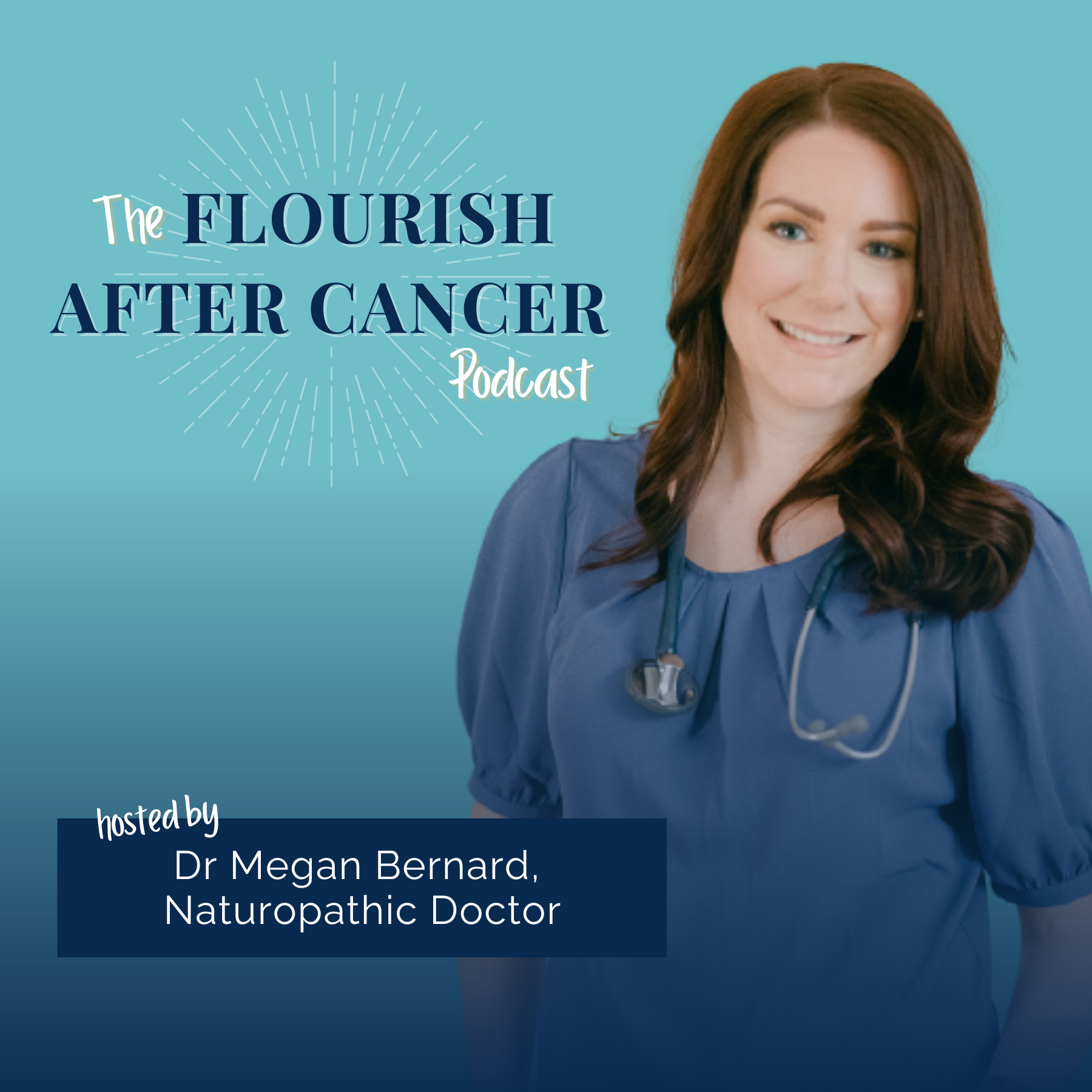
A woman was on a Roadmap Call with our program advisor. She’d listened to my podcasts, watched my trainings, followed me on Instagram - she couldn’t wait to get started. Then her skeptical husband leaned into the zoom call frame and asked: "If this is so important, why doesn't her oncologist do it?" It's such a great question. I had to share our answer with you too. In this episode of The Flourish After Cancer Podcast, Dr. Megan Bernard answers that question directly and honestly — no defensiveness, no vague reassurances. You'll understand exactly why the gap between cancer treatment and cancer recovery exists, why it has nothing to do with how much your oncologist cares about you, and what it looks like when someone finally starts asking the questions the conventional system was never built to ask. In This Episode
Why oncology training is extraordinary, and exactly where it stops, and why recovery was never part of the design The four structural reasons the gap exists, including why the research on metabolic health, microbiome repair, and nutrient depletion after chemo lives in a completely different corner of medicine Why the day treatment ends often feels like abandonment, and why that feeling is a reasonable response to a system with no formal handoff The difference between the questions your oncologist asks and the questions that drive cancer recovery, and why they're not competing, they're sequential
I’m Dr Megan, a board-certified naturopathic doctor. My team and I have worked with hundreds of women globally to rebuild their health after cancer and reduce recurrence risk using science-backed nutrition, lifestyle, and targeted supplement strategies — so they can feel confident, strong, and free to enjoy life again. ✨ Let’s Connect!Book a free Roadmap Call and let’s chat about how we can help:https://flourishaftercancer.com/nextsteps Follow me:Instagram: @MeganBernardNDFacebook: @MeganBernardNDWebsite: https://flourishaftercancer.com/ Medical Disclaimer: The information provided in these videos and podcasts is for educational purposes only and is not intended to diagnose, treat, cure, or prevent any disease. Consult with a qualified healthcare provider before making any changes to your diet, medications, or lifestyle. Content is not a substitute for professional medical advice or care.
More from The Flourish After Cancer Podcast
You’ve been told to lower your stress after cancer, and you’ve probably felt the quiet pressure of that advice every time life refused to cooperate. A scan date, a lab result, a hard conversation at home, and suddenly managing stress becomes one more thing you feel like you’re failing at. 😮💨 In this episode, I sit down with Dr. Donese Worden, a naturopathic medical doctor and researcher who has spent more than two decades studying metabolic oncology. We talk about the metabolic side of cancer and the tiny organelles at the center of it, your mitochondria. We cover why she calls mitochondria the motherboard of your body and why the goal is stress resilience rather than a stress-free life. We also get into how your muscles help your body handle glucose, and why a bag full of supplements with no plan behind it can create more problems than it solves. ⚠️ This is a must-listen if:
Whether you were just diagnosed or finished treatment years ago, the instinct is usually the same: find the thing that fights the cancer. "What's the best cancer-killing supplement for my type of cancer?" "Am I doing enough?" "What if I'm missing the one thing that matters?" 😮💨 But timing matters as much as the tool you choose. The same supplement or nutrition change can help in one phase of care, do very little in another, and sometimes even get in the way. In this episode, I walk you through the two phases of cancer care using the picture of a boat in a storm, so you can figure out where you are right now and what your body needs from you in this season. ⚠️ This is a must-listen if:
If you've had ER+ breast cancer, estrogen probably feels like the enemy, and every food label, lotion, and supplement bottle comes with the same question: "Is this raising my estrogen?" 😮💨 Here's the hopeful part. Lowering recurrence risk was never about chasing estrogen to zero. It's about what your body does with the estrogen it already has. In this episode, I walk you through where your estrogen comes from, which forms are more harmful or more protective, and how your body clears it, plus the four areas you can support to keep that system working in your favor. 💛 🔗 Episode Relevant Resources • The Breast Cancer Freedom Workshop: https://flourishaftercancer.com/freedom • E60 Can You Take Estrogen To Treat Menopause After Breast Cancer?: https://flourishaftercancer.com/post/e60 ⚠️ This is a must-listen if:• Estrogen has felt like something to fear since your ER+ diagnosis.• You've cut foods or products to avoid estrogen and don't know if it's helping.• You want to know where DIM, sulforaphane, and estrogen testing fit.✨ In this episode, you'll learn:• Why "more estrogen means more risk" is too simple.• How your liver turns estrogen into more protective (2-OH) or more harmful (4-OH and 16-OH) forms.• How fiber and gut health decide whether estrogen leaves your body or gets recirculated.• What urine, saliva, and GI testing can show you.💡 You'll leave this episode with:• Relief from the idea that your estrogen has to go to zero.• A clear picture of the four areas that shape your estrogen: exposure, liver, epigenetics, and elimination.• Simple starting points like cruciferous vegetables, more fiber, and less alcohol. I’m Dr. Megan, a licensed naturopathic doctor. My team and I have worked with hundreds of women around the world to rebuild their health after cancer and reduce their risk of recurrence through science-backed nutrition, lifestyle, and targeted supplement strategies—so they can feel confident, strong, and free to enjoy life again. ✨ Let’s Connect! Book a free Roadmap Call to discuss how we can help: https://flourishaftercancer.com/nextsteps Follow me:
A viral claim swept across social media a few months ago: a prominent breast surgeon said that mammograms cause breast cancer. The fear spread quickly, and so did the confusion. If you’re a woman navigating life after breast cancer, that kind of claim isn’t just noise. It’s the kind of thing that can keep you up at night, wondering whether the test meant to protect you might actually be putting you at risk. In this episode of The Flourish After Cancer Podcast, I break down what the research actually says about mammograms, the real math behind radiation exposure, how mammograms compare with ultrasounds, MRIs, QT scans, and thermography, and why breast density might be the part of your screening picture that no one has explained to you yet. ✨ This episode is designed to help you:
Hot flashes, joint pain, night sweats, and decreasing bone strength—many survivors are told the same thing by their doctor: “Hormone therapy is completely off the table for you.”But that isn’t the full picture. In this episode of The Flourish After Cancer Podcast, I break down what 25 menopause and oncology specialists found about hormone therapy after breast cancer. ✨ This episode is designed to help you:• Understand the difference between local vaginal and systemic hormone therapy• Learn what your long-term risk actually depends on• Walk away with questions worth bringing back to your doctor 💛 📝 The Flourish Process for Supporting Menopause Options After Breast Cancer• Review your quality of life and the symptoms MHT could help, including hot flashes, night sweats, and joint pain.• Review your long-term heart, bone, and brain health, including your PREVENT score, DEXA results, and family history.• Explore nonhormonal options first and weigh their effectiveness.• Consider vaginal estrogen early, even without symptoms—it is different from systemic hormone therapy.• Consider your individual risk of recurrence, which is covered in the next episode.• Consider the form of MHT—patch versus oral—since each is absorbed differently.⚠️ This is a must-listen if:• You were told hormone therapy is simply off the table after breast cancer.• You’re dealing with hot flashes, joint pain, or night sweats and don’t know what’s safe to try.• You’re worried about your bone, heart, or brain health now that estrogen isn’t in the picture.• You want a real framework instead of a one-line answer from your doctor.💡 You’ll leave this episode with:• A clear framework for reviewing your symptoms, long-term risk, and options.• Language to bring back to your doctor instead of accepting a blanket “no.”• Relief in knowing that this decision is yours to make based on your priorities and risk. 🔗 Relevant Episode Resources:• Join me live for the Breast Cancer Freedom Workshop, October 13–15: http://flourishaftercancer.com/freedom I'm Dr. Megan, a licensed naturopathic doctor. My team and I have worked with hundreds of women globally to rebuild their health after cancer and reduce recurrence risk using science-backed nutrition, lifestyle, and targeted supplement strategies — so they can feel confident, strong, and free to enjoy life again. ✨ Let’s Connect! Book a free Roadmap Call and let’s chat about how we can help: https://flourishaftercancer.com/nextsteps Follow me: Instagram: @MeganBernardND Facebook: @MeganBernardND Website: https://flourishaftercancer.com/ Medical Disclaimer: The information provided in these videos and podcasts is for educational purposes only and is not intended to diagnose, treat, cure, or prevent any disease. Consult with a qualified healthcare provider before making any changes to your diet, medications, or lifestyle. Content is not a substitute for professional medical advice or care.