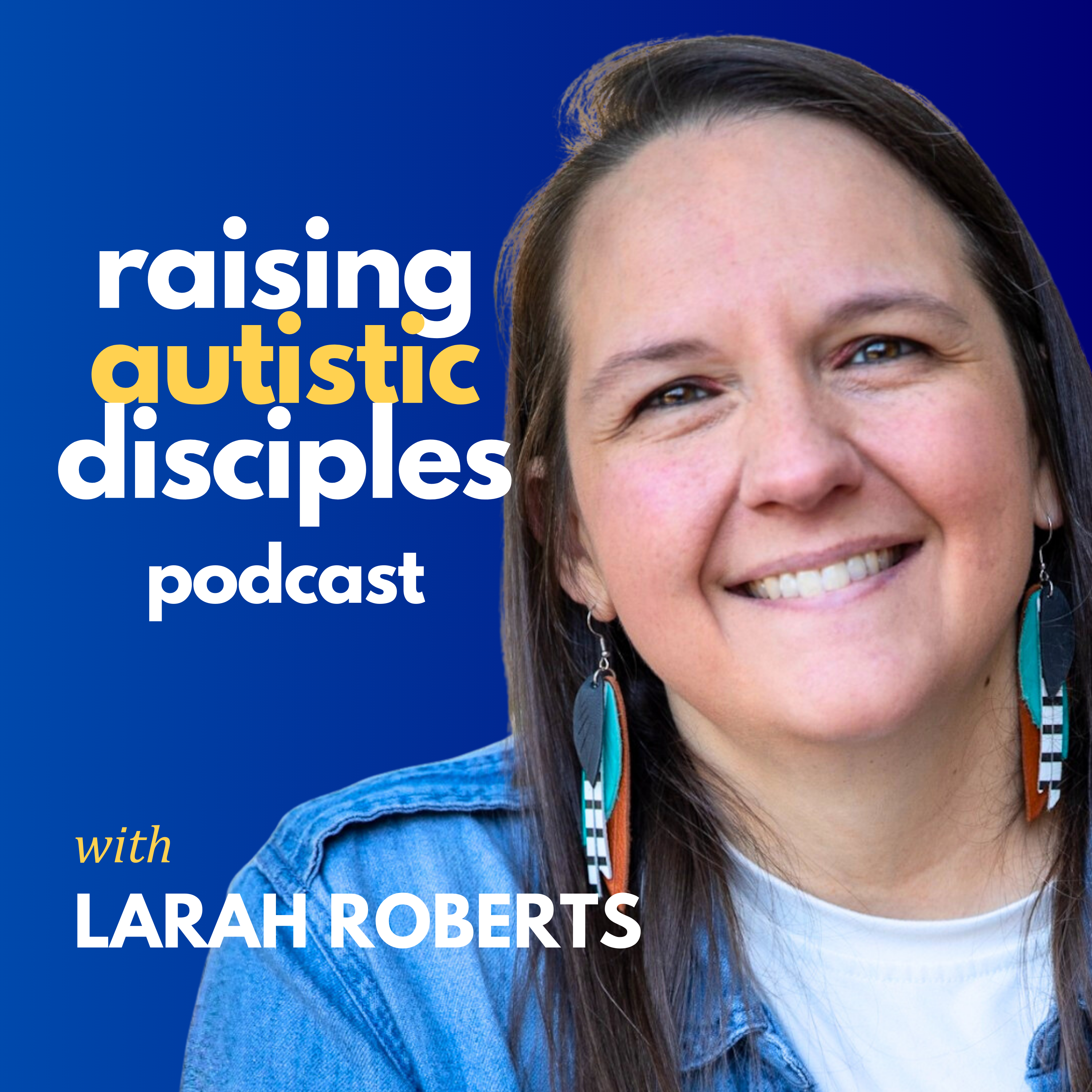
35: Autism & Healing Series: Who Do You Listen to When Christians Disagree?
Raising Autistic DisciplesShow Notes
When Christians disagree about autism and healing—and everyone seems completely convinced they're right—who do you listen to?
In the final episode of the Autism & Healing series, we're talking about discernment: healing testimonies, confident Christian content creators, Bible verses pulled into Instagram Reels, "God told me" claims, and what happens when someone turns their personal conviction about autism and healing into a test of someone else's faith.
Someone can be confident and still be wrong. Someone can have an extraordinary testimony and still misunderstand what that testimony means. Someone can quote Scripture and interpret it incorrectly.
And that includes me.
Confidence is not authority. God's Word is.
We also talk about families who say their child was "healed of autism." Something may have genuinely changed—and we can praise God for it! But discernment asks another question: What actually changed?
Behavior is not autism. A meltdown is not autism. Aggression is not autism. Elopement is not autism. Being nonspeaking is not autism.
Communication can grow. Sleep can improve. Anxiety can decrease. Sensory needs can be accommodated. Therapy can help. Children can mature. And God can be glorified through every bit of it.
God's work does not become less divine because He works through ordinary means.
Scriptures Referenced
Acts 17 Matthew 4 Isaiah 53:5 James 5 1 Corinthians 15 Romans 10 John 14:6 Matthew 28:18–20 2 Corinthians 12
A Discernment Filter
When you encounter a big theological claim, ask:
What does Scripture explicitly say? What conclusion is this person drawing from it? Does the passage actually authorize that conclusion? Is this Scripture, inference, personal conviction, or testimony?
And remember:
Someone else's testimony cannot become God's promise to my family.
Where This Series Lands
Can God heal? Yes.
Do I know whether God intends to remove Graham's autism this side of eternity? I don't know.
Does that make me passive? Absolutely not.
Do I believe neurotypicality is God's definition of wholeness? No. Neurotypical is a neurological category. Redeemed is a theological category.
Do faithful Christians disagree about healing? Yes. And disagreement about healing does not give us permission to redefine the gospel around our conclusions.
So what do I do with everything I don't know?
I know my assignment.
You don't have to settle every question about autism and healing before you get busy with the Great Commission. Pray. Ask boldly. Open your Bible. Learn your child. Trust God with what He hasn't revealed. Be faithful with what He has.
God gets the outcome. You get the assignment. Now go raise that autistic disciple.
______
📚 Letters to Lindsey: Seeing Your Child's Autism Diagnosis Through a Gospel Lens [https://www.amazon.com/dp/B0FS87WY24]
📚 How to Advocate & Stay Christian [https://link.amazon/B00yWcdKK]
📺 Minno — Get a free 7-day trial with code RAD [https://gominno.com/?afmc=RAISINGAUTISTICDISCIPLES]
🛍️ Larah's Amazon Picks [https://www.amazon.com/shop/raisingautisticdisciples]
👕 RAD Merch [https://raising-autistic-disciples.printify.me/products]
✍️ Read RAD on Substack [https://substack.com/@raisingautisticdisciples]
More from Raising Autistic Disciples
Costumes, candy, crowds, and a whole evening of doing things we spend the rest of the year telling our kids NOT to do. When you stop and think about it, trick-or-treating has some pretty confusing rules.
Welcome to the series: Surviving the Holidays!
When Christians talk about autism and healing, what exactly do we mean by healed?
If I don't know whether God intends to remove my son's autism this side of eternity… what exactly do I pray for?
Can God heal autism? And if God can, does that mean He has promised that He will?