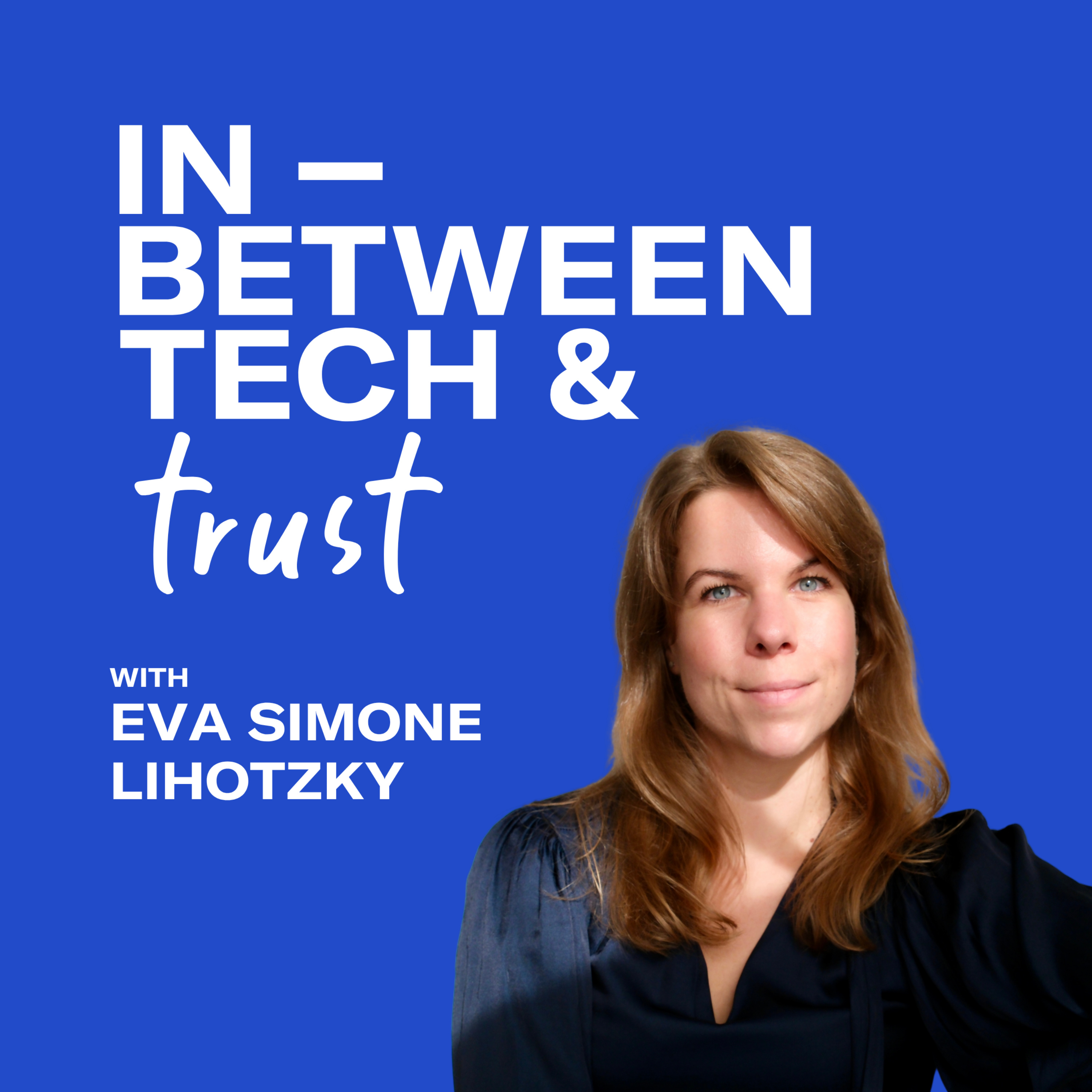
Foresight, Tech and Trust: How to Plan Ahead When The Future Stops Behaving Linearly (EP 19)
The In-Between Tech and Trust PodcastShow Notes
🎙️Prof. Dr. Heiko von der Gracht, Professor at the University of Krems
Opening Episode 19 of the in-between tech & trust podcast explores how organizations can make better decisions under uncertainty through foresight and scenario planning. In conversation with Heiko von der Gracht, professor at the University for Continuing Education Krems and long-standing practitioner of foresight practices, the discussion looks at how trust, technology, and perception shape what leaders think is possible. It is especially relevant for people working with strategy, innovation, or long-term planning in fast-moving environments.
🧭 Episode overview The conversation examines foresight not as prediction, but as a practical discipline for stress-testing assumptions and improving choices when the future is unclear. Drawing on decades of research and applied work, Heiko reflects on why uncertainty feels overwhelming today, how media and digital systems influence our perception of risk, and why traditional planning often breaks down under rapid change. The episode also looks at how trust is being reshaped by scalable, anonymous technologies, and what this means for organizations trying to act responsibly and coherently over time.
🔍 Key themes discussed Why foresight is about decision quality, not forecasting outcomes
The difference between actual uncertainty and how uncertain the world feels
How complexity and speed interact to undermine linear planning
Trust in digital environments shaped by anonymity, scale, and weak accountability
Knowledge overload, misinformation, and the loss of shared reality
Scenario planning as a strategic conversation rather than an analytical exercise
Empirical evidence that sustained foresight investment improves performance
The discussion also draws on Heiko’s involvement in global foresight and governance contexts, including work connected to the World Economic Forum and UNESCO, grounding the conversation in both research and lived practice.
More from The In-Between Tech and Trust Podcast
🎙️with Christopher Trummer, MD Venture Lab Quantum / Semicon, TUM Venture Labs
🎙️ Moran Cerf, Neuroscientist and Professor, Columbia Business School Moran Cerf, a neuroscientist and professor at Columbia Business School, studies what happens in our brains when we talk, decide and get persuaded, and lately what happens when the other side of the conversation is AI. His research shows AI can read people remarkably well: from recordings of speed dates, it predicted who liked each other better than human observers did. The same skill worries him: we raise our guard when a person tries to sell us something, but not when AI does it in much the same way.
🎙️ with Martin Soltau, Co-CEO, Space Solar Solar power collected in space and beamed down to Earth sounds like science fiction (it did to the space sector too, until reusable rockets arrived). Martin Soltau, Co-CEO of Space Solar, is building it in the UK, and he is confident about the technology: NASA demonstrated power beaming in the 1970s. The part of his timeline he can't engineer is trust: how quickly regulators and the public accept energy that comes down from orbit.
🎙️ Sten Saluveer, Growth & Innovation, Telia
🎙️ Noah Wetzel, Photographer