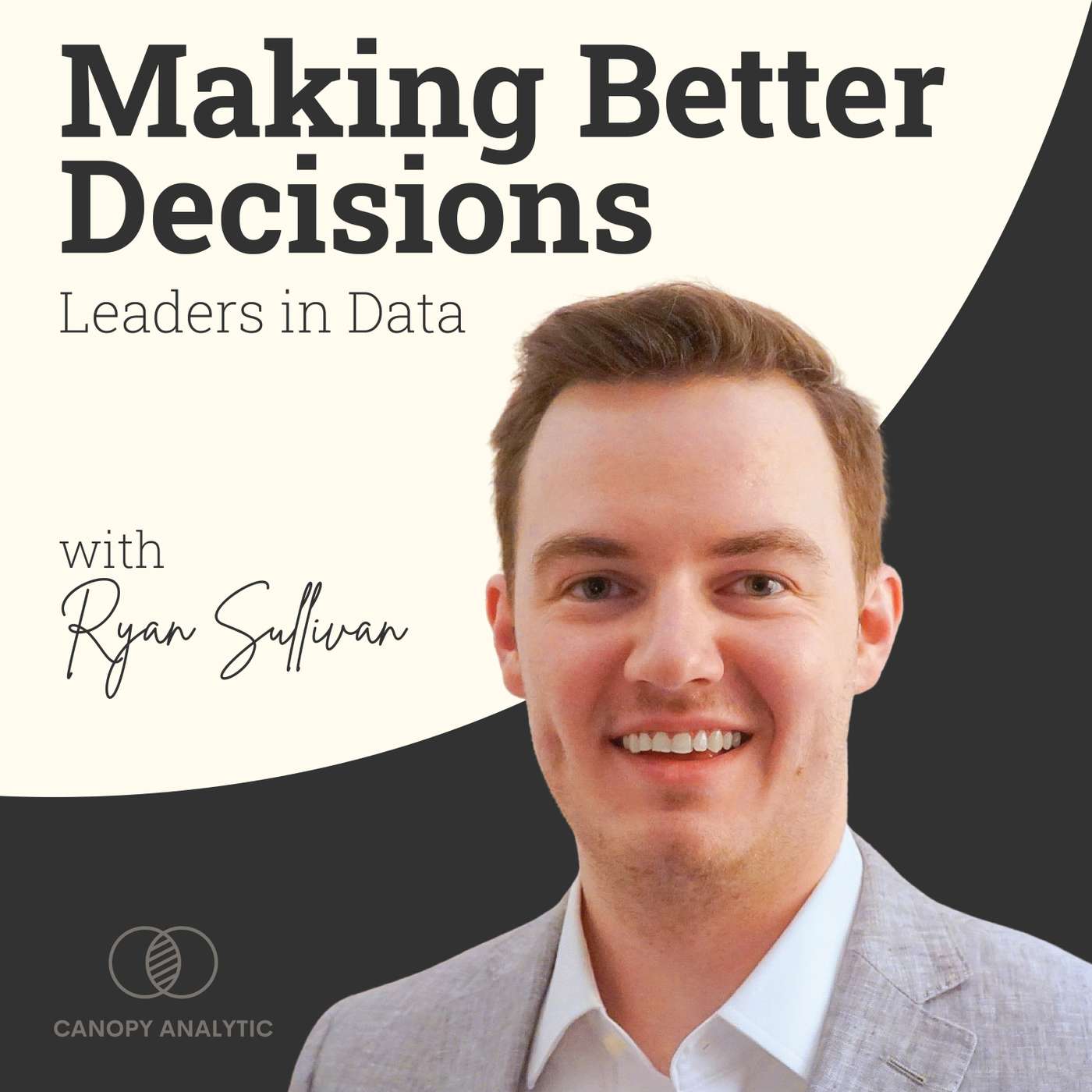
How do you use data to make better decisions? - With Some of our Favorite Guests - Making Better Decisions - Episode #26
Making Better Decisions: Leaders in DataShow Notes
In this episode, we dive deep into the art of using data to drive better business decisions with some of our favorite guests. From the challenge of compiling vast amounts of information to the thrill of discovering insights, we explore how data plays a crucial role in shaping strategies. Our guests also highlight the significance of original research in data collection, collaboration with peers to fill gaps, and how data-driven marketing can be a powerful tool for business growth. We also touch on the importance of starting with the business objectives before diving into tools and technology. Links to Episodes: - Unlocking Data Potential - Claus Torp Jensen - Making Better Decisions - Episode #20 https://youtu.be/d6fSTUNW89Y - Impactful Insights: Why Sales Data Matters - Scott Parisi - Making Better Decisions - Episode #16 https://youtu.be/bmU5DwOq0AA - Data Excellence: Strategies for Success - Zainulabedin Shah - Making Better Decisions - Episode #17 https://youtu.be/_NKgwTyMglc - Building Trust Through Data in Finance - Divyasom Malhan - Making Better Decisions - Episode #19 https://youtu.be/CxTnId0ikLo Ways to Tune In: - Spotify: https://open.spotify.com/show/6PpvYXoXjAYl8auDpmShYi - Apple Podcasts: https://podcasts.apple.com/us/podcast/making-better-decisions-leaders-in-data/id1739178505 - Amazon Music: https://music.amazon.com/podcasts/5e2ec300-0c66-4e24-8b01-0586af60235c/making-better-decisions-leaders-in-data - Podchaser: https://www.podchaser.com/podcasts/making-better-decisions-leader-5672586 - Transistor: https://www.makingbetterdecisions.live/episodes - YouTube: https://www.youtube.com/@MakingBetterDecisions/podcasts
More from Making Better Decisions: Leaders in Data
“Any business is in data business”. Arman Eshraghi, Founder and CEO of Qrvey, joins Ryan today, where they discuss looking at data as an asset to the business. Arman shares his extensive experience in the field of business analytics, emphasizing the importance of high-quality, relevant data for making impactful business decisions. The discussion covers various aspects of data strategy, including the importance of separating data collection and data utilization, the role of low-code and no-code environments, and the significance of data literacy within organizations. Arman advises leaders to embrace data-driven decision-making and explains how to cultivate a strong data culture. Additionally, he gives a glimpse into his personal interests, such as designing strategy games and hiking. This episode provides valuable insights for both technical and non-technical business leaders looking to leverage data effectively. Key Takeaways: Understand the Importance of Data Quality: Focus on maintaining high-quality data to ensure meaningful insights. Poor data quality can lead to misleading outcomes and wasted resources. Adopt a Step-by-Step Approach: Instead of trying to perfect everything upfront, adopt a phased approach and continuously refine your data strategies. Hire Data Experts: If you lack data expertise, hire someone who can effectively manage and interpret data to support business decisions. Utilize No-Code/Low-Code Tools: Empower non-technical users with no-code/low-code tools to allow them to manipulate and analyze data without needing deep technical skills. Democratize Data Usage: Give various stakeholders within the organization access to data tools, allowing them to derive insights relevant to their specific roles. Quote of the Show: “It is the worst mistake to not be data savvy today.” - Arman Eshraghi Links: LinkedIn: https://www.linkedin.com/in/aeshraghi/ Website: https://qrvey.com/ Check out our SubStack! https://substack.com/@makingbetterdecisions1
Today we niche down to discuss mortgage data and analytics. Brennan O’Connell, Director of Data Solutions at Optimal Blue joins to dive into how leveraging data can significantly enhance decision-making within the mortgage industry. The conversation touches on the importance of connecting disparate data sets, understanding market pricing relative to internal data, and effectively building a data-driven decision structure. They explore how actionable insights for mortgage originators can be derived from analyzing both internal and external datasets. The episode also highlights Optimal Blue’s Market Advantage Report and Podcast as key resources for industry insights. Key Takeaways: Understand Your Decision-Making Goals: Start with the decision in mind before delving into data collection and reporting. This ensures that all data analysis efforts are aligned with the key decisions that need to be made. Integrate Disparate Data Sets: Work towards integrating all relevant data sources into a single coherent view. This will help in making more informed and accurate decisions without the need to switch between multiple platforms or data sets. Focus on KPIs: Define clear key performance indicators (KPIs) to determine what success looks like for your organization. Communicate Reporting Effectively: Ensure that the reports generated are read and understood by the decision-makers. Simplify complex data into easy-to-understand and actionable reports. Human-Readable Reporting: Transform raw data into charts, graphs, and reports that are easy to read and interpret. This makes it easier for non-technical stakeholders to engage with the data.
“ I strongly believe that you can take a horse and attach a unicorn by training them to think differently.” Jacquie Bailey, Director of Analytics at Designit, joins the show today to discuss how best to transform a seemingly ordinary analyst into a unicorn, somebody who balances the technical and business aspects. She emphasizes the need to think beyond historical measurements to identify actionable levers that can influence future results. Jacquie shares insights on understanding three-dimensional problems in analytics, the importance of data accessibility, and how organizations can foster a data-driven culture. Key Takeaways: Think Beyond Historical Data: Emphasize the value of using data to influence future outcomes rather than just measuring past events. Encourage an analytical mindset focused on identifying actionable levers that can impact business decisions. Understand the Problem in 3D: Recognize that business problems are multi-dimensional, involving processes, people, and various factors. Ensure a thorough understanding of all components influencing the outcome. Engage with Real-World Context: Spend time understanding the real-world context of the data. This could involve activities such as walking the manufacturing floor or engaging with different departments to understand the processes being analyzed. Promote Data as a Valuable Product: Advocate for viewing data as a valuable product rather than a static asset. Highlight the potential ROI of data projects to gain better investment and resources. Plan for Future Risks: Consider the long-term sustainability of data processes, especially concerning potential retirements or layoffs. Develop resilient processes that do.
What does AI consciousness mean? Today, Stephanie Shipp, Director of Business Analytics at Beacon Building Products joins to hash out this exact question, drawing from her background in philosophy and AI. Stephanie emphasizes the importance of balancing speed, insights, and accuracy in analytics. She talks about the need for setting clear expectations with stakeholders using accuracy scores and the importance of understanding the business context. The episode concludes with a discussion on the challenges of rapid technological advancements and the need for continuous learning and skill development in analytics.
How can we effectively manage risk? Sashi Tadinada, Vice President of Actuarial and Analytics at NFP joins the show today to hash out risk management and probability. Sashi dives deep into the importance of feedback in data modeling. Sashi and Ryan discuss the common misconceptions about data models, the role of iteration, and how to effectively communicate the range of outcomes to stakeholders. The conversation also explores how businesses can prepare for catastrophic events, although rare. This episode provides valuable insights for business leaders on making informed decisions using data analytics. Key Takeaways: Prioritize Real-World Feedback: Constantly incorporate feedback from real-world data and stakeholders to improve and iterate on models and solutions. Educate Stakeholders on Model Limitations: Ensure that stakeholders understand the probabilistic nature of models to prevent misconceptions about their accuracy. Focus on Risk-Adjusted Decisions: Make decisions by weighing the potential benefits against the risks, considering both average outcomes and extreme possibilities. Educate About Probability Misconceptions: Raise awareness about common misconceptions in probability, such as underestimating high-probability events and overestimating low-probability, high-impact events. Foster a Learning Culture: Share books and resources on probabilistic and statistical thinking, like Nassim Taleb's "Black Swan," to deepen understanding among team members.