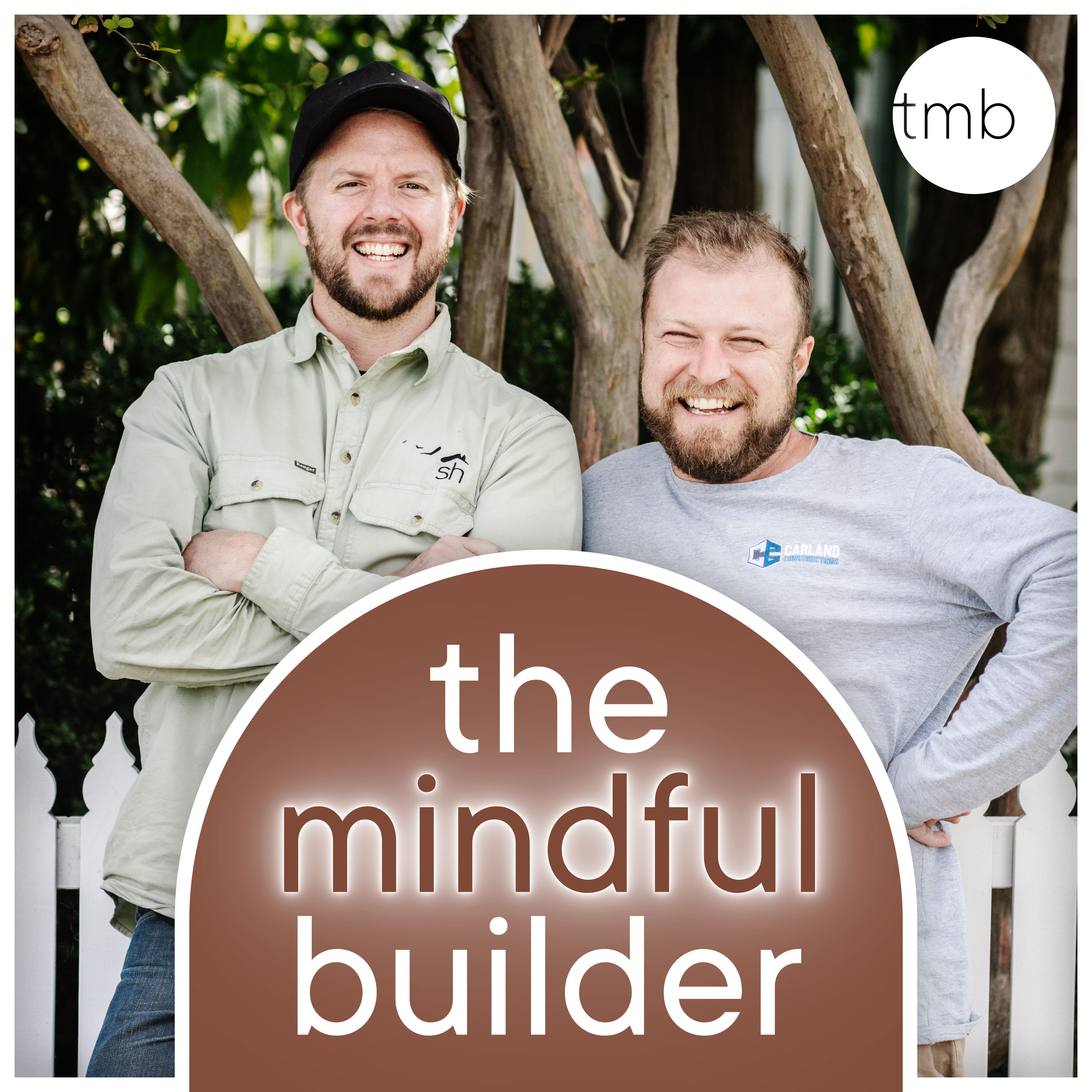
Show Notes
“Version one is better than version none.” James Brown means it in the most practical way possible for builders. A rough first system in your building business is better than no system at all. Not the perfect process. Not the spreadsheet you will build “when things slow down”. Just something written down that gets the ball rolling, so you can test it, hand it to someone else, and improve it over time. If you have ever felt like the business owns you, this conversation will feel familiar. Quoting at night, solving problems all day, trying to remember what you promised clients and trades, and living in your inbox. James runs Builders Escape and helps builders step out of that reactive loop by putting simple business systems and processes in place that make a construction business easier to run. We take a look at what systemisation actually looks like on the ground for the building industry. The goal is to make the invisible visible. Get the key steps out of your head, document them, and make them easy for your team to follow. Not a corporate manual. Just clear, repeatable processes that reduce mistakes, improve communication, and help you build a more reliable operation. James also walks through starting with your client journey from enquiry to handover, because that is where the cracks usually show up. Missed steps, repeated conversations, and tasks that rely on one person remembering everything. We also talk about AI in construction business and why it only works when your processes are clear. If you are a builder who wants better margins, fewer fires, and more time and headspace, this episode is your reminder to start with version one and iterate from there. 👇 CHAPTER MARKERS 👇 00:00 Mindful Builder Podcast Intro 01:39 Meet James Brown from Builders Escape 02:21 Freedom Through Systems for Building Businesses 03:15 Systemisation Works in Any Construction Business 04:43 Choosing Software and the EOS Operating System Metaphor 05:55 What Is a System in a Building Company? 08:09 Over-Systemising Pitfalls for Builders and Tradies 10:04 Make the Invisible Visible: Documenting Processes 16:43 Systems vs Policies vs Training in Construction Teams 19:33 Where Builders Should Start with Systemisation 20:21 Choosing a Systems Champion in Your Building Business 21:36 Time, Authority, and Empowerment for Process Ownership 22:16 Getting Your Team to Follow Systems and Processes 27:35 Why AI Still Needs Systems in Construction Operations 29:13 SystemHUB and AI Drafting for Process Documentation 32:20 Systems Champion Lifecycle and Delegation 34:29 Real Examples: How Systems Create Builder Leverage 35:07 Start With the Client Flow: Enquiry to Handover 38:20 Builder Leverage and BOFT Explained 43:00 Minimum Viable Systems for Builders: Start with Version One 46:06 Owner as Systems Architect: Leading Process Improvement 49:15 Apprentices and Spaghetti Maps: Visualising Workflow 51:51 Effective Over Efficient: What Actually Works on Site 55:02 Contact Details and Wrap Up with Builders Escape
LINKS: Builders Escape: https://www.biztechguru.com.au/builders-escape
Our Sponsors: Pro Clima - https://mindful-builder.captivate.fm/proclima MEGT - https://mindful-builder.captivate.fm/megt CR Kennedy - https://www.crkennedy.com.au/ Connect with us on Instagram: @themindfulbuilderpod Connect with Hamish: Instagram: @sanctumhomes Website: www.yoursanctum.com.au/
Connect with Matt: Instagram: @carlandconstructions Website: www.carlandconstructions.com/
More from Mindful Builder
“I couldn’t unsee it.” Jimmy from June Building explains how Passive House building science finally clicked, after learning through Instagram and then winning the Pro Clima Passive House Tradesperson scholarship. Today Jimmy flips the format and turns up with a notebook full of questions on Passive House for us. Questions around high-performance homes, airtightness, mechanical ventilation, and what actually changes when you start building for comfort, not just compliance. Jimmy’s background is classic chippy-to-builder with a few turns that matter. Apprenticeship in Ballarat, travel to Banff in Canada, then Melbourne across maintenance, commercial, and high-end residential before moving to the Northern Rivers in early 2020. He’s now in the first 12 months of June Building, building the plane while flying it, and trying to bring Passive House principles into a market where clients aren’t necessarily asking for certification, even though mould, humidity, and comfort issues are everywhere. We talk about why you shouldn’t lead with the “Passive House” label and instead start with the problems people already feel in their current home: drafts, noise, dust, mould, and rooms that never feel right. Jimmy asks what details cause the most challenges, and we go straight to retrofits, because nothing is square, nothing is level, and you don’t find the real issues until you start pulling things apart. We also get blunt about where builders underquote when they move into high-performance construction, and it’s labour, all labour, especially detailing, wraps, window installs, battens, and set-out. Jimmy also pushes on PHPP and how builders should use it. PHPP isn’t just a certification hurdle. It’s a pre-construction tool for optimising cost and performance, spotting overheating risk early, and avoiding the nightmare of delivering a “high performance home” that still feels uncomfortable to live in. If you’re a builder, architect, or homeowner curious about Passive House Australia, high-performance building, and what it takes to lift your standard without blowing your budget, this episode is a solid place to start.
You can’t build ten versions of the same house, live in them for ten years, and then pick the best one. We’re sitting down with thermal modelling specialist Cameron Munro to talk about why “model early and model often” should be a non-negotiable part of pre-construction, whether you’re chasing Passive House or just trying to build a home that actually feels good to live in. We explain what modelling is really for (direction, not perfection), how to run “what if” scenarios across glazing, insulation, shading, and floor build-ups, and why the best decisions come from cost-benefit thinking instead of intuition. We also get into the real-world gap between models and lived performance, the risk of not updating models as drawings change, and why overheating is the mistake that bites hardest when you skip the final iteration. If you want fewer ugly conversations later, this is the episode.
“At some point, someone’s paying for that tender.” Tendering sounds fair on paper. Same drawings, three builders, pick the best price, move on. But once you understand what it actually costs to price a job properly, and how tendering rewards omissions, risk loading, and variations, it starts to look less like a “market test” and more like a costly way to kick off a relationship. In this episode, Hamish and Matt break down what a tender really is, why the classic draw, bid, build model creates isolation and blame, and why negotiated tendering (paid pre-construction with clear costing stop points) changes the incentives for everyone. They also get into the uncomfortable bits architects and clients don’t always see: the real cost of tendering, why prices can come back wildly different, how gaps in documentation become legitimate variations, and why trust matters more than pretending you can compare builders like-for-like. If you’ve ever wondered why a project can look “fully resolved” and still blow out, or why builders hate competitive tendering, this one will probably ruffle a few feathers.
Good design isn’t something you look at. It’s something you live in. We sit down with James Goodlet from Altereco Design to talk about what “good design” actually means in the real world, and what a proper pre-construction process looks like when it’s done properly. We get into why comfort is more than temperature, how designers extract the details that shape the lived experience, and why due diligence and risk management need to happen before anyone starts drawing. We also break down why James brings builders in early, how he thinks about budgeting versus estimating versus contract, and why clients need clarity on exclusions and allowances instead of getting buried in noise. We talk contingency versus inflation, the feedback loop between builders and design teams that improves outcomes over time, and a simple practical fix for smoother pre-con. Whiteboard the whole timeline, agree on milestones, and make sure everyone knows who owns what. CHAPTER MARKERS 00:00 Introduction 01:27 Meet James Goodlet 02:16 Good Design Is Seen Or Felt? 03:00 Comfort Beyond Temperature (Hempcrete House) 04:12 What Comfort Actually Includes (Sound, Air, Light) 07:08 James’ Path Into Design 11:25 Why “Alter Eco” And Sustainability 12:52 Pro Clima Detail Library 14:00 Alignment First: The Real Start Of Design 17:21 The Client Questionnaire (Sleep, Routines, Storage) 21:46 Due Diligence Before Sketching 28:10 Choosing Builders Based On Fit 37:00 Budgeting vs Estimating vs Contract 42:45 Contingency And Inflation 48:22 How Designers Read Trade Breakdowns 49:00 The Feedback Loop With Interiors
A proper site visit isn’t a stroll around the block. It’s where you catch the stuff that turns into $30k surprises later. We’re back with Brad from Sanford Buildco to have a conversation about what a site visit should actually involve, and why doing it properly is one of the simplest ways to protect your time, your margin, and your sanity. We break down how our checklists differ across inner-city and rural sites, but still cover the same core categories: access, services, water management, demolition risk, and the existing building. We talk through real examples like tram and train line constraints, construction zones and parking permits, combined drains, earthenware stormwater, boundary trap upgrades, three-phase power, septic fields, and when a sump and pump becomes the only option. We also get into the stuff that catches builders out if you don’t look early: neighbour water issues you can’t control once you’re hard on the boundary, asbestos you can’t spot from photos, and demolition rule changes that can turn normal waste into hazardous waste overnight. The theme is simple: gather better information now, and you’ll have fewer ugly conversations later.