Trust Me: Talking Trusted Sources and Internet Liars in the Clearance Process
Security Clearance InsecurityShow Notes
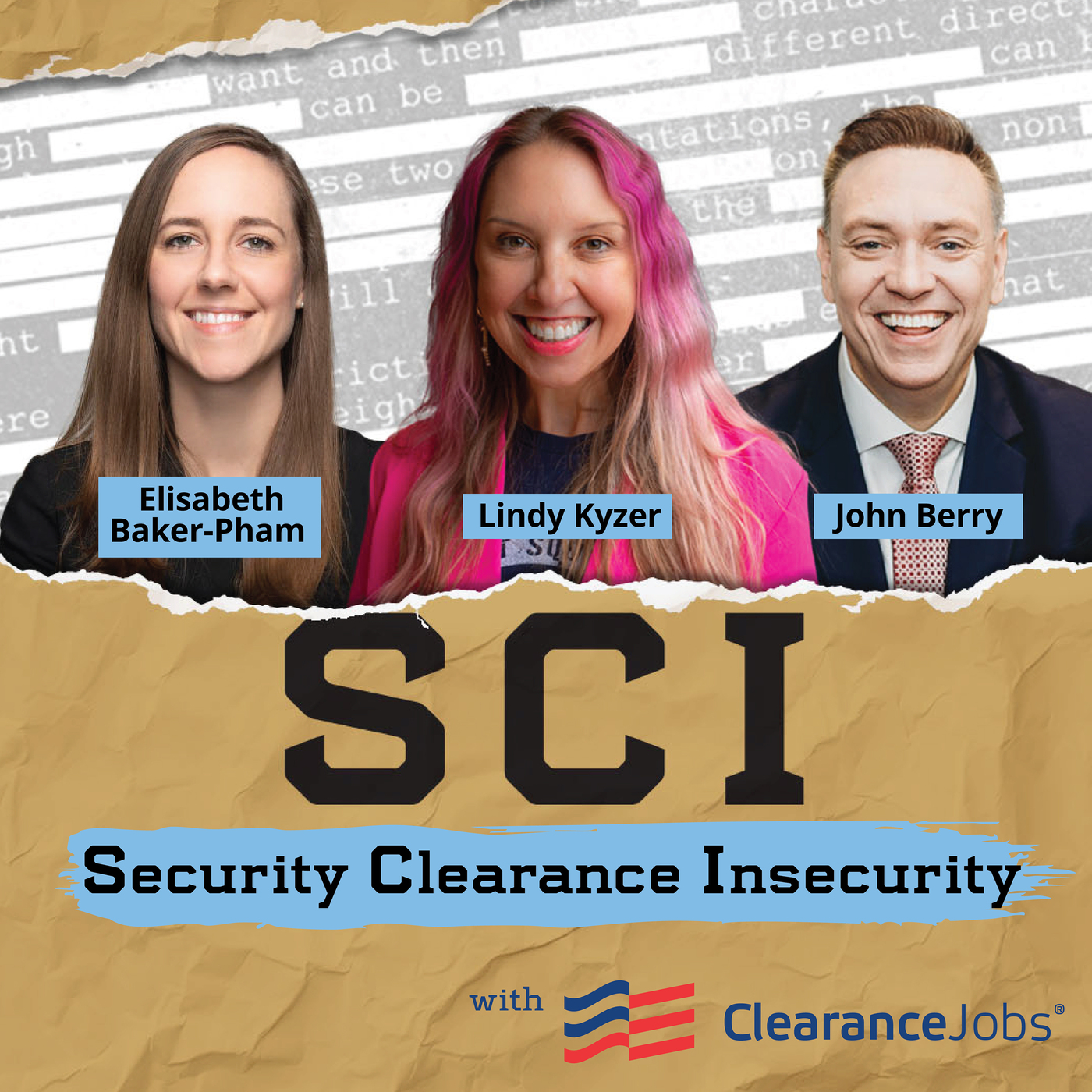
Jill Hamilton Content Director, ClearanceJobs, joins Lindy Kyzer to discuss a brand new book that discusses the history and the current realities of the Clearance process. In Trust Me: A Guide to Secrets, Lindy Kyzer tackles the wonky security clearance process in one readable resource for applicants and professionals alike. A recent Reddit post from a young applicant illustrates the stakes. The individual admitted to years of marijuana use but confessed they had already told their recruiter “no drug usage.” Unsure of how to move forward, they turned online for advice—and found the internet urging them to lie. Kyzer’s book and her broader message address exactly why that’s the wrong path. Trust vs. Fear of Disqualification For many applicants, the biggest fear is that one mistake will end their career before it begins. That fear leads to a troubling temptation: lying on the forms or to an investigator. Kyzer stresses that this fear is misplaced. The clearance process is built to account for human imperfection through something called the 'whole person' concept. What matters most is whether an individual demonstrates honesty and growth, not whether they lived without flaws. Internet Advice vs. Official Guidance The Reddit post is a case study in the dangers of relying on unofficial advice. Seventy-five percent of commenters told the applicant to lie—directly contradicting what security professionals and adjudicators would say. Kyzer points out that this disconnect is one reason she wrote Trust Me. By elevating authoritative voices and demystifying clearance rules, the book seeks to drown out the misinformation that thrives online. Marijuana and Modern Policy Marijuana remains one of the most confusing issues in the clearance world. State laws have shifted, but federal rules still apply. The applicant in this case had been marijuana-free since October, raising the question: is that enough? Kyzer emphasizes that adjudicators look for patterns, recency, and demonstrated change. While past use is not automatically disqualifying, dishonesty about that use almost always is. Building Long-Term Trust in the Clearance System The broader takeaway is clear: applicants don’t fully trust the system to be fair, and yet the system itself rests entirely on trustworthiness. Kyzer argues that closing that gap will require more than rulebooks; it will take proactive communication from recruiters, transparency from investigators, and cultural reinforcement from agencies. When honesty feels like the safer choice, both individuals and the national security community benefit.
Weigh in: Looking for a place to share your own federal stories or career advice? Visit us at FedWork, a brand new Internet forum designed for federal employees and those interested in federal work. See Privacy Policy at https://art19.com/privacy and California Privacy Notice at https://art19.com/privacy#do-not-sell-my-info.
More from Security Clearance Insecurity
Lindy Kyzer of ClearanceJobs talks with Scott Cooper, who leads policy at With Honor, about how veterans in Congress are working across party lines. Scott describes the For Country Caucus, a bipartisan group of more than 50 House and Senate members he calls "radical moderates." He talks about the caucus' role in moving the Russia Sanctions Act and about With Honor's new 13-month fellowship, which places mid-career professionals in congressional offices. The conversation also covers the civil-military divide, why security clearance reform is one of the few truly bipartisan issues on the Hill, and how Congress shapes clearance policy through the NDAA and the Intelligence Authorization Act. Scott closes by explaining why the ethos of service still matters, using a Winslow Homer painting that hangs in his office. In the second segment, security clearance attorney John Berry joins Lindy to answer a common question: can investigators see social media posts you've deleted? Usually they can't. The real risk is deleting posts to hide something that contradicts your SF-86. They also explain why scrubbing your entire online presence can look like a red flag, and what a sensible approach to privacy looks like for clearance holders and applicants. This program is for general guidance only and is not legal advice. Send your questions to [email protected]. See Privacy Policy at https://art19.com/privacy and California Privacy Notice at https://art19.com/privacy#do-not-sell-my-info.
How do we grow the pool of cleared talent instead of competing over the same people? Lindy Kyzer of ClearanceJobs talks with Jamie Jones Miller of Northeastern University, a member of the ClearanceJobs Policy Advisory Board. Jamie got her first clearance at 19 as an intern at the Defense Intelligence Agency, and she's held one through her career on Capitol Hill, at the Pentagon and now in academia. She explains how Northeastern's co-op program and industrial security team sponsor students for clearances, train future FSOs and place them with industry partners. She and Lindy also cover reciprocity problems, the push for longer eligibility timelines and a clearance ready reserve, and how to keep the human at the center as AI changes the work of intelligence analysts. Later, security clearance attorney John Berry of Berry & Berry, PLLC joins Lindy to talk about unreported foreign travel. They explain why "I'll just report it on my reinvestigation" is a mistake, what SEAD 3 requires you to report, and how continuous vetting flags travel almost in real time. They also show how a reporting lapse that seems small can add up to a personal conduct concern. Hear Jamie and more speakers in person at ClearanceJobs Connect Reston, October 15–16 at the Carahsoft office in Reston, Virginia. Register at https://about.clearancejobs.com/employers/events/clearancejobs-connect-reston. See Privacy Policy at https://art19.com/privacy and California Privacy Notice at https://art19.com/privacy#do-not-sell-my-info.
Lindy Kyzer sits down with The Cipher Brief's COO Brad Christian to preview the 10th annual Threat Conference in Sea Island, Georgia — covering AI's growing role in warfare, the widening public-private innovation gap, and the "gray warfare" tactics adversaries are using inside the U.S. homeland. Apply to attend: https://www.tcbconference.com/ Then, attorney Elisabeth Baker-Pham joins Lindy to unpack a less obvious clearance risk: how conflicts in Ukraine, Israel, and elsewhere can reignite foreign influence and foreign preference concerns (Guidelines B and C) for clearance holders whose foreign contacts were already vetted — through no action of their own. See Privacy Policy at https://art19.com/privacy and California Privacy Notice at https://art19.com/privacy#do-not-sell-my-info.
This episode of Security Clearance Insecurity covers two timely issues facing the cleared workforce. First, Lindy Kyzer talks with Mike Flanders, founder of SudoTouch, about the technology gap slowing SCI nomination processing and how automation can help security offices keep pace with Trusted Workforce 2.0's shift to continuous vetting. Then, attorney Elisabeth Baker-Pham joins Lindy to break down Guidelines B and C — foreign influence and foreign preference — and what clearance holders need to know when conflicts abroad (Ukraine, Israel, tensions with China) change how existing foreign contacts are viewed, even without any change in the clearance holder's own behavior. See Privacy Policy at https://art19.com/privacy and California Privacy Notice at https://art19.com/privacy#do-not-sell-my-info.
This episode tackles two very different but equally timely clearance issues. First, host Lindy Kyzer sits down with Andrew Lotwin, Senior Vice President of Federal at ISI and a former senior leader at DCSA, to unpack the Department of War's proposed expansion of Foreign Ownership, Control, or Influence (FOCI) requirements. The draft rule would extend FOCI disclosure obligations well beyond the traditional cleared contractor base to any contractor or subcontractor with contracts over $5 million — a change DCSA estimates could take FOCI determinations from roughly 2,000 a year to as many as 40,000. Andrew breaks down what this means for industry awareness, DCSA staffing and technology needs, the strain on the NISS system as it transitions to NISS Increment Two, and how bidders (not just contract winners) could soon be pulled into the process before award. The conversation closes with a look at broader clearance reform priorities, including reciprocity between Title 10 and Title 50 organizations and the push for more transparency in the facility clearance process. In the second half, security clearance attorney Elisabeth Baker-Pham joins Lindy to talk about the clearance risks that tend to surface every summer: overspending and vacation debt, unreported foreign travel (including the "does a cruise count?" gray area), marijuana and hallucinogen use while visiting family or relaxing in legal-use states, DUIs around holiday gatherings, and the general lapses in judgment that come with letting your guard down. With continuous vetting now catching more of these incidents in real time, they explain why self-reporting and consistent judgment matter just as much in July as they do the rest of the year. Have a clearance question or topic you'd like covered on a future episode? Email [email protected]. Want me to adjust the tone, shorten it for show notes, or draft a shorter social-friendly version too? See Privacy Policy at https://art19.com/privacy and California Privacy Notice at https://art19.com/privacy#do-not-sell-my-info.