Show Notes
Why do some CEOs run toward the hardest challenges in business?
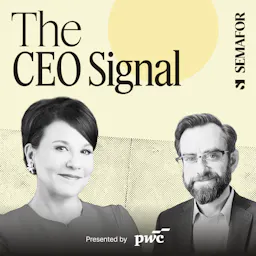
In the first episode of The CEO Signal, Starbucks CEO Brian Niccol joins hosts Penny Pritzker and Andrew Edgecliffe-Johnson to discuss the leadership mindset behind one of the most closely watched turnaround stories in global business.
Niccol has built a reputation for stepping into difficult situations. He previously led Chipotle through its recovery following the company’s food safety crisis — and before that took on struggling brands earlier in his career. Now he’s tackling a new challenge at Starbucks, a company under intense scrutiny from customers, employees, and investors.
In the conversation, Niccol explains what draws him to these moments of pressure — and how he approaches them. He describes visiting Starbucks stores multiple times a day before officially starting the job, listening to baristas and customers who felt the company had made the experience more complicated than it needed to be.
That insight became the foundation of his strategy: “Back to Starbucks.” A return to the essentials of the brand — the coffeehouse experience, the connection between baristas and customers, and simple decisions that show up clearly in the store.
Niccol also reflects on lessons from his time at Chipotle, the importance of building teams that tell the truth, how CEOs make decisions under pressure, and why technologies like AI should enhance — not replace — human connection.
About the show
The CEO Signal is Semafor’s interview platform for conversations with the global CEOs whose decisions are shaping the future of the new world economy. Hosted by Penny Pritzker and Andrew Edgecliffe-Johnson, the show explores the moments of judgment that define leadership.
Penny Pritzker
Penny Pritzker is the founder and chairman of PSP Partners and served as U.S. Secretary of Commerce from 2013 to 2017.
Andrew Edgecliffe-Johnson
Andrew Edgecliffe-Johnson is CEO Editor at Semafor and a veteran Financial Times journalist who has spent decades covering global companies and corporate leadership.
The CEO Signal is presented by PwC.
More from The CEO Signal
“What if design just ran the boardroom?”
After nearly four decades at Honeywell, Vimal Kapur reached the top — and then took on the task of breaking the 140-year-old industrial conglomerate into three companies.
“Relief or regret?” That is the question Motorola Solutions Chairman and CEO Greg Brown uses to test consequential decisions.
United Airlines CEO Scott Kirby wants to build what he calls the “undisputed flag carrier of the United States.” He argues that airlines are not commodities and that greater scale could benefit customers, but acknowledges a fundamental obstacle to consolidation: “We can’t get it done without a willing partner, and we don’t have one.”
Jon Gray, chief operating officer of the $1.3 trillion asset manager Blackstone, says one of the firm’s distinguishing habits is to “go big” when it finds a theme it believes in. But he also says successful convictions need to be challenged, particularly as Blackstone invests heavily around artificial intelligence. “You keep pressing against what you’re doing to confirm that you haven’t just sort of fallen in love,” he says.