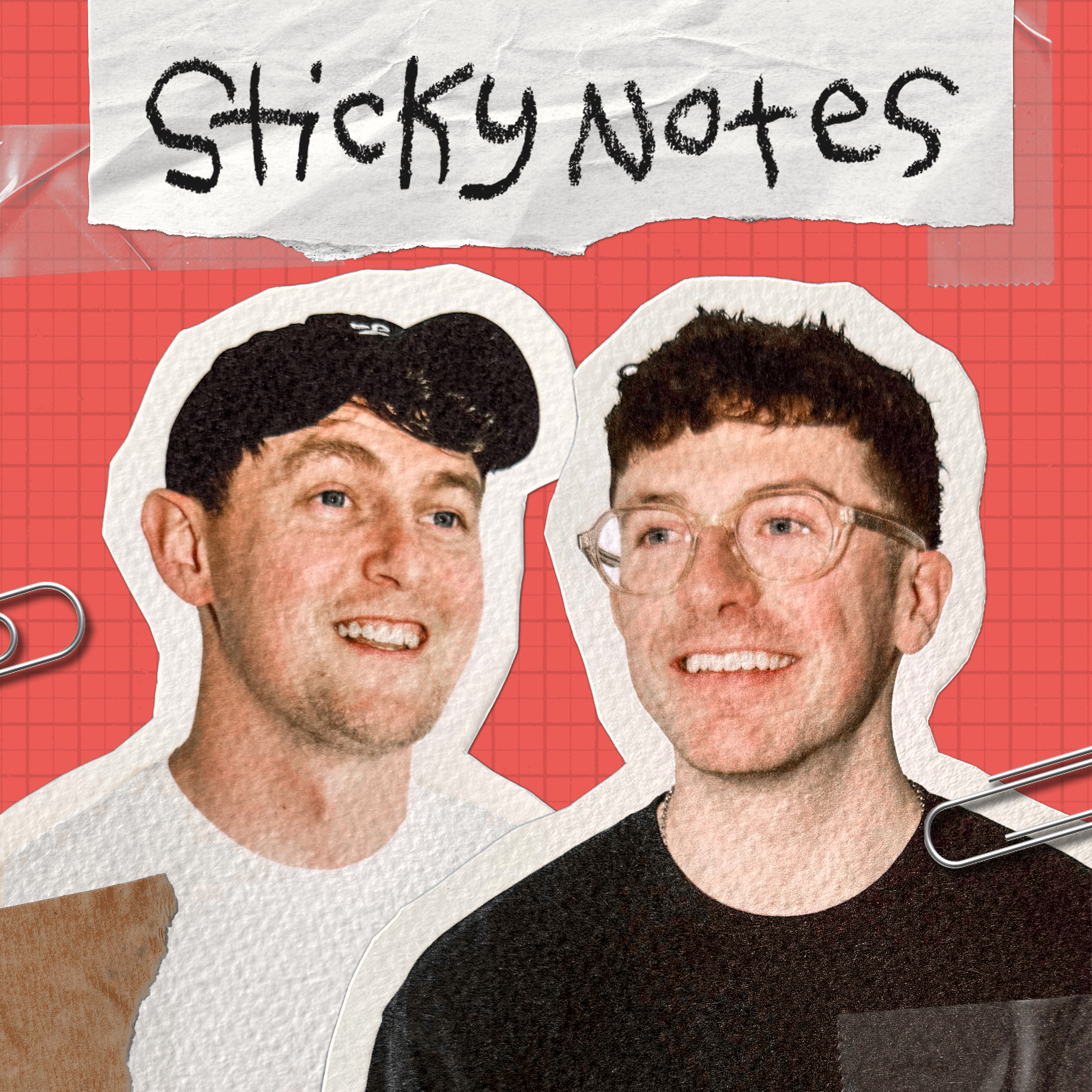
Show Notes
This week, we’re talking about how to protect yourself as a freelance designer.We're talking contracts, payment terms, scope creep, unlimited revisions and difficult clients. We get into the business side of creativity that most designers are never taught.We also share some of the biggest mistakes we made early in our careers, including the project that grew into nearly a year of work for just £4,000, and the systems and boundaries we now use to protect our time, money and creative energy.We get into:👉 Why every designer needs a proper contract👉 What should be included in your scope of work👉 How to stop clients adding “just one more thing” to a project👉 Why you should never begin work before receiving a deposit👉 How to avoid chasing unpaid invoices👉 How to handle clients who ask for discounts👉 The red flags that can reveal a nightmare clients👉 Why saying yes to everything can cost you time, money and better opportunities
More from Sticky Notes with CJ Cawley and Jack Chitty
This week, we’re asking each other the awkward questions others might not usually answer, from money and self-worth to creative process, client mistakes and whether either of us could actually be replaced on Sticky Notes.
Do you actually need a degree to become a good designer? Or can you teach yourself everything you need to know?
This week, we’re doing something a little different. No big topic or case study. Just an honest conversation about why running a creative business feels really hard sometimes. We’ve both had a few turbulent weeks recently, so we wanted to go properly behind the curtain and talk about the stuff that doesn’t normally make it onto Instagram: unpaid invoices, difficult client conversations, financial pressure, changing expectations around AI, slower leads and the constant pressure of having to go out and earn every single pound again next month.
This week, we’re going behind the scenes of one of CJ’s favourite brand identity projects to date: the complete rebrand of Mike Lane.
This week, we’re doing something a little different and playing a game of Would You Rather: graphic design edition. Some of the questions are stupid. Some get surprisingly deep. And a few reveal far more about how we think as designers than either of us probably expected.