Show Notes
The climate crisis is not one problem. It is a crisis of water, food, energy, language, justice and power - all colliding at once. So how do we respond when climate solutions create new trade-offs of their own? And are we even using the right words to describe what is happening?
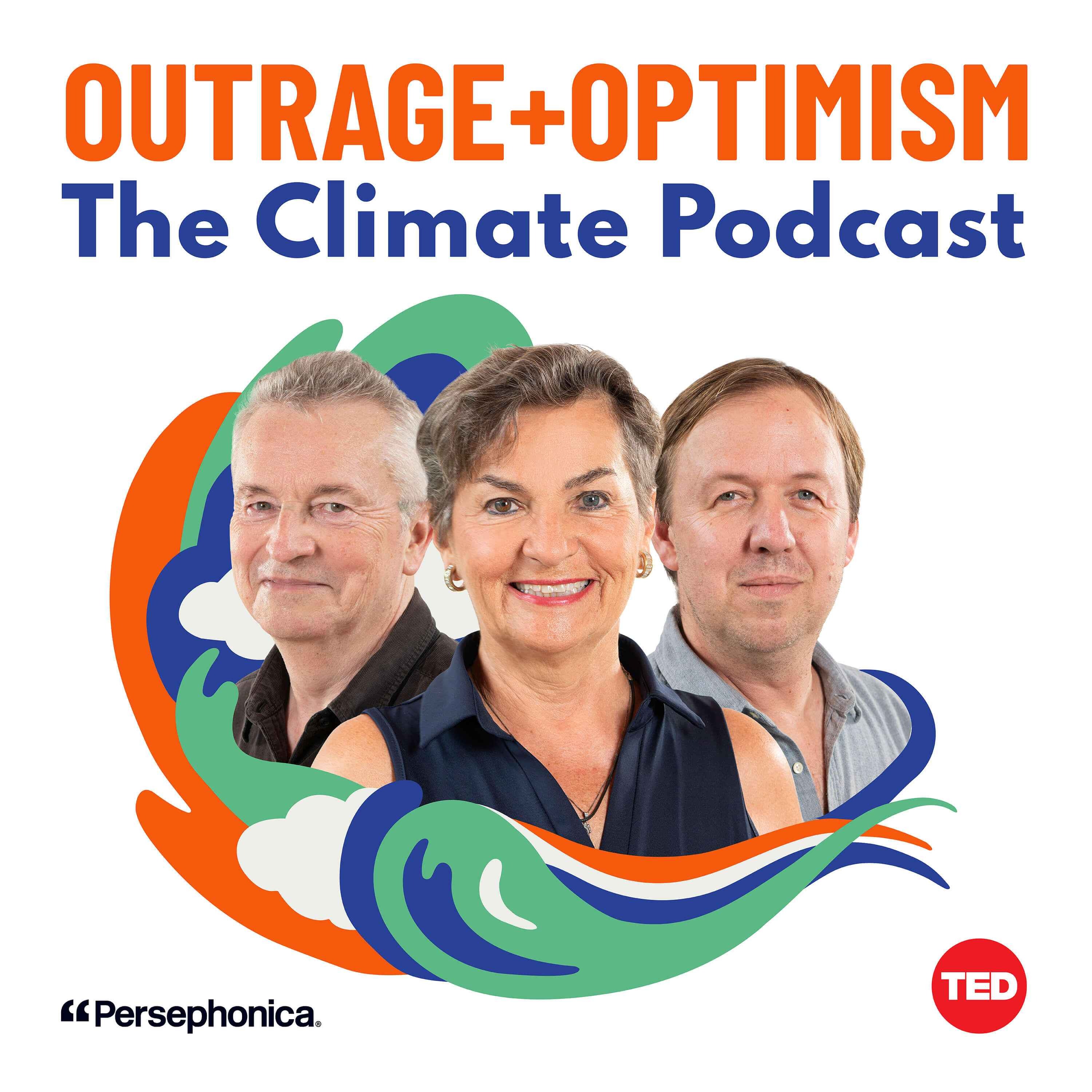
In this episode, Christiana Figueres, Tom Rivett-Carnac and Paul Dickinson take on some of the knottiest questions in climate. From water stress and biodiversity loss, to geoengineering, public understanding, and the language of urgency itself. What gets overlooked? What gets simplified? And how do we navigate increasing complexity in the middle of a worsening crisis?
We don’t have all the answers. But as our choices grow harder, these are some of the questions that demand our attention.
Learn More:
💧 Dive into Why Water Matters from the UNFCCC 🦅 Explore how solar and wind energy producers can mitigate impacts on biodiversity 🎧 Listen back to last year’s episode unpacking some of climate’s most common acronyms ☁️ … or return to our most recent episode on geoengineering with Politico’s Karl Mathiesen
🎤 Leave us your voice notes and questions for upcoming episodes on SpeakPipe
Join the conversation: Instagram @outrageoptimism LinkedIn @outrageoptimism Or get in touch with us via this form.
Producer: Ben Weaver-Hincks Edited by: Miles Martignoni Planning: Caitlin Hanrahan Exec Producer: Ellie Clifford
This is a Persephonica production for Global Optimism and is part of the Acast Creator Network. Hosted on Acast. See acast.com/privacy for more information.
More from Outrage + Optimism
In Digger, Tom Cruise plays an oil tycoon whose rig sets off a tsunami. Within days of release, it was written off as a flop. Christiana Figueres has seen it twice, and she has questions about how quickly that verdict arrived. As she sees it, the film puts the fossil fuel lobby squarely in the frame.
Before she was Christiana Figueres, architect of the Paris agreement, who was she? What did believe in 2015 that she no longer believes?
A ship rams a canoe. The canoe starts to sink. The ship's crew lean over the rail and offer a loan to repair it.
Net Zero was once a radical idea. Now it’s both an accepted global target, and an increasingly toxic political faultline.
The news cameras may be following rising tensions between President Trump and President Pezeshkian of Iran, but deep in the bowels of the United Nations, fifteen countries are about to choose, in private, the person who speaks for 8 billion people.