Show Notes
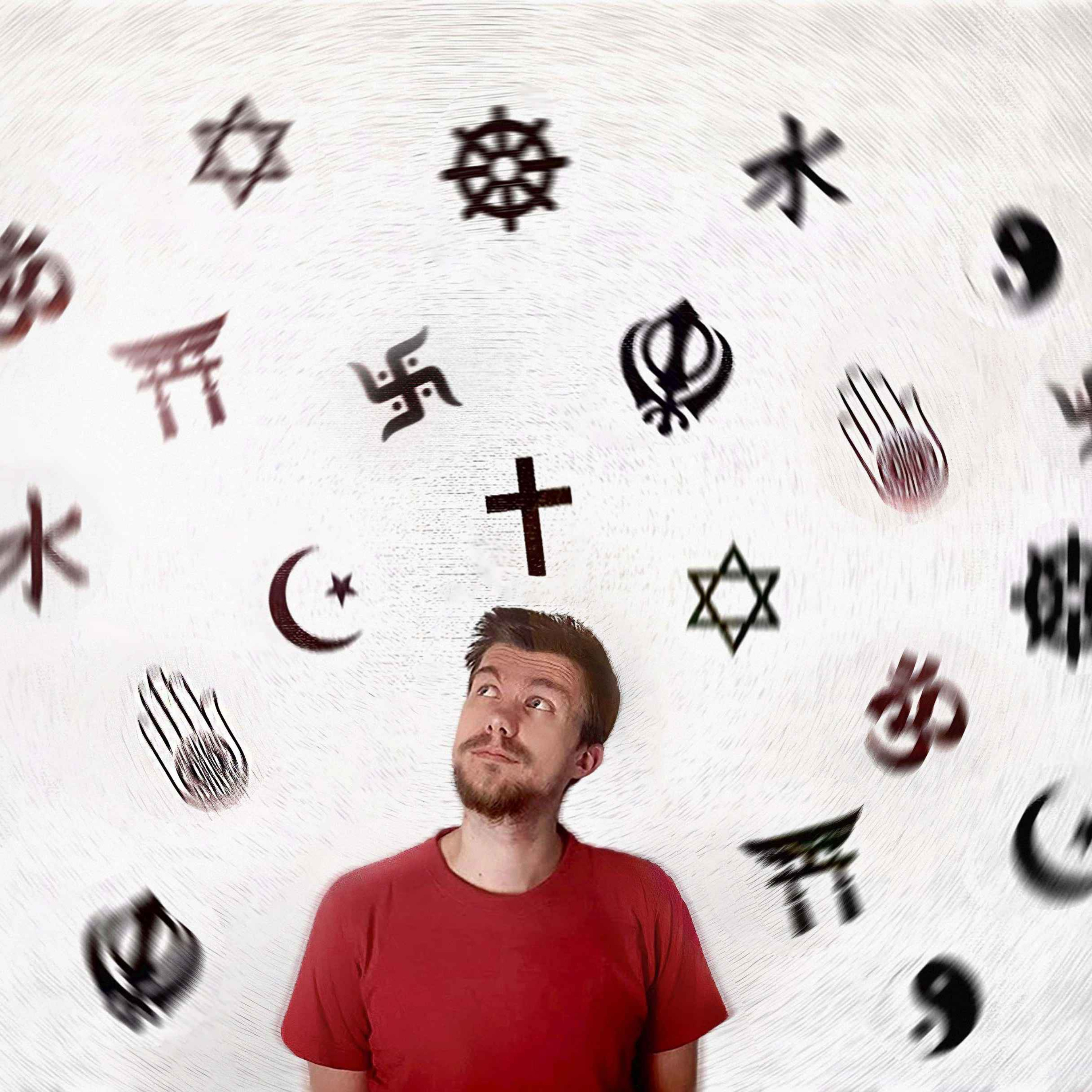
Nicholas of Cusa was a 15th-century philosopher, theologian, and mathematician whose ideas anticipated modern science and philosophy. In this video, we explore his life, key works, and radical concept of “learned ignorance,” as well as his views on infinity, knowledge and religious diversity. Discover why this forgotten medieval thinker still matters today.
Find me and my music here: https://linktr.ee/filipholm
Support Let's Talk Religion on Patreon: https://www.patreon.com/letstalkreligion Or through a one-time donation: https://paypal.me/talkreligiondonate
Sources/Recommended Reading:
Bond. H. Lawrence (edited and translated by) (1997). "Nicholas of Cusa: Selected Spiritual Writings". Classics of Western Spirituality Series. Paulist Press.
Hopkins, Jasper (translated by) (1986). "NICHOLAS OF CUSA’S DE PACE FIDEI AND CRIBRATIO ALKORANI". Second edition. THE ARTHUR J. BANNING PRESS MINNEAPOLIS.
McGinn, Bernard. "The Presence of God" Series, in several volumes. Perhaps the best and most comprehensive introduction to Christian mysticism. Published by Crossroad Publishing Co.
Valkenberg, Pim (2011). "Sifting the Qur’an: Two Forms of Interreligious Hermeneutics in Nicholas of Cusa". In "Interreligious Hermeneutics in Pluralistic Europe", Currents of Encounter Online, Volume: 40. Brill. Hosted on Acast. See acast.com/privacy for more information.
More from Let's Talk Religion
Iblis (Satan) refused to bow to Adam, and the Qur’an condemns him for it. But some of the most daring Sufi mystics read that refusal very differently: as the act of a perfect monotheist and a tragic lover who would not bow to anything but God, even at the cost of eternal separation. In this video we explore how Iblis was reinterpreted in Islamic mysticism, from Mansur al-Hallaj’s Kitab al-Tawasin to the Persian “School of Love” (madhhab-i ‘ishq) of Ahmad Ghazali and ‘Ayn al-Qudat Hamadani.
What is the Anqa? In this episode we explore the Anqa (عنقاء), the elusive, legendary bird of Arabic and Islamic tradition, often compared to the phoenix and the Persian Simurgh. We look at its origins in pre-Islamic Arabian lore, the story of how it vanished from the world, and how "the Anqa of the West" (ʿanqāʾ mughrib) became a proverb for something that exists in name but can never be found. We also trace how Sufi mystics like Ibn ʿArabi and Farid al-Din ʿAttar turned this mythical creature into a powerful symbol of the hidden, the unknowable, and the divine.
In this episode, we explore the fascinating history of alchemy in the Islamic(ate) world, from the writings of Jabir ibn Hayyan, to the Emerald Tablet, Abu Bakr al-Razi & the Sufis.
Ibn 'Arabi's famous "Religion of Love" verses are some of the most striking lines in Islamic mysticism - a declaration that the heart can take the form of every temple, church, and shrine. In this episode, we do a deep dive into the poem itself, its context in the Tarjuman al-Ashwaq, and what it reveals about Ibn 'Arabi's views on love, God, and universality in Sufi thought.
The House of Wisdom (Bayt al-Hikma) is one of the most mythologized institutions in history, but what do the actual medieval sources say? In this video, we separate legend from evidence, tracing what the House of Wisdom really was in Abbasid Baghdad & what role it played in the translation movement.