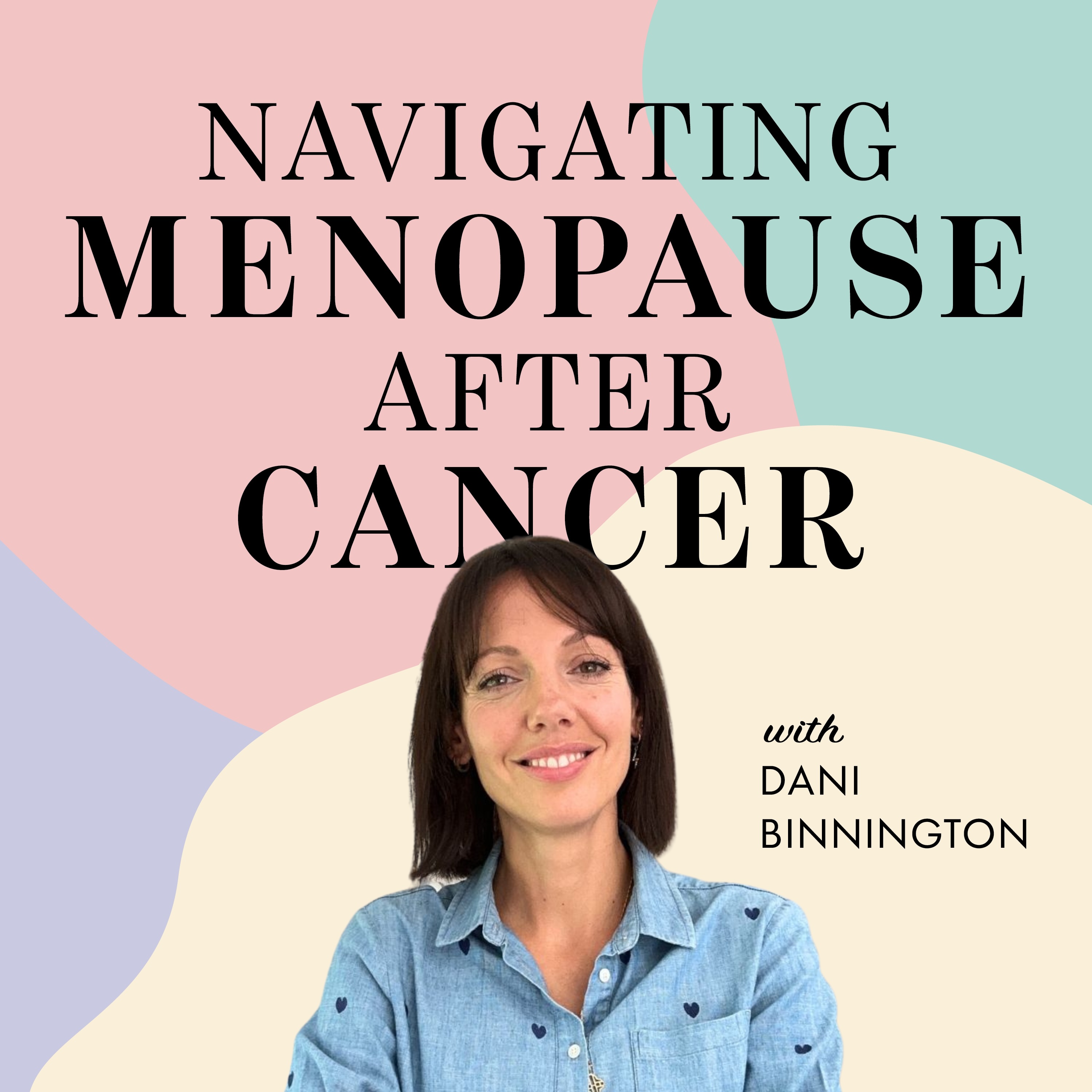
Episode 223 - Four Years, Hundreds of Conversations and One Big Question: What's Next?
Navigating Menopause After CancerShow Notes
Four years ago, I sat down and recorded the very first episode of The Menopause and Cancer Podcast. At the time, I had no idea what I was doing. I didn't know whether anyone would listen, whether I'd make it past a handful of episodes, or that four years later I'd still be here, talking to you every single week. What began as a simple idea, to create the menopause resource I desperately wished I'd had after cancer, has grown into something far bigger than I ever imagined. Over the last four years, we've shared hundreds of conversations with incredible experts, survivors, partners, advocates and healthcare professionals. Together we've explored symptoms, treatments, relationships, intimacy, identity, mental health, grief, hope and everything in between. The podcast has opened doors I never expected. It has led to friendships, opportunities, a bestselling book, healthcare professional training, events, retreats and the growth of Menopause and Cancer into a global movement. But perhaps the greatest gift has been you: your emails, messages and stories. Hosting this podcast has been one of the greatest privileges of my life. And the truth is, I think the podcast has changed me just as much as it has helped others. Over the last four years, life has changed, too. My daughters have grown up. I've become a founder, an author and somehow a CEO. I've gained confidence in some areas and lost it in others. I've learned new skills, made mistakes, changed my mind, needed reading glasses and realised that growth rarely happens in a straight line. Recently, I've been reflecting a lot on identity. For years, I was a yoga teacher. Then an advocate. Then a founder. Now a CEO. And yet, if I'm honest, I don't always feel like any of those labels fully fit anymore. Maybe you've felt that too? Are we constantly in transition? Perhaps that's why this moment feels important. Not because we've reached four years, but because it feels like the beginning of a new chapter. I've recently started a new project called Still Becoming: a kind of blog, and in many ways, this is how it all started for me. It's a space where I can share some of the conversations that don't always fit neatly into a Menopause and Cancer podcast episode: reflections on identity, motherhood, relationships, intimacy, purpose, building a charity and navigating all the messy, beautiful parts of being human. And because this next chapter isn't just about me, I'd love your help. I've created a short listener survey to help shape the future of the podcast. What have you loved? What has helped? What conversations are missing? What would you like more of? I'll also be inviting a small group of listeners to join me on a Zoom call on 9th July at 5pm so we can talk about the future together. For now, though, I simply want to say thank you. Thank you for listening. Thank you for showing up. Thank you for sharing your stories. Thank you for trusting me with them. Links Mentioned The Next Chapter - Shape the future of the show with me: https://forms.gle/cQ36jKzDFqY2p3qy6 Join my blog ‘Still Becoming’ on Substack: https://substack.com/@danibinnington?r=1osz6a&utm_campaign=profile&utm_medium=profile-page Buy the book “Navigating Menopause After Cancer” https://amzn.eu/d/0fPhc0tt Episode Highlights: 00:00 Intro 03:35 Discovering Menopause Support Needs 09:20 Writing ‘Navigating Menopause After Cancer’ 13:00 The importance of audience feedback 14:57 Kate's experience with menopause and cancer 20:27 Navigating life after cancer 21:27 Still Becoming: Embracing Multiple Identities 25:07 Listener feedback session invitation 28:14 Podcast future plans announcement Connect with us: For more information and resources, visit our website: www.menopauseandcancer.org Follow us on Instagram @menopause_and_cancer Find us on YouTube: http://www.youtube.com/@NavigatingMenopauseAfterCancer Join my NEW blog ‘Still Becoming’ on Substack: https://substack.com/@danibinnington?... Buy my book ‘Navigating Menopause After
More from Navigating Menopause After Cancer
Protein, sugar, soya, supplements, inflammation… what should we actually be eating when we're navigating menopause after cancer? Cancer treatment can bring on menopause earlier than expected, and suddenly we're dealing with a whole new set of challenges. Weight changes, hot flushes, bone health, cholesterol, fatigue and brain fog — all while wondering whether what we eat might affect our long-term health or risk of cancer recurrence. And with so much conflicting nutrition advice out there, it's easy to feel completely overwhelmed! In this episode, I'm joined by returning guest, nutritionist and now bestselling author (!!) Julie, to cut through the confusion and help us understand what really matters when it comes to eating well in menopause after cancer. We're playing a game of Yes, No or Maybe?, tackling some of the questions we hear most often: Can changing our diet really make a difference to our health after cancer? If we're already eating healthily, do we need to change anything when menopause hits? Does the type of cancer we've had affect what we should eat? Do we need different diets for our bones, cholesterol, heart health and menopause symptoms? Does sugar really feed cancer? Is soya safe after cancer? What about red meat and dairy? Are there supplements we should be taking — or avoiding? And do we still need nutrition books in the age of AI and social media?!
This week I’m joined by my lovely friend and community member Jenny Costelloe, alongside oncologist Dr Eleonora Teplinsky, to talk about something I know so many of you will relate to: weight changes after cancer treatment, the struggle to lose weight during ongoing treatment, and the growing conversation around GLP-1 medications. But this episode is really about much more than weight. It’s about what happens when cancer treatment, menopause, joint pain, changes to your body and quality of life all collide – and how we begin to work out what might actually help. Jenny shares her breast cancer story and talks very honestly about the impact surgical menopause and endocrine therapy have had on her body and her life. At one point, she describes feeling almost physically broken – dealing with weight gained through chemotherapy and treatment, reduced mobility and persistent pain that was making everyday life increasingly difficult. We also hear from board-certified oncologist Dr Eleonora Teplinsky, who helps us understand the emerging evidence around GLP-1 medications after cancer, what we know and still don’t know, and why conversations about weight, metabolic health, symptoms and being able to stay on cancer treatment really matter. And I love something Jenny says during our conversation: “This is just about finding the path that works for you individually.” I couldn’t agree more.
Everyone’s Talking About Creatine. But Should Cancer Survivors Take It? Creatine seems to be everywhere right now. But what actually is it, what can it do for our strength and muscle, and the big question for this community: is it safe to take after cancer, and can it help with symptoms of menopause? Today I have two brilliant experts to help us understand both the potential benefits and the safety of creatine after a cancer diagnosis. First, you'll hear from Dr Eleonora Teplinsky, medical oncologist, who helps us unpack what we currently know — and importantly, what we still don't know — about creatine and cancer. The evidence specifically in people affected by cancer is still limited, so this is an important part of the conversation. Then I'm joined by Sarah Newman, oncology exercise specialist and founder of Get Me Back, to take the conversation into the practical world of exercise, strength and recovery after cancer. We talk about what creatine actually does, why maintaining muscle matters so much as we age and go through menopause, and why resistance training is such an important part of the picture. We also get practical: Do you have to lift heavy weights? How often should we be strength training? Can creatine help if you're not an athlete? What type should you take? Does it cause weight gain? And where should someone start if cancer treatment has left them feeling weak, exhausted or simply disconnected from exercise? Because this isn't really an episode about taking a scoop of powder. It's a conversation about rebuilding strength after cancer, understanding our bodies, and finding out what might genuinely help us feel stronger again. Episode Highlights: 00:00 Intro 04:37 Building healthy habits step-by-step 08:13 Building strength after cancer treatment 10:46 Discussing exercise and creatine use 14:59 Importance of diet and recovery 16:54 Concerns about effective muscle maintenance 22:58 Creating supportive exercise spaces 26:34 Rebuilding muscle after chemotherapy 27:57 Incorporating exercise for bone health 32:37 Benefits of strength training 34:30 Supporting diverse health needs
What if tamoxifen and aromatase inhibitors weren’t the only options? For many people with hormone receptor-positive breast cancer, endocrine therapy can be lifesaving – but it can also be incredibly difficult to live with. Joint pain, sleep problems, sexual health changes, bone health, weight and metabolic changes can all have a significant impact on day-to-day life. And for some, the question becomes: what else is there? In this episode, Dani is joined by oncologist Dr Eleonora Teplinsky, author of Beyond the Pink: Navigating Life, Health, and Breast Cancer, to explore the changing landscape of breast cancer treatment and survivorship. One of the big topics is SERDs – a newer generation of endocrine therapies that are creating a lot of interest in the breast cancer world. What are they? How are they different from tamoxifen and aromatase inhibitors? What did we learn from the LIDERA study? And could having more endocrine treatment options eventually make a meaningful difference for patients struggling with side effects? But, as always, this isn't only about the science. Dani also sits down with Rachel Bowman, breast cancer survivor and Director at Menopause and Cancer, to mull over what all of this actually means when you’re the person taking these treatments Dr Teplinsky also shares the thinking behind her new book, Beyond the Pink, which brings together evidence-based, practical information about the questions people often don't have enough time to explore during an oncology appointment. Here are the links mentioned in this episode: Find Dr Teplinsky’s new book here: https://www.waterstones.com/book/beyond-the-pink/eleonora-teplinsky/9781538777145 Watch this Substack video with Dr Teplinsky on Serds: https://drteplinsky.substack.com/p/ob-gyn-x-oncologist-session-2-asco Episode Highlights: 00:00 Introduction 04:31 Discussing rising early-onset cancers with Dr Teplinsky 09:05 Discussing limitations of current treatments 11:46 Uncertainty with new treatments 16:26 Acknowledging emotional struggles post-chemo 19:10 Evolving breast cancer treatment 22:07 Cancer treatment advancements discussion with Rachel 24:06 Discussing cancer drug availability 28:17 Managing menopause and cancer treatment 31:52 HRT journey in Dubai 36:08 Encouragement for endocrine therapy patients Connect with us: For more information and resources, visit our website: www.menopauseandcancer.org Follow us on Instagram @menopause_and_cancer Find us on YouTube: http://www.youtube.com/@NavigatingMenopauseAfterCancer Join my NEW blog ‘Still Becoming’ on Substack: https://substack.com/@danibinnington?... Buy my book ‘Navigating Menopause After Cancer’: https://amzn.eu/d/07dUoYBb Join our Facebook group: www.facebook.com/groups/menopauseandcancerchathub
After more than 200 episodes of conversations with doctors, researchers, therapists, cancer specialists and, most importantly, people navigating menopause after cancer themselves, I’ve learned a lot. Last week, a dream came true, and we hosted our first global menopause and cancer conference for healthcare professionals - and so for this episode, I’m doing something a little different. I’m sharing five things I now know to be true (I know, a bold statement!) about menopause after cancer. Things I’ve learned at the conference and things I’ve learned over the years. You might disagree with me - but here are mine (for today anyway!): There is rarely one “right” answer. Especially when it comes to HRT after cancer, risk and personal choice. Treatment shouldn't mean simply putting up with everything. We need to talk about the impact of treatments such as tamoxifen and aromatase inhibitors — and what can be done to help. The things that might sound “small” can have an enormous impact. Hair, vaginal and bladder symptoms, painful sex, body changes — these things matter. Menopause after cancer isn't just physical. Anxiety, sleep, confidence, relationships, identity and that feeling of “Who am I now?” There is almost always something we can do. We need to look beyond the medical and expand our thinking. From non-hormonal medications and symptom-specific treatments to movement, sleep, psychological support, lifestyle and community — often it's about finding your own combination of things that help. Episode Mentions: Episode 74 - Why Would a Menopause Specialist Who Had Breast Cancer Take HRT? Episode 71 - Combat Hair Issues in Menopause After Cancer Episode 75 - From Anxiety to PRSD with Dr Nina Fuller-Shavel Episode Highlights: 00:00 Intro: Four years of podcasting milestones 04:48 Reflection on September's new beginnings 12:47 Discussing treatment after cancer 17:08 Podcast impact on cancer treatment 27:31 Struggling with menopause and mental health 29:34 Finding support in online groups 34:46 Navigating menopause after cancer Connect with us: For more information and resources, visit our website: www.menopauseandcancer.org Follow us on Instagram @menopause_and_cancer Find us on YouTube: http://www.youtube.com/@NavigatingMenopauseAfterCancer Join my NEW blog ‘Still Becoming’ on Substack: https://substack.com/@danibinnington?... Buy my book ‘Navigating Menopause After Cancer’: https://amzn.eu/d/07dUoYBb Join our Facebook group: www.facebook.com/groups/menopauseandcancerchathub