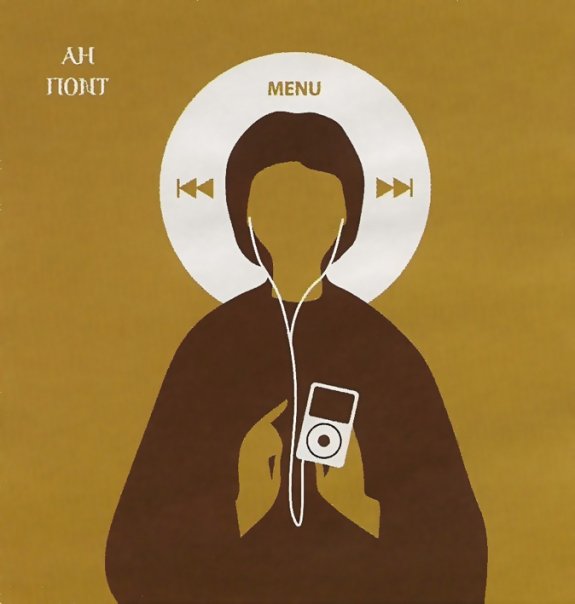
161. The politics of ignorance between theology and imperial power, with Lea Niccolai
Byzantium & FriendsSummary
Recent discussions in the field of pre-modern disease scholarship highlight a contrast between historical understandings of pandemics and contemporary experiences, particularly in light of the COVID-19 pandemic. Scholars often assert that individuals in pre-modern times lacked knowledge about the causes and mitigations of disease. However, some historians, like Procopius of Caesarea, challenge this notion by documenting their ignorance without resorting to speculative or moral interpretations. Procopius's account of the plague during the reign of Justinian emphasizes that the disease indiscriminately affected both virtuous and wicked individuals, suggesting a more nuanced understanding of ignorance as a scientific position.
Lea Nicolai, a professor at the University of Cambridge, explores the dynamics of knowledge and authority in the context of uncertainty, particularly in the fourth century. Her work delves into how emperors and bishops navigated their respective authorities amidst theological disputes and the complexities of ignorance. Nicolai's forthcoming edited volume, "Not Knowing in Classical Antiquity," aims to examine how ancient societies grappled with the concept of ignorance across various domains, including medicine and rhetoric.
The conversation also touches on the political implications of ignorance, particularly for rulers who relied on religious authority to legitimize their power. The relationship between emperors and bishops, especially following Constantine's conversion to Christianity, illustrates a tension where emperors sought to assert authority while simultaneously deferring to ecclesiastical expertise. This dynamic raises questions about the nature of knowledge and the legitimacy of authority in both ancient and modern contexts, suggesting that the struggle with ignorance remains a relevant theme in contemporary discourse.
Show Notes
A conversation with Lea Niccolai (University of Cambridge) on the challenge faced by emperors and theologians who claimed authority on the basis of their religious positions while simultaneously admitting that the truth about God lay beyond reach. How did they cope with this self-professed ignorance or deploy it as an asset in polemics, e.g., against heretics who presumed to know too much? The conversation is based on Lea's contributions to a forthcoming volume, co-edited with Giulia Maltagliati and entitled Not Knowing in Classical Antiquity: Discourses of Ignorance in the Greco-Roman World (Cambridge University Press).
More from Byzantium & Friends
A conversation with Derek Krueger (University of North Carolina at Greensboro) on homoerotic language and imagery in the works of Symeon the New Theologian (eleventh century). These passages are unusual enough that earlier editors and scholars were made uncomfortable about them. We discuss their devotional context but also the broader context of homoeroticism and homophobia in the monastic world of that time. The conversation is based on Derek's recent monograph, Monastic Desires: Homoeroticism, Homophobia, and the Love of God in Medieval Constantinople (Cambridge University Press 2026).
A conversation with Naomi Pitamber (Clark University) about the art and architecture of the empire of Nicaea (Nikaia), the convention name of the Roman state that emerged in Asia Minor after the disaster of 1204. This art is often overlooked by scholars and overshadowed by the Palaiologan "Renaissance" that supposedly kicked in after the return to Constantinople in 1261. Naomi casts that development as a continuation of the art of Nikaia in her recent book Byzantium and the Landscapes of Loss: The Recreation of Constantinople in the Laskarid and Palaiologan Eras (Cambridge University Press 2026).
A conversation with Christopher Bonura (Mount St. Mary's University) about the apocalyptic tradition of identifying the Four Kingdoms prophesied in the Book of Daniel. Which one was the Roman empire? The fourth, scheduled to fall with the others, or something that came afterward (a tradition sometimes called imperial eschatology)? Among other topics we discuss Eusebios of Caesarea and the reign of Herakleios as possible turning points in this tradition. Christopher has published a monograph on one of the most important of these texts: A Prophecy of Empire: The Apocalypse of Pseudo-Methodius from Late Antique Mesopotamia to the Global Medieval Imagination (University of California Press 2025), though our discussion focuses more on two articles, 'Eusebius of Caesarea, the Roman Empire, and the Fulfillment of Biblical Prophecy,' Church History 90 (2021) 509-536; and 'Eschatology and Apocalypticism in the Age of Heraclius,' forthcoming.
A conversation with Jeremy Swist (Michigan State University) on the emperor Julian (361-363 AD) and how he tried to combine his love of philosophy with ruling the Roman empire. We talk about why Julian continues to excite such passions, how in some ways he may have been more Roman than Greek, and how he read Roman history in light of the theurgical Neoplatonism that he espoused. The conversation is based on Jeremy's recent book, Julian Augustus: Platonism, Myth, and the Refounding of Rome (Oxford University Press 2025).
A conversation with Charlie Kuper (University of Tennessee, Knoxville) about the Menologion of Basil II, a lavishly illustrated manuscript pairing brief notices about the saints with images of them and their ordeals, arranged according to the liturgical calendar. We talk about how this manuscript was made and how it can be read, specifically the texts in relation to the images. Charlie has just reedited those texts and made them available in translation in the DOML series (vol. 89): The Menologion of Basil II (2025). For a digitized version of the entire manuscript (Vat.gr. 1613), where you can see the images as well, go here. Look around in it, skim it, zoom in, enjoy!