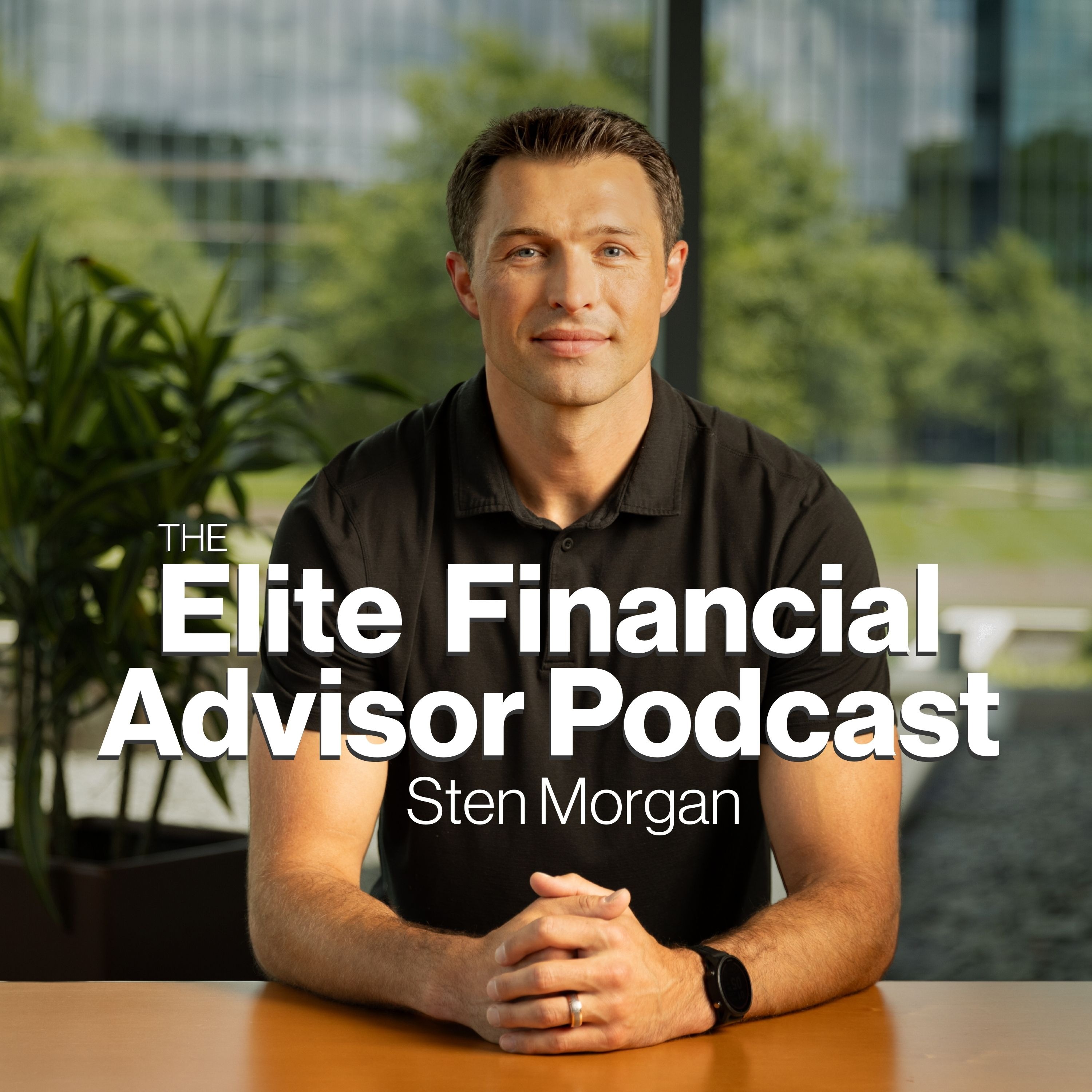
216 How to Strengthen Your Legacy with a Letter: Blake Brewer
The Elite Financial Advisor Podcast With Sten MorganShow Notes
In this episode, Sten Morgan sits down with Blake Brewer, the founder of Legacy Letter, who’s on a mission to help one million people write a meaningful, lasting letter to the people they love most. Blake shares the moment that shaped his entire life: at 19, while snorkeling with his dad in Hawaii, his father drowned in treacherous waters. Hours later, Blake’s mom handed him a letter his dad had written for him—words that brought comfort, clarity, peace, and direction when he needed it most. That legacy letter didn’t just help Blake grieve—it helped him grow. Years later, as a father himself, Blake realized writing a letter to his own kids was both harder and more transformative than he expected. That experience became the spark for a structured process—workshops, templates, prompts, and an online program—that has now helped 20,000+ people write their own legacy letters. Sten and Blake also unpack why this matters deeply for financial advisors: many clients are building wealth, but struggle to pass down values, voice, and relationship. The legacy letter becomes a powerful tool—not only for families, but for advisors who want to deepen trust, create more meaningful client conversations, and build multi-generational relationships. It’s simple, but it’s not easy—and it might be one of the most impactful “gifts” an advisor can introduce to a client’s life. Takeaways A legacy letter can change someone’s life. Blake’s father’s letter became a source of comfort, clarity, and stability after sudden loss. Simple doesn’t mean easy. Most people want to write a letter—but perfectionism, emotion, and “where do I start?” keep them stuck. Your words become their inner voice. What parents say becomes what children repeat to themselves—confidence or criticism often starts at home. Writing the letter changes the writer. The process clarifies values, strengthens identity, and gives you something to “go live out.” Legacy isn’t just money—it’s relationship, meaning, and values. Advisors can help clients pass down more than wealth. It can restore relationships. A well-written letter can soften conflict, reopen connection, and rebuild family rhythms. For advisors, this creates deeper trust. Clients often become more bonded to the advisor who helps them do something this meaningful. It gives advisors better conversations than performance alone. In down markets, legacy conversations can matter more than numbers. It can become part of a repeatable practice. Not a “one-off idea,” but a woven-in component alongside estate planning and family planning. There’s a scalable pathway. Blake offers workshops, a $97 online program, and an advisor “Legacy Letter Advocate” model to roll it out to clients.
More from The Elite Financial Advisor Podcast With Sten Morgan
In this episode of the Elite Financial Advisor Podcast, Sten Morgan, CFP®, welcomes Meredith Jones, SPHR, founder and CEO of Sera Business Advisors, to talk about the part of your practice that rarely gets planned: your people. From hiring and onboarding to growing future leaders, Meredith makes the case that HR is a growth strategy, not paperwork. Meredith started her career as an auditor at Deloitte, moved into HR there, and later worked on the people side of bank mergers before founding Sera Business Advisors. She explains why recruiting is really sales, why structure doesn't make you "corporate," when a growing firm needs an HR process or an in-house hire, and why the best leaders act more like coaches than critics. Communication is the second of the three focus areas of EAN's Elite Model, and this conversation shows how it reaches past clients to the people who serve them. They also cover why advisors put off getting help for their own business. As Meredith puts it: "At the end of the day, people are your product." In This Episode Recruiting is sales. If you can sell a client, you can sell a candidate, so be clear about who you are and why the right person should join. Structure isn't corporate. Hiring, onboarding, reviews and training are how your culture shows up. Lead like a coach: stretch your people, support them, and congratulate them, instead of only pointing out what's wrong. Around 30 to 35 people you need an HR process; around 100, a dedicated HR person. Before that, a fractional expert can fill the gap. Waiting until you can "afford" a coach delays your full potential. Treat every new hire as a possible future leader.
In this episode of the Elite Financial Advisor Podcast, Sten Morgan, CFP®, ChFC®, welcomes Adam Knorr, CEO of Take Action Copy and co-founder of InfluenceLab, to unpack what it really takes to turn LinkedIn into booked meetings: realistic timelines, a clear niche, and DMs that sound like a person instead of a brochure. Adam spent six years as a wholesaler at Jackson National and AllianceBernstein before leaving in 2022 to write. He now ghostwrites LinkedIn content for financial advisors and built InfluenceLab, a tool that coaches advisors on their own drafts while keeping their voice. He explains why you should give LinkedIn 90 days before judging it, why most DIY advisors get more from outbound DMs than from posts, and why the people who never comment are often the ones who book. Prospecting is the first of the three focus areas of EAN's Elite Model, and this conversation is a practical playbook for making content one piece of your prospecting, not the whole plan. Adam also covers who shouldn't bother with LinkedIn, how to vet a content agency, and why YouTube can win on leads. As Adam puts it: "You guys preach compound interest to your clients every single day. It's no different here." In This Episode LinkedIn is the long game. Give it 90 days, and expect results to compound, not show up overnight. Two things have to be true: a posting rhythm you can keep without burning out, and a clear niche. The generalist is everybody's second option. Write DMs the way you text a friend: short messages, no paragraphs, and never the words "comprehensive" or "holistic." Most leads come from lurkers who read for months and never comment, so don't judge your content by the likes. No 30 minutes a day (or a teammate to cover it)? Don't post. If you have it, start with one post a week and build the habit.
In this episode of the Elite Financial Advisor Podcast, Sten Morgan, CFP®, ChFC®, is joined by Chuck Downs, founder of Epic Success Coaching and a former Northwestern Mutual managing director, to talk about the inner game behind elite performance: why some advisors break through while others stay stuck, and what it takes to rewire the programming holding you back. After 25 years as an advisor and leader of advisors, Chuck now coaches high performers on letting go of who they're not. He explains how inherited stories become adopted beliefs and conditioned behaviors, how neuroplasticity lets you rewire fear, doubt, and regret, and why success alone just gives you a bigger stage to feel the fear. Communication is one of the three pillars of EAN's Elite Model, and this conversation shows how the inner work changes the way you show up with clients and your team - less pushing, more pulling people in. Chuck also shares a simple daily practice to start feeling the emotions you actually want. As Chuck puts it: "Nobody lives up to their potential. Everyone lives up to their programming." In This Episode Nobody lives up to their potential - everyone lives up to their programming: the stories, beliefs, and behaviors you inherited. Neuroplasticity means you can rewire old pathways of fear, doubt, and regret into empowering thoughts and productive behaviors. Success doesn't remove fear or insecurity. It just gives you a bigger stage to feel it. You can't hit a target you can't see: name the emotions you want to feel, write them into a first-person vision, and see and feel it daily. Don't let other people's reactions decide yours. Swap "that's not fair" for curiosity and compassion.
In this episode of the Elite Financial Advisor Podcast, Sten Morgan, CFP®, ChFC®, talks with Dr. Jordan Hutchison, VP of Technology and Operations at RFG Advisory, about what keeps great advisors in flow: time well spent, technology that removes friction, and a business built around the work that actually fulfills you. Jordan has sat in nearly every seat in the industry - advisor, coach, fintech builder, XY Planning Network, Shaping Wealth, and now RFG - while earning a doctorate in behavioral finance. He shares why a financial plan is an ongoing process rather than a static printout, and why clients still come back to one question: am I going to be okay? Communication and building a financial plan are two of the three pillars of EAN's Elite Model, and Jordan makes the case that great communication only works when you know the nuts and bolts - plus why change isn't always the answer when deciding where your practice should land. In This Episode Time well spent: build and choose tools that remove friction instead of draining your day. Planning is an ongoing process, and clients still want to know "am I going to be okay?" The future advisor is a great communicator who still knows the nuts and bolts. Beware the action bias. Change isn't always the right move - self-reflection comes first. Build around what fulfills you, and pick a platform that supports it. Episode Timestamps 00:00 - Introduction and basketball 05:06 - A senior-year wake-up call and a financial planning master's 07:51 - Trying almost every job in the industry 15:57 - What RFG does and Jordan's role 17:04 - Click One and the principle of "time well spent" 20:28 - Is financial planning the tip of the spear? 22:23 - Why planning is ongoing, not static 25:27 - The future advisor's core skill set 27:20 - "If I close that open book, do you know what you did?" 30:20 - Is change a good thing? The action bias 31:46 - Build the business that fulfills you Get the Free Episode Companion Guide: Want the cheat sheet? Our one-page companion guide covers the flow blueprint, core insights, and four action steps. Grab your free copy here: https://gobeelite.com/elite-advisor-podcast-companion-page?utm_source=shownotes&utm_medium=podcast&utm_campaign=ep_253_jordan_hutchison Take the Free EliteIndex: Where do you fall between average and Elite? This free 5-minute assessment shows how the Elite Model can help you get paid for what you know instead of what you sell. Take the EliteIndex here: https://eadvisornetwork.com/eliteindex/?utm_source=shownotes&utm_medium=podcast&utm_campaign=ep_253_jordan_hutchison Get the Free Book: Value First Prospecting Sten Morgan's book shows you how to create demand, lead with ideas, and turn first meetings into strategy conversations instead of sales meetings. Claim your free copy - just cover shipping. Get the book here: https://gobeelite.com/free-book?utm_source=shownotes&utm_medium=podcast&utm_campaign=ep_253_jordan_hutchison Take the Prospecting Course: Prospecting is the first focus area of the Elite Model. Five self-guided lessons and a workbook help you find the strategies that fit you and leave with a 30-day plan you'll actually run. Start the Prospecting Course here: https://eadvisornetwork.com/prospecting-course/?utm_source=shownotes&utm_medium=podcast&utm_campaign=ep_253_jordan_hutchison Attend Elite Advisor Live: Our in-person training where advisors get the reps, feedback, and proven system to start charging for advice and clearly communicate their value. See upcoming Elite Advisor Live events here: https://www.eliteadvisorlive.com?utm_source=shownotes&utm_medium=podcast&utm_campaign=ep_253_jordan_hutchison Apply to Elite+: Elite+ is for advisors who are done dabbling and ready to become Elite: proximity, accountability, real-time coaching, and a complete operating system to help you grow at a higher level. Apply for Elite+ here: https://eadvisornetwork.com/eliteplus/?utm_source=shownotes&utm_medium=podcast&utm_campaign=ep_253_jordan_hutchi
This is Part 2 of our prospecting roundtable. If you missed Part 1, go back and start with Episode 234. In this roundtable episode of the Elite Financial Advisor Podcast, Sten Morgan, CFP®, ChFC®, gets the band back together with Wes Young, Founder and CEO of Wes Young & Associates, and Gavin Filasek, Co-Founder and Partner of Highland Wealth, to get practical about prospecting: how to stop chasing prospects and start creating demand. Prospecting is one of the three pillars of EAN's Elite Model, alongside communication and building a financial plan, and this conversation goes deep on it. They open on the thing most producers get wrong - balance - and why you need a 90-day family plan, not just a business plan. Then they dig into how fee-based planning turns call-outs into call-ins, how each of them prices and structures their service models, and why "never a thousand" is a rule worth keeping. The heart of the episode is process and language: the three-part way to answer "what do you do?" so you are memorable and magnetic, why your process is what makes clients refer you, and the weekly system Gavin's team runs to drive growth instead of letting the market dictate it. As Gavin puts it: "I used to have to call out. Now they call in."