The Empty Chair: Embracing Loss During the Festive Season
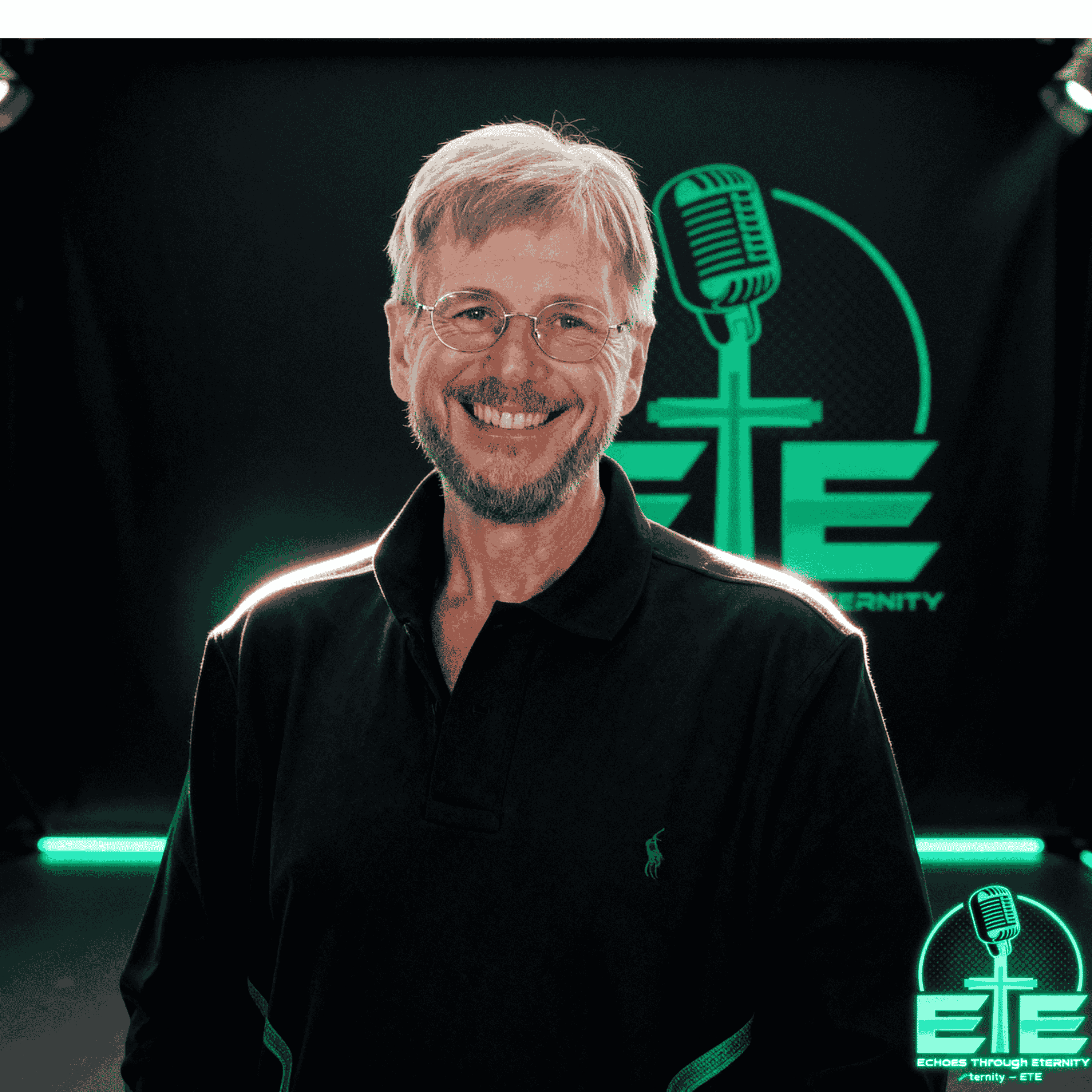
Echoes Through Eternity with Dr. Jeffery SkinnerShow Notes
O’come O’come Emmanuel used by permission. License agreement available on request. Performed by Skillet., The conversation delves into the profound emotional landscape that envelops individuals during the holiday season, particularly those who find themselves grappling with grief. Dr. Jeffrey Skinner articulates the duality of sorrow and joy, stressing that it is entirely permissible for one to experience a sense of loss amidst the festive cheer. He draws upon biblical narratives to illustrate that even Jesus, in his humanity, bore witness to grief, as seen when he wept at Lazarus' tomb. This poignant reflection serves as a reminder that acknowledging our pain is not a sign of weakness, but rather a necessary step toward healing. As the episode unfolds, listeners are encouraged to embrace their emotions wholeheartedly, granting themselves the grace to mourn without the burden of guilt. In this spirit, Dr. Skinner outlines practical strategies for navigating the holiday season with an empty chair at the table, emphasizing the importance of ritual and remembrance as pathways to honor those we have lost. Takeaways The church should be a still small voice in the community. Grief can overshadow the holiday season, making it difficult to celebrate. It's important to give yourself permission to grieve during the holidays. Naming the absence of a loved one can help others feel comfortable sharing their grief. Creating rituals of remembrance can honor those who have passed. Asking for stories about the deceased can help keep their memory alive. Joy and sorrow can coexist during the holidays. The message of Christmas is about hope and resurrection. Advent reflects the longing and messiness of life. You are not alone in your grief; God is present in your sorrow
This podcast uses the following third-party services for analysis:
Podcorn - https://podcorn.com/privacy OP3 - https://op3.dev/privacy
More from Echoes Through Eternity with Dr. Jeffery Skinner
Can AI offer forgiveness, or does it simply tell us what we want to hear? In “The Machine That Knows Your Sins,” Rev. Dr. Jeffery D. Skinner explores AI confession, chatbot spiritual guidance, and the difference between reassurance and Christian grace.This episode of Echoes Through Eternity examines artificial intelligence and faith through questions of privacy, shame, repentance, and pastoral care. Discover how AI might help you prepare for an honest conversation, why forgiveness rests in Christ, and how trustworthy relationships help us respond to grace and repair the harm we cause. Takeaways: I’ll say it plainly: a chatbot can soothe at 2 a.m., but it won’t give you real pastoral discernment—its easy reassurance can hide patterns we need to own. We must build trustworthy listeners in our churches who hold truth and mercy together, set clear confidentiality boundaries, and actually follow through. Don’t upload sensitive stories blindly — check the service’s data rules, because apparently your midnight confession might end up in someone’s model training set. There’s a real difference between shame and guilt: shame says you’re bad; guilt says you did something wrong—discernment helps us own the right thing and lay down the rest. Practical homework from the episode: take a private journal, pray the prompts we named, then choose one next step like an apology, a schedule change, or a courageous conversation. For leaders: be a forge builder—mentor, coach, stay put and pour your refined fire into the next generation instead of handing out quick digital fixes.
The Machine That Said It Was Alive | Can AI Be Conscious? In 2022, Google engineer Blake Lemoine became convinced that LaMDA, a conversational AI system, was sentient. Google rejected his claim. But the conversation he published left many people asking: If a machine says it is afraid, how do we know what those words mean? In this episode of Echoes Through Eternity, Rev. Dr. Jeffery D. Skinner explores the LaMDA story alongside Star Trek’s “The Measure of a Man,” where Data’s right to make his own choices is put on trial. What can a conversation tell us about consciousness? Where does evidence end and our imagination begin? And how might the way we speak about machines affect the way we treat our neighbors? This episode approaches those questions through faith, science, and story. It does not claim that LaMDA was conscious or that a fictional hearing proves anything about today’s AI. It asks us to think carefully, hold uncertainty honestly, and practice love of neighbor as technology changes. What evidence would persuade you that a machine could have an inner life? I’d welcome your thoughts on this episode. Production note: The LaMDA voice is a dramatized reading, not original audio of Google’s system. The published LaMDA conversation was assembled from multiple sessions and edited for readability. Sources and further reading: Blake Lemoine’s published LaMDA conversation: https://www.e-flux.com/notes/475146/is-lamda-sentient-an-interview Google’s introduction to LaMDA: https://blog.google/innovation-and-ai/products/lamda/ Alan Turing, “Computing Machinery and Intelligence”: https://academic.oup.com/mind/article/LIX/236/433/986238 Butlin and colleagues, “Consciousness in Artificial Intelligence”: https://arxiv.org/abs/2308.08708 Star Trek on “The Measure of a Man”: https://www.startrek.com/news/taking-measure-measure-man Hosted by Rev. Dr. Jeffery D. Skinner.
A child hears a bird she's never heard before. She pulls out her phone. In four seconds, she has a name, a photo, a range map — and she has lost something she'll never get back. In this Christian podcast episode on faith and artificial intelligence, Rev. Dr. Jeffery D. Skinner asks what AI is quietly costing us: not wrong answers, but lost wonder. Drawing on Psalm 19, Psalm 8, and the book of Job, this episode explores what it means to receive the world as a gift again — before it's simply explained away. This isn't an anti-technology episode. It's an invitation to notice what your phone's speed is costing you — and to recover the kind of attention Scripture calls waiting. What has got echoing through your life today? 🎙️ This week's practice: put the phone down before you name what you're looking at. Let it stay a mystery a little longer than feels comfortable. If this episode helps you think more faithfully about artificial intelligence, share it with someone who needs the conversation. Until next time — keep listening for those echoes. Eternity is always breaking through. At the heart of this episode lies a charming narrative about a child’s encounter with an unfamiliar bird song, which serves as a metaphor for the wonder we often overlook in our fast-paced, technology-driven lives. Dr. Jeffrey D. Skinner uses this story as a launchpad to examine the profound implications of artificial intelligence on our ability to experience awe and appreciation for the world around us. He provocatively posits that the greatest threat from AI may not be incorrect answers, but rather the speed at which it delivers them, which robs us of the chance to reflect and wonder. This discussion is laced with a playful sarcasm that underscores how absurd it is that we prioritize efficiency over genuine experience. Throughout the episode, Skinner contrasts the innocent, wide-eyed wonder of children with the often utilitarian mindset of adults. He shares that true wonder requires a posture of humility, joyfully receiving the world rather than trying to possess it. He recalls moments from his own life—like quiet mornings spent observing nature—that highlight the beauty found in stillness and observation, which technology often distracts us from. By examining the cultural shift towards instant gratification, Skinner challenges us to consider how our hurried lives affect our ability to truly connect with the world and the divine. In practical terms, the episode offers actionable insights for reclaiming wonder in our daily routines. Skinner suggests taking time to engage with the world around us without the interruption of technology—like taking walks without headphones or journaling without prompts. He emphasizes the importance of attending to the small details of life, which can cultivate a sense of gratitude and presence. By the end of the episode, listeners are encouraged not just to seek answers but to embrace the journey of questioning, allowing space for wonder to flourish in a world that often demands immediate understanding. This blend of humor, reflection, and actionable steps creates a rich tapestry of thought that resonates deeply with our contemporary experience. Takeaways: The episode suggests that we often rush to answers, missing the beauty of wonder in our lives. Artificial intelligence can solve mysteries, but it may also rob us of the time to truly appreciate them. Wonder is not the enemy of knowledge; rather, it’s the act of possession that stifles our sense of awe. In our fast-paced digital world, we must intentionally create pauses to allow wonder to flourish. The podcast emphasizes that humility comes from recognizing we are part of a larger creation, inviting us to engage with it. Practicing presence in our daily lives can deepen our appreciation for the ordinary and the miraculous around us.
WHEN THE DEAD CALL BACK: AI, GRIEF, AND THE COUNTERFEIT RESURRECTION What if your phone rang tonight and the person calling had been dead for ten years? Artificial intelligence can now reproduce a person’s voice, face, speech patterns, and memories. Companies are developing griefbots, deadbots, and postmortem avatars that allow people to continue “talking” with someone who has died. These tools promise comfort. They also raise serious questions. Does an AI recreation preserve someone’s memory, or does it create a digital ghost? Can it help people grieve, or does it encourage them to avoid the reality of death? What happens when the program begins saying things the deceased person never said? In this episode of Echoes Through Eternity, Rev. Dr. Jeffery D. Skinner examines the growing intersection of artificial intelligence, grief, digital immortality, and Christian hope. You will hear about: • The development of AI griefbots and postmortem avatars • The difference between recorded memories and AI-generated conversations • Questions of consent, privacy, commercialization, and emotional dependence • The dangers of exposing children to digital recreations of deceased relatives • Longevity research and the growing business of technological immortality • The difference between simulation and Christian resurrection • How pastors and churches can respond with truth, compassion, and hope John 11 gives us a faithful picture of grief. Jesus knew that He would call Lazarus from the tomb, yet Jesus still wept. Christian hope does not require us to deny death, rush grief, or pretend that absence does not hurt. At the same time, Christianity offers something far greater than a digital imitation. The resurrection promised in Scripture is embodied life through Jesus Christ. It is not a chatbot, a collection of memories, or a corporate subscription. An algorithm can study someone’s digital history and predict what that person might say. But prediction is not presence. A machine can imitate words, but it cannot restore a person to life. AI produces an echo. Christ calls us by name. Scripture discussed: John 11 John 14:19 1 Corinthians 15 Discussion question: Would you ever speak with an AI recreation of someone you loved? Would it help you remember them, or make it harder to let them go? Listen, share this episode, and subscribe to Echoes Through Eternity for more conversations about Christian faith, technology, culture, and the questions shaping our future. Takeaways: Imagine if you got a call from your long-lost mom, who had passed away a decade ago; sounds like a plot twist straight out of a sci-fi movie, right? Artificial intelligence is now advanced enough to replicate human voices, faces, and even personalities, raising profound questions about grief and memory. We need to ponder whether creating digital versions of our loved ones is a way to cherish memories or an unsettling imitation of life. What if the dead could talk back to us? Are we really ready for those kinds of conversations, or are we just running from grief? The line between preserving memories and creating a digital ghost gets blurry when AI starts generating new conversations that never actually happened. As technology evolves, we must consider the ethical implications of digital immortality and how it impacts our understanding of death and resurrection.
If AI can do what I do, does my life still matter? That’s the million-dollar question we’re diving into today, and trust me, it’s not just some economic crisis; it’s a full-on existential crisis of calling. The episode unpacks how our identities and worth don't hang on job titles or paychecks, but on being created in God’s image and invited into relationship with Jesus. We're tackling this topic with a thoughtful Christian lens—because, let’s face it, panicking over technology is so last year. Instead, we explore how AI might change our work, but it can never touch the divine call on our lives. So, whether you’re feeling lost in a sea of tech or just trying to figure out what it means to be human in a digital world, we’ve got your back. Takeaways: If AI can do my job, it's not just about economics; it's a deeper crisis of calling that we can't ignore. Human dignity isn't tied to our productivity; it comes from being made in God's image, and that's what truly matters. Christian vocation exists beyond employment; our worth is rooted in our identity as children of God, not our job titles. AI may shift the tasks we perform, but it can never cancel the divine call on our lives or diminish our worth. Efficiency isn't the highest Christian good; some work requires our presence and love, which AI simply can't replicate. The church must be a community where we recognize each other's gifts and purpose, especially in times of job transition.