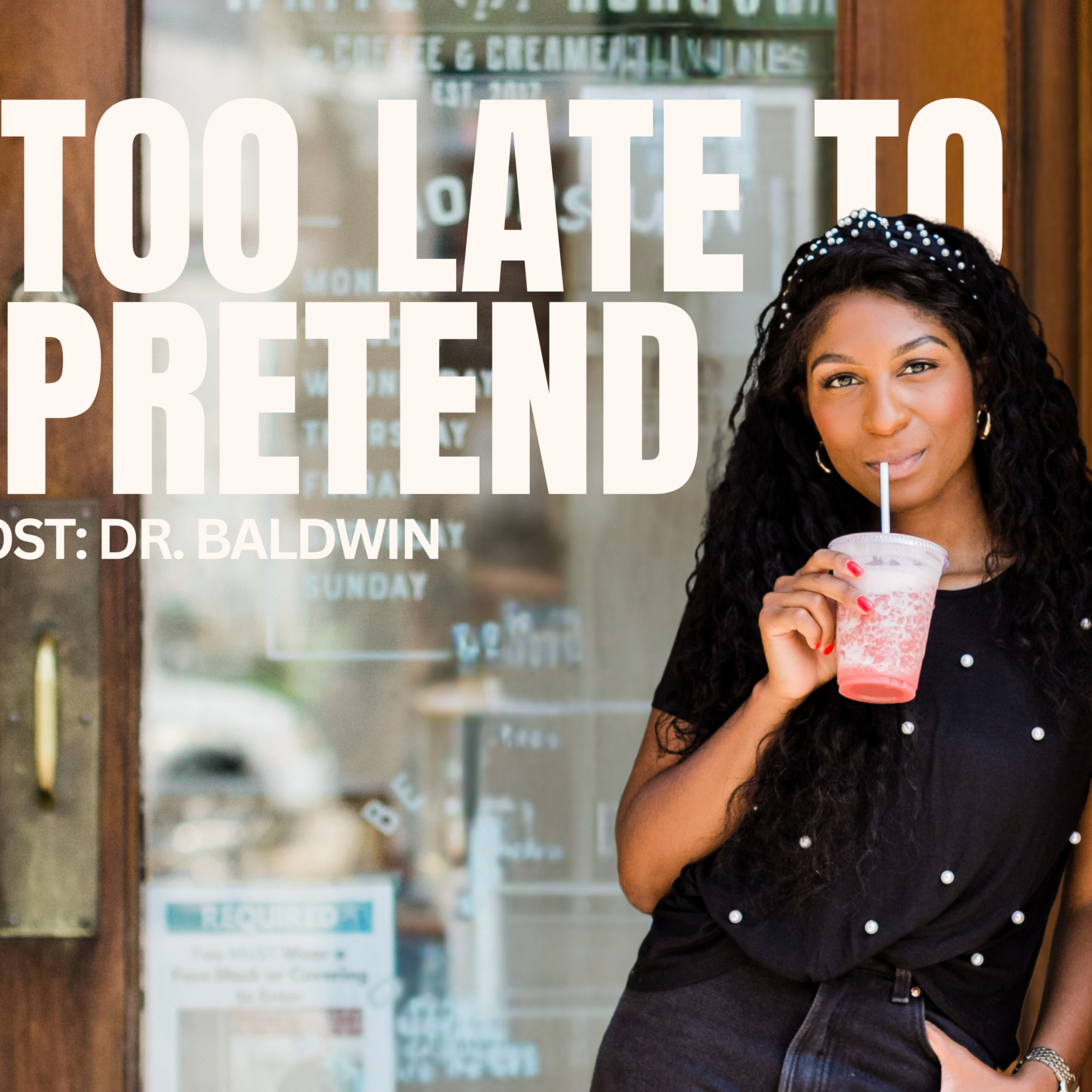
Show Notes
Nobody wants to hear this, but it needs to be said. Not everyone deserves a second chance. And giving one doesn't make you more evolved, more enlightened, or more emotionally mature. It just means you made a decision. The question is whether that decision is an informed one.In this episode, Dr. Cecelia Baldwin gets into the one thing that actually earns a second chance. It's not an apology, it's not time, and it's not them saying they've changed. It's a full perspective shift. The kind you can feel in the room before they even open their mouth.You'll hear: → What separates a real second chance from giving someone permission to hurt you again→ Why contempt is the quiet relationship killer → What it actually looks like to forgive someone fully vs. letting them back in while keeping them on trial→ A real example of a second chance done right and what happens when the pattern repeatsIf you've been wrestling with whether to let someone back in, or you already did and something still feels off, this one's for you.Disclaimer: The content shared on this page is for informational and educational purposes only and does not constitute psychotherapy, counseling, or any form of professional mental health treatment. Viewing, commenting on, or engaging with this content does not establish a therapist-client relationship. The information provided is general in nature and may not apply to your individual circumstances. Please consult a licensed mental health professional for personalized advice and support.Please note that I am unable to respond to direct messages or comments regarding clinical concerns, personal mental health questions, or requests for therapeutic advice. Social media is not a secure or appropriate platform for clinical communication, and any such messages received will not be answered.If you are experiencing a mental health emergency or crisis, please call or text 988 (Suicide & Crisis Lifeline), call 911, or go to your nearest emergency room.
More from Too Late To Pretend
Someone is going to dislike you no matter how kind, generous, or accommodating you are.Dr. Cecelia Baldwin, a licensed therapist, breaks down why disapproval can hit the body like a threat, how “if/then” rules quietly run your decisions, and why the search for reassurance keeps anxiety coming back. Why Not Everyone Will Like You (Therapist Explains)Contingent Self-Worth Explained People Pleasing and Anxiety: The If/Then Rules Behind Approval Seeking Reassurance Seeking and Fear of Rejection How to Stop Needing Everyone’s Approval Do You Like Who You Are When Nobody’s Watching? Disclaimer: The content shared on this page is for informational and educational purposes only and does not constitute psychotherapy, counseling, or any form of professional mental health treatment. Viewing, commenting on, or engaging with this content does not establish a therapist-client relationship. The information provided is general in nature and may not apply to your individual circumstances. Please consult a licensed mental health professional for personalized advice and support.Please note that I am unable to respond to direct messages or comments regarding clinical concerns, personal mental health questions, or requests for therapeutic advice. Social media is not a secure or appropriate platform for clinical communication, and any such messages received will not be answered.If you are experiencing a mental health emergency or crisis, please call or text 988 (Suicide & Crisis Lifeline), call 911, or go to your nearest emergency room.
Everyone has heard the advice to stop caring what other people think. Dr. Cecelia Baldwin, a licensed therapist, explains why that advice gets half of it right and leaves the other half out.
Some of the people you love most can also be the ones who leave you anxious, drained, and second-guessing yourself. Dr. Cecelia Baldwin, a licensed therapist, breaks down what it means to create distance from family when closeness has started to cost you your well-being. She covers why love and access are two separate things, how to hold two opposing truths at once, and why guilt shows up when you start choosing yourself. → Why loving someone and giving them access to you can be separated → What dialectical thinking is and how it helps you hold two truths at once → Why trying to love someone less feels easier, and what to do instead → How to read a pattern of interaction and treat your anxiety as information → What distance can look like, from talking less to no contact → Why distance can be temporary and you don't need to know the answer today → How to work through guilt and being misunderstood by your family → What opens up in your life when you stop spending so much energy managing unhealthy relationships
Siblings fight. That's normal. But what about when the fighting never gets repaired, the boundaries never get respected, and you leave every family gathering feeling smaller than when you arrived?
Things feel louder, faster, and less certain than they used to. What's your plan for staying steady?Dr. Cecelia Baldwin, a licensed therapist, is helping her clients and her own family build stability now, before a hard season arrives. In this episode, she shares the framework she uses so you can start building your own.→ The one question to ask yourself: if life gets harder, what will help me stay?→ Why a plan built on knowledge and support serves you better than one built on fear→ How to cut back on the distractions competing for your attention→ A five-part look at your health: physical, emotional, mental, spiritual, and relational→ How to feel your anger and still choose how you show up→ Why building your identity on more than work, money, or status gives you something to hold onto→ How co-regulation lets you carry hard things with another person beside youThis is for you if:→ The pace of the world leaves you feeling unsettled→ You want to prepare for uncertainty without living in fear→ You're ready to strengthen the parts of your life you can control→ You'd like a simple starting point for looking after your mental healthSubscribe for more conversations on mental health, relationships, and real-life healing.Disclaimer: The content shared on this page is for informational and educational purposes only and does not constitute psychotherapy, counseling, or any form of professional mental health treatment. Viewing, commenting on, or engaging with this content does not establish a therapist-client relationship. The information provided is general in nature and may not apply to your individual circumstances. Please consult a licensed mental health professional for personalized advice and support.Please note that I am unable to respond to direct messages or comments regarding clinical concerns, personal mental health questions, or requests for therapeutic advice. Social media is not a secure or appropriate platform for clinical communication, and any such messages received will not be answered.If you are experiencing a mental health emergency or crisis, please call or text 988 (Suicide & Crisis Lifeline), call 911, or go to your nearest emergency room.