Sevastopol Sketch 1 (Part I of II): December of 1854, Shades of Andrei in Austerlitz
War & Peace Podnotes, A Study GuideShow Notes
The first Sevastopol Sketch focuses on December of 1854.
Sevastopol is a name of Greek origin and is a well-known port city in Crimea. Before it was Ukrainian -- and before it was Russian or under Russian occupation -- it was part of the Crimean Khanate, heavily influenced by the Ottomans. Greek names were stamped on conquered cities just north of the Black Sea (think also Melitopol, Mariupol, and Kherson) by Czars & Czarinas as a show of respect for Greek culture. Notably, Greeks had a presence there going back thousands of years.
The first Sketch focuses on a sunrise to sunset amidst the Siege. We take in Sevastopol through the perspective of an officer and get closer to the infamous bastions as the day goes on.
Around 8 a.m., you (the officer) take notice of the rising sun above Sapun Ridge, which rises 240 meters. There is a changing of the guard, a soldier washing his face in frigid water, as well as doctors and nurses reporting to their stations. Life gets moving amidst the backdrop of death, which you can observe through wagons transporting the departed.
You traverse a muddy beach, passing over a dead horse, and get into a small boat pulled by an old man and boy. The vessel sails around a disabled warship and soon reaches a wharf near the city center. Sevastopol remains a traditional city but has also become a war encampment. The surface bears the scars of cannon fire. There is a bustle – smoking, chatting, gambling and arguing. You take in: Cossacks with their horses, women with their children, and trades-folk. All their faces express enthusiasm in carrying on. Nobody is paralyzed by fear.
Most importantly, you approach the Sevastopol Assembly Hall, which is serving as a hospital. You enter to the sights, sounds and smell of the wounded. Some are in hammocks, but the majority are on the floor. You are overcome through absorbing the pervasive suffering. You address a few of the men and they respond to your empathy. You meet one who lost his leg, who graciously thanks God that he will get his discharge. He tells you that it is best not to dwell. You come across housewives, one visiting her husband and another who was severely wounded while delivering food to her husband. You come across a blonde man with swollen face and labored breathing who is near death. You sense his internal fire of pain. You see an old gaunt solder changing his clothes. His body displays a lifetime of hardship. You can’t find words to convey your admiration.
You take in the horrors of the operating area. Sleepless doctors are at work administering chloroform and hacking limbs. You see repeated -- the placing a sharp curved knife into a healthy part of the body and the men coming to with piercing cries. What follows is an arm or leg being thrown onto a pile. The men in queue for such treatment obsess over the terror that lies ahead.
Tolstoy’s point is that such is the reality of War, not the music and drum beats and gallantry, and waving flags. This is the grim nature of suffering and death.
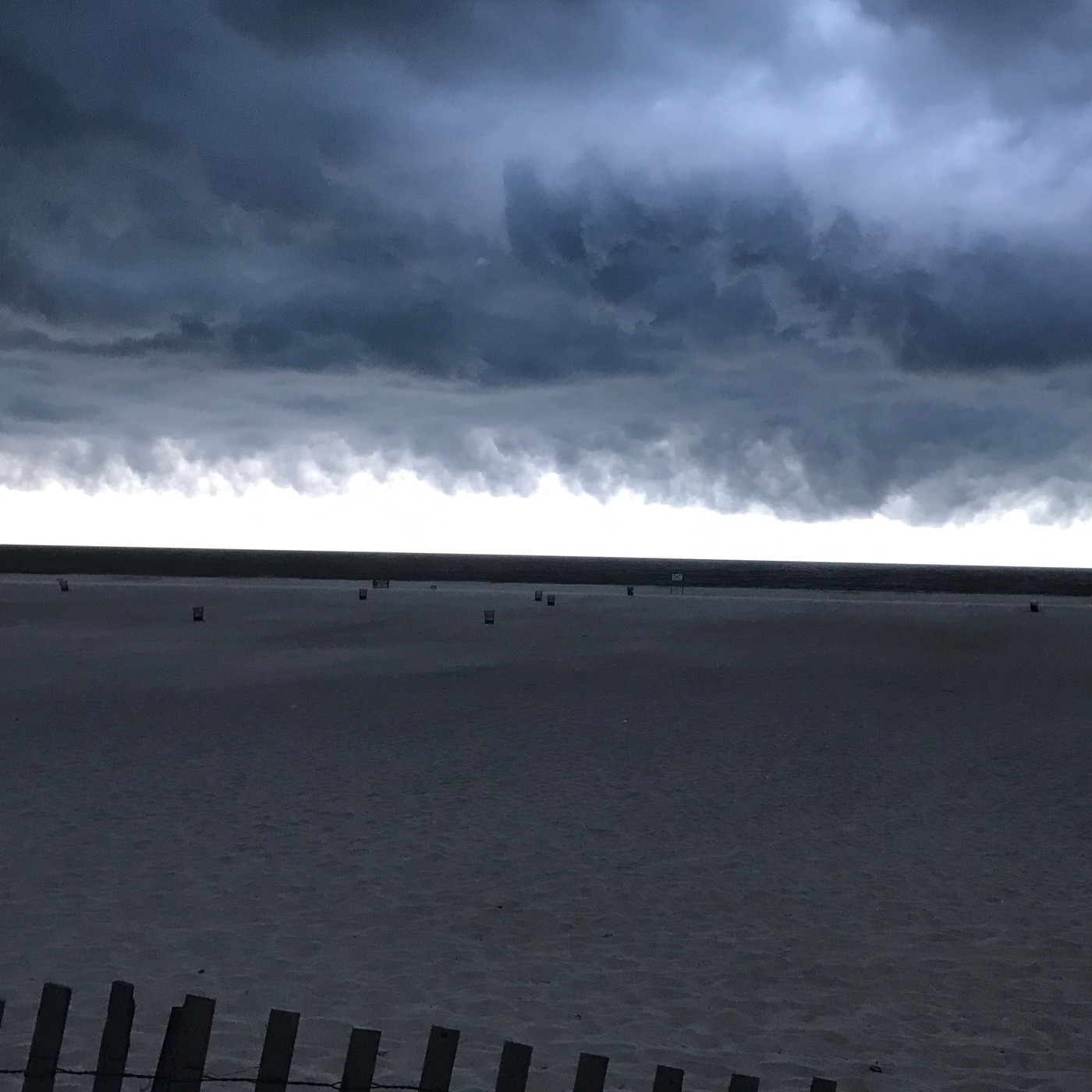
You leave and head to an actual bastion. You reflect on what you observed and grasp your insignificance. You take a moment to behold the majestic sky -- The Lord’s sky. For any War & Peace reader, this scene bring to mind Andrei on the field of Austerlitz, gazing from the grass at the brilliant sky. Your mind soars above the fine city with a lovely church; and Your mind is restored.
More from War & Peace Podnotes, A Study Guide
As War & Peace delves into to fiction to a much greater degree than the previous section, exploring the Rostov family dynamic throughout 1806, there is a great deal that historically transpired which Tolstoy does not bring you through. In this stretch, Bonaparte was a continental Behemoth, who sets his sights on Prussia, then an industrial power with a highly organized military. The centers that made up the Prussian Kingdom were: Berlin, Potsdam, Königsberg and Danzig. You should recall that based on the battle of Austerlitz, Napoleon replaced the Habsburg Family as the principal authority in Central Europe. Austria never again reached such heights of power. Over the next 70 years Austria would lose influence over the dozens of German states while Prussia gained in this regard. It was Prussia, under Otto Von Bismarck, who in 1871 established the nation we know as Germany. In the start of 1806, France remained in a state of war against Russia, England and even Sweden. It was a busy and productive year for "the man of destiny." In February, Napoleon sent General André Messéna to Naples to overthrow the Bourbon King, Ferdinand IV, and install his brother, Joseph. Messéna was successful though fighting continued for months. In the Summer, Napoleon consolidated control of Holland and placed a crown on another brother, Louis. By mid-July, Napoleon created the Confederation of the Rhine of mostly southern German states, where he compelled alliances. The expanded territory gave the French 60,000 more troops. Napoleon was reshaping Central Europe to assure French influence and limit that of Austria, Prussia, Russia and Great Britain. Napoleon’s desire was to marginalize Britain economically after the Brtis won control of the seas at the Battle of Trafalgar, which preceded Austerlitz by a month. Just off the Southwest coast of France, the French Navy was decimated. The English controlled the water, but Napoleon was dominant on land and wanted to implement the Continental Commerce System. He had success in spreading French administrative, legal and social reforms—including the Napoleonic Code. When possible and practical, he moved to end the remnants of feudalism. The Code abolished a plethora feudal privileges, dismantled manorial courts and freed some peasants, granting basic civil rights and a semblance of equality before the law. To continue to foster his ambitions, Napoleon set his sights on Prussia, which included former Polish territory. Poland was a former Kingdom cut up (partitioned) by Russia, Prussia, and Austria, where many Polish nobles committed allegiance to the Czar or King of Prussia. While the Czar worked with much of the nobility of Poland, the peasants filled the ranks and endured. Czar Alexander was 27 in 1806. Despite the historic loss at Austerlitz, Alexander, would rule for nearly two more decades. He was fortunate that his population was forgiving. Alexander did not enter into serious peace negotiations nor publicly concede the loss. Many among the Russian nobility blamed the result on the Austrians. There are memoirs from Phillip Vigel, then a 20 year-old Russian diplomat, who detailed his observations of the mood in Moscow and Petersburg. The Muscovites were more vocal in castigating the Czar. Some would even laud Napoleon. There, Bonaparte earned nickname befitting a Russian Conqueror, Napoleoskha. In Petersburg, the population shared the humiliation. They would explain the result as a turn of luck. Vigel expressed that Petersburg society felt the desire to get themselves off the floor and prove themselves. He sensed a general optimism of youth. He also notes how the English desired Russia as allies against the French and Czar was their lifeline from French domination. Consequently, Russia spent the summer of 1806 preparing for a new war -- reorganizing and refilling their ranks. General Kutuzov fades into obscurity for a time. Just prior to Austerlitz, in the Fall of 1805, Alexander made a notable a
We now get taken from March of 1806, through the warmer months and then to the end of the year. Quite the fast-forward!
We have reached the pivotal chapter involving the death of the Little Princess and birth of the Andrei’s son.
We move further into March of 1806 and return to Bald Hills, the estate of Andrei’s father. Despite letters and official inquiries, Andrei’s body had not been found nor was he on the list of prisoners.
This episode examines some likely influences in Tolstoy’s writing of the Duel between Pierre & Dolokhov.