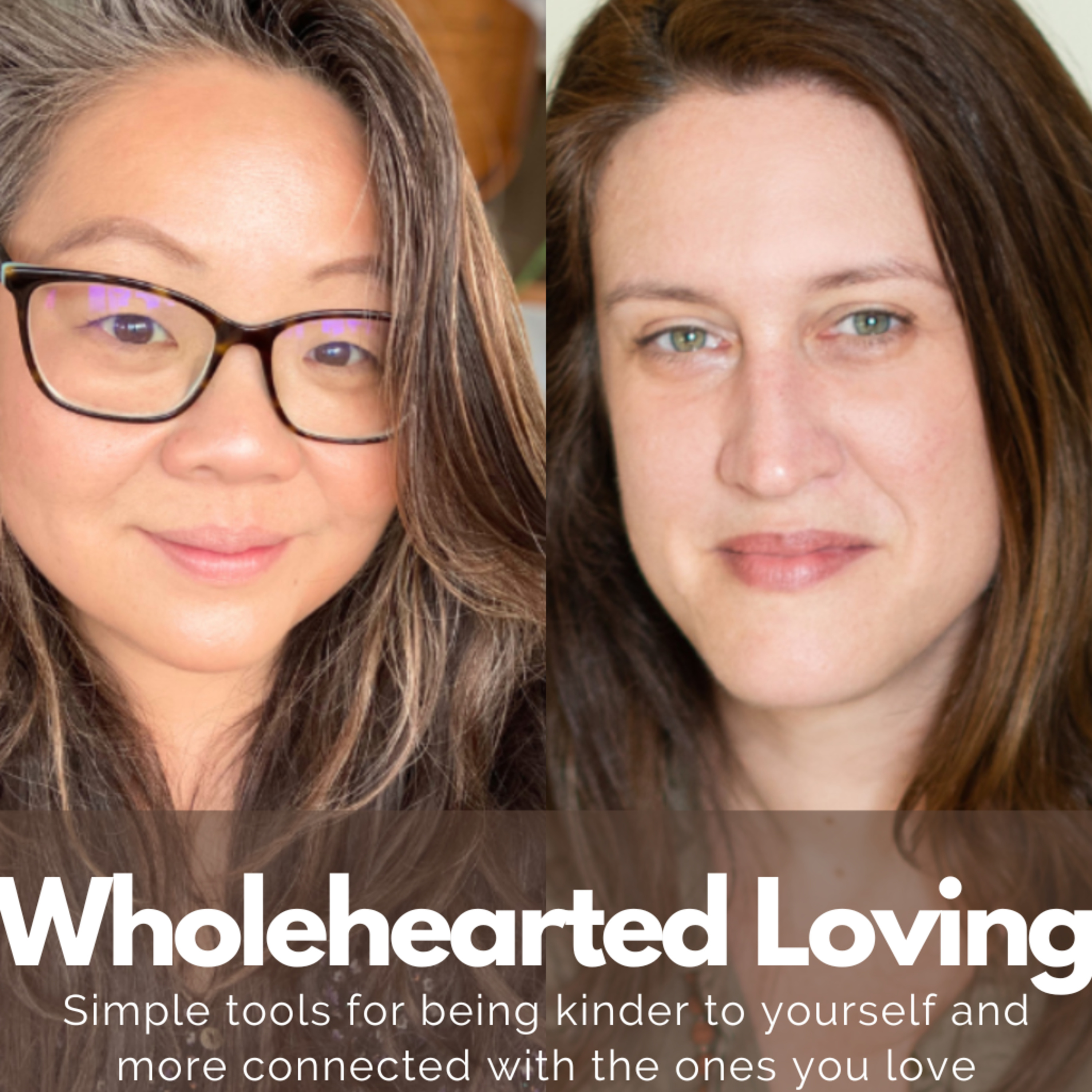
Weaponized Therapy-Speak & How It Harms Us All | Ep159
Wholehearted Loving: A Conscious Relationship PodcastShow Notes
Weaponizing therapy-speak co-opts healing language as a way to avoid the actual work of healing.
"I'm triggered." "I don't feel safe." "He's a narcissist." "You're gaslighting me." These are rarely accurate, and more often than not they're just a fancy way to say "shut up", and stifle the big uncomfortable feelings of disagreement and misunderstanding.
Therapy-speak is helpful when it's a doorway, and relationally dangerous when it's the destination.
In this episode, Georgianna and Steph dig into what's actually happening when we reach for diagnostic language in real time, what it costs us in relationships, and the somatic shadow work tools we can use to access what's underneath — the stuff this language is helping us avoid.
Steph goes hard on the ways this unresolved shadow material scales — from your body, to your relationships, to the wider world — and Georgianna brings the somatic mechanism — what's actually happening in the body when a trigger fires, and the small, doable practices that build the capacity to be with discomfort instead of trying to legislate it out of existence.
They confess their own patterns from years gone by: Georgianna's temporary relief when she discovered therapy-speak, which gave her the vocabulary to describe what she was experiencing with an avoidant ex, and Steph's past weaponizing of these terms as diagnoses to shut people up and avoid her own big feelings. Same mechanism, different use case. Both very common in society today, and all of it ultimately unhelpful for our lives and relationships.
The throughline: words like "triggered" and "unsafe" should be starting points for curiosity and connection. When they're not, our relationships contract, the world shrinks, and the unresolved fight energy underneath comes out sideways in every aspect of our experience.
What you'll learn: The physiology of a trigger and how to recognize one before it runs your conversation Why naming an attachment style or a diagnosis feels like relief but still leaves you stuck Why saying "I don't feel safe" about your (non-abusive) partner is self-defeating, confusing, and breaks trust — and what to say instead The "magic pill" practice for staying with discomfort one breath at a time How suppressed fight energy fuels weaponization — and how to transform it The difference between real compassion and suppressed anger dressed as compassion How your suppressed anger is present and palpable whether you admit it out loud or not
Resources Mentioned: Self-Compassionate Body-Based Toolkit — personal self-connection studio for self-led practice being with big feelings and growing your nervous system capacity Somatic Integration Sessions — twice-monthly live practice container Conscious Relationship Training — twice yearly live cohort for relational shadow work
If you're tired of the therapy-speak and want to know what's next, this episode opens the door.
With love,Georgianna & Steph
More from Wholehearted Loving: A Conscious Relationship Podcast
At the beginning of a new relationship, the honeymoon bubble is exactly where it’s easiest to miss the signs that matter most in determining long-term compatibility. In this conscious relationship podcast episode, Georgianna and Steph dig into patterns worth watching in real time, and how the same words — “flexible,” “loyal,” “reasonable” — can mean completely different things to different people. All things only time and getting specific with someone will reveal. And for every discovery you make about each other, are you willing and able to embrace it — or at least accept it honestly — in your shared life together? WHAT YOU’LL LEARN: ✓ Why attraction and compatibility aren’t the same thing ✓ The patterns worth noticing early: the barista, apologies, broken plans, how they talk about their ex ✓ How words mean different things to different people, and why that’s important ✓ The price of admission, and how to know if you can pay it without resentment ✓ How to feel the difference in your body between a genuine yes and all the other kinds of yesses ✓ Why the thing you love about someone now may be the thing that grates on you later ✓ A playful self-knowledge practice you can do with your underwear RESOURCES: 🔗 The Relationship Lab: https://www.wholeheartedloving.com/lab 🔗 Conscious Relationship Training (next cohort starts October 24, 2026): https://www.wholeheartedloving.com/crt 🔗 Our website: https://wholeheartedloving.com This is Episode 7 of Slow Dating, our season about getting off the dating apps and into real life with one person at a time — starting with you. Every episode gives you a practice to use in real life too. Follow the whole season: https://www.wholeheartedloving.com/slowdating New episodes twice a month — subscribe so you don’t miss the next one. ❤️ Enjoy the spark. Just keep your eyes open while you do.
To slow down when you're dating someone new — to pace your new relationship — starts with a hard truth: You already know pacing is important, but that doesn't stop you when the chemical rush hits and your whole body wants to lock this relationship in...instead of letting the beauty of your connection (or mismatch) emerge. In this conscious relationship podcast episode, Georgianna and Steph get into why we rush, and how we can learn to stay with the excitement and uncertainty long enough to let something real blossom instead. They unpack what the rush really means, why your nervous system reads uncertainty as danger, and how our unconscious needs tend to write the ending of the romance before you've even met the person IRL. The message: being intentional in relationships is a body skill plus the the slow, active work of collecting date-data over time. The episode ends with two practices: a somatic grounding practice for shadow work, and 10 shadow work dating prompts for surfacing your subconscious material around dating and relationships. One caution — don't use these on a date. These prompts are for your personal self-discovery, or for use with others on their own paths to self-discovery. What you'll learn: Why knowing you should slow down doesn't help, and what builds the capacity that does What the chemical rush of new love really means, and what it doesn't How to hold two realities at once — your hopes and what's actually true The way old wounds have us ignoring red flags and misreading green ones How stress, your cycle, and the "ick" can shift your read on someone How the early dating phase is an active, participatory time for data collection and experience Two practices: somatic grounding and 10 shadow work prompts for early dating
Staying present on a first date starts with noticing the fantasy you've already built before you sit down — the private wedding you've half-planned with someone you barely know, or the set of hopes and expectations you've got about where the date might go, or who this person is, or your future.
The slow dating approach to finding your people and making real connections starts somewhere most dating advice ignores: the truest dimension of you. Before the bar, the app, or the better opening line, there's the question of how much of the real you is even showing up — and in this conscious relationship podcast, that's the main thing. In this episode, Georgianna and Steph separate finding your people from performing for them, talk about how the apps hide your vibe, tell you how to collect more useful data watching how someone treats the barista than you'll ever get from a profile. Along the way they get honest about nerves, rejection, and the right to say no without making it personal. Georgianna closes with a live body-based practice to shift the energy you carry when you approach someone, or when someone approaches you. What you'll learn: Why "where to meet people" is more of a vibe than a location What real life shows that a dating profile just can't The reflection principle: why hiding your essence attracts people who can't see you Empowered vs grasping energy, and how each one feels from the inside Why your nerves are worth keeping instead of numbing How to move rejection out of the realm of self-worth A body-based practice for making connections with more ease
Slow dating and fulfilling love starts with enjoying your own company. Georgianna and Steph make the case that until you can enjoy being on your own, you'll keep reaching for whoever's available to fill the silence — even when it's not a good fit. They trace how the discomfort of an empty evening sends us to the phone, the plans, the next person, and how the inner critic gets loud the moment things go quiet. From there: why you can't really like yourself if you don't know yourself, what a "battery relationship" is, and why the parts of yourself you reject show up amplified in the people you attract. Georgianna shares the six weeks she spent deliberately alone, and Steph her much slower, seven-year version. Then Georgianna walks through a simple hands-on practice for collecting evidence that your own company isn't as awful as you fear. In fact, you can even really enjoy it. What you'll learn: Why filling silence with busyness is a pattern worth noticing How your inner voice was built, and how to rebuild a kinder one Why you can't really enjoy yourself until you actually know who you are What a "battery relationship" is, and why it drains you both How the traits you reject in yourself get amplified in who you attract Why dating from a place of single and empowered changes who you say yes to A body-based practice for enjoying your own company Learning to be content on your own is the groundwork the rest of dating is built on — which is exactly what this season is all about. Resources Mentioned: Somatic Integration Sessions — twice-monthly live body-based practice Conscious Relationship Training — 10-week live cohort, twice yearly; fall cohort doors open soon