Why Male and Female Strength Differs (Genetics, Hormones, Muscle Fibres, and More) — Shanie Landen
Evidence Strong | Weightlifting ScienceShow Notes
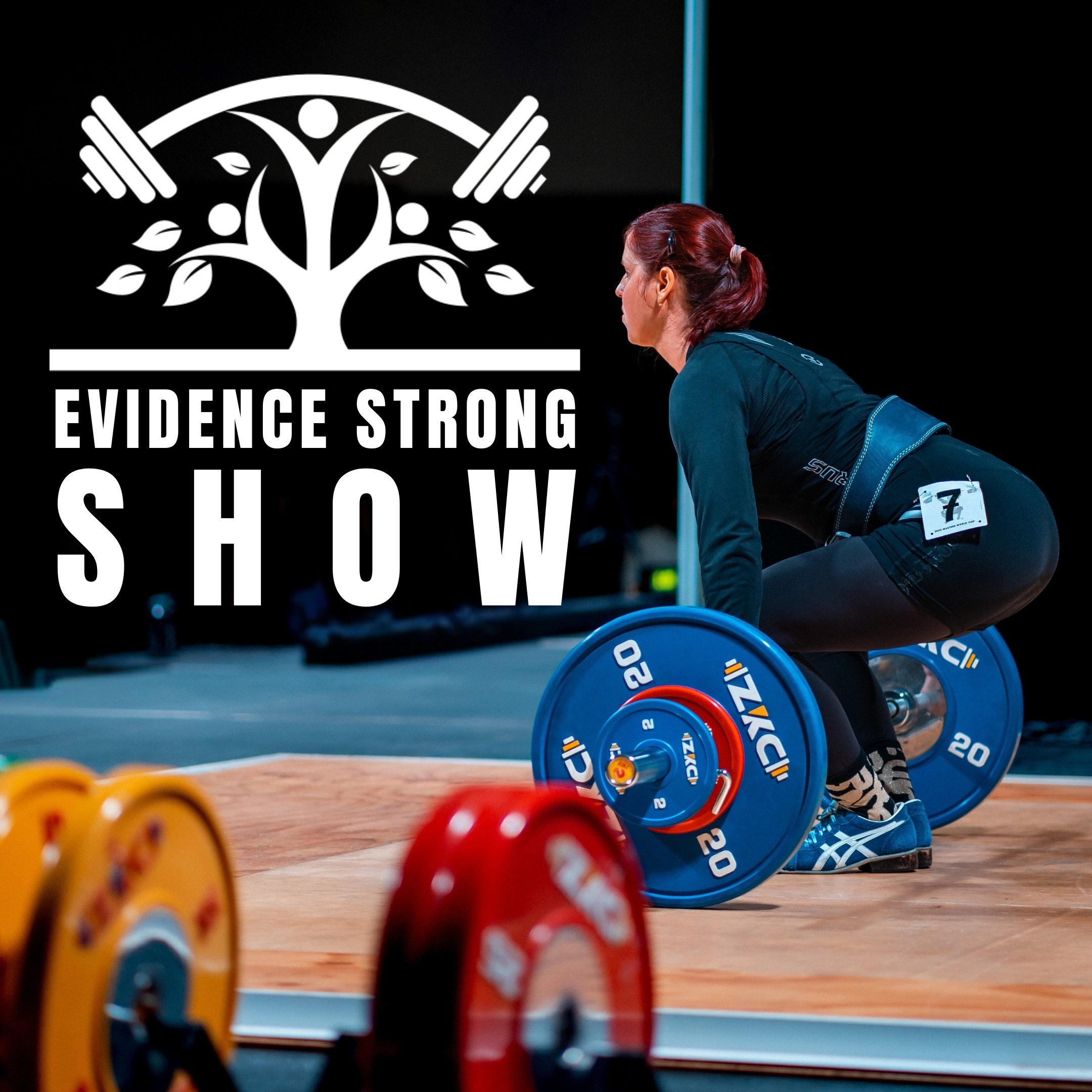
🏋️♀️ Extended version of this interview: https://www.patreon.com/posts/how-and-why-and-145262357 🏋️♀️ Differences in sports performance are present between females and males. Why do these develop, how, and when exactly? Dr Shanie Landen explains what is known so far and what is currently being researched. The topics we cover include genetics, epigenetics, hormones, and muscle fibres and their influence on athletic performance. Shanie has a PhD from Victoria University in Melbourne, Australia, where she investigated sex-specific epigenetic adaptations to endurance exercise training. She has authored 22 publications in the field of gene regulation. Shanie is interested in gene regulation mechanisms and the mechanisms by which exercise improves health and disease. She is researching how sex-biasing forces influence gene regulation and function. Enjoy! Some of the research papers mentioned in this interview: Landen S, Jacques M, Hiam D, Alvarez-Romero J, Schittenhelm RB, Shah AD, Huang C, Steele JR, Harvey NR, Haupt LM, Griffiths LR. Sex differences in muscle protein expression and DNA methylation in response to exercise training. Biology of Sex Differences. 2023 Sep 5;14(1):56. https://link.springer.com/article/10.1186/s13293-023-00539-2 Amar D, Lindholm ME, Norrbom J, Wheeler MT, Rivas MA, Ashley EA. Time trajectories in the transcriptomic response to exercise-a meta-analysis. Nature Communications. 2021 Jun 9;12(1):3471. https://www.nature.com/articles/s41467-021-23579-x Testosterone in females in the conversation by Severine Lamon: https://theconversation.com/do-naturally-high-testosterone-levels-equal-stronger-female-athletic-performance-not-necessarily-160009
❤️ Join Evidence Strong Patreon: https://www.patreon.com/evidencestrong ▶️ Watch the episodes on YouTube: https://www.youtube.com/playlist?list=PL9L-_m0WGD_7xV0sf87Zy7oMVDdtqR3bG 🖼️ Weightlifting research infographics: https://evidencestrong.com ✉️ Follow Shanie Landen: 🔹 https://x.com/LandenShanie 🔹 https://www.linkedin.com/in/shanie-landen-33421280/ 💪 Follow Evidence Strong: 🔹 https://www.instagram.com/evidence_strong 🔹 https://x.com/EvidenceStrong All the content is for informational purposes only and is not intended as medical, nutritional, coaching, or financial advice, nor does it substitute for advice from your health care professional/provider. Any actions you will take, changes you will make to your nutrition, training or health care, are on your own responsibility and not mine.
More from Evidence Strong | Weightlifting Science
🏋️♀️ Extended version of this interview: https://www.patreon.com/evidencestrong/posts/biomechanics-of-170955689 🏋️♀️ The Turkish national Olympic weightlifting team underwent a biomechanical assessment of the snatch to determine what is similar and what is different between male and female lifters. Dr. Kaan Nazım Nazik and the team assessed ground reaction forces, joint angles, angular velocities, bar kinematics, and muscle activation of six muscles. This is an interesting study that not only compares males and females at the same competitive level but also uses EMG, which is quite rare (and for a reason we discuss). Kaan Nazım Nazik, PhD, is an Assistant Professor at Istanbul Aydın University, Faculty of Sport Sciences, Department of Coaching Education. His research focuses primarily on Olympic weightlifting, sports biomechanics, strength and conditioning, and athletic performance. Before his academic career, he competed as a national-team weightlifter, giving him both practical and scientific perspectives on elite weightlifting performance. Enjoy! Original research paper: NAZİK, K. N., Ertan, H., & Harbili, E. Biomechanics of The Snatch Technique in Men and Women Weightlifters: Comparison of Ground Reaction Forces, Muscle Activation and Bar Kinematics. Muscle Activation and Bar Kinematics. https://papers.ssrn.com/sol3/papers.cfm?abstract_id=5704547 ❤️ Join Evidence Strong Patreon: https://www.patreon.com/evidencestrong ▶️ Watch the episodes on YouTube: https://www.youtube.com/playlist?list=PL9L-_m0WGD_7xV0sf87Zy7oMVDdtqR3bG 🖼️ Weightlifting research infographics: https://evidencestrong.com ✉️ Follow Kaan Nazım Nazik: 🔹 https://orcid.org/0000-0002-5053-4137 🔹 https://scholar.google.com/citations?user=JgmUNWQAAAAJ&hl=tr&oi=ao 🔹 https://akademikkadro.aydin.edu.tr/akademik-personel.php?sdid=a2Fhbm5hemlrQGF5ZGluLmVkdS50cg== 💪 Follow Evidence Strong: 🔹 https://www.instagram.com/evidence_strong 🔹 https://x.com/EvidenceStrong All the content is for informational purposes only and is not intended as medical, nutritional, coaching, or financial advice, nor does it substitute for advice from your health care professional/provider. Any actions you will take, changes you will make to your nutrition, training or health care, are on your own responsibility and not mine.
🏋️♀️ Extended version of this interview: https://www.patreon.com/evidencestrong/posts/menstrual-cycle-170946802 🏋️♀️ What are the experiences with menstrual cycle symptoms in competitive Olympic weightlifters and powerlifters? Brooke Alvar came on the ES Show for the second time to report what she has found so far in her PhD from talking to lifters and their coaches. Brooke Alvar has a background in exercise and sport science (BSc) and strength and conditioning (MSc), five years of university-level teaching, and almost ten years of coaching experience. Her interests lie in getting athletes as strong as possible for competition, whilst managing their health and wellbeing. Her PhD research aims to understand how the menstrual cycle influences maximal strength performance, neuromuscular function, and subjective measures of wellbeing in strength-sport athletes (weightlifters and powerlifters). Alongside her research and coaching, Brooke teaches within the College of Sport, Health and Engineering at Victoria University. Enjoy! Original research paper: Alvar BE, Harris DM, O’Bryan SJ, Nelson AR. Strength-sport athlete and coach perspectives and training practices throughout the menstrual cycle. International Journal of Sports Science & Coaching. 2026:17479541261439786. https://journals.sagepub.com/doi/full/10.1177/17479541261439786 ❤️ Join Evidence Strong Patreon: https://www.patreon.com/evidencestrong ▶️ Watch the episodes on YouTube: https://www.youtube.com/playlist?list=PL9L-_m0WGD_7xV0sf87Zy7oMVDdtqR3bG 🖼️ Weightlifting research infographics: https://evidencestrong.com ✉️ Follow Brooke Alvar: 🔹 https://www.instagram.com/brooke_alvar_ 💪 Follow Evidence Strong: 🔹 https://www.instagram.com/evidence_strong 🔹 https://x.com/EvidenceStrong All the content is for informational purposes only and is not intended as medical, nutritional, coaching, or financial advice, nor does it substitute for advice from your health care professional/provider. Any actions you will take, changes you will make to your nutrition, training or health care, are on your own responsibility and not mine.
🏋️♀️ Extended version of this interview: https://www.patreon.com/evidencestrong/posts/what-sleep-does-170584793 🏋️♀️ How does sleep quality affect mental health and quality of life in elite athletes? Dr. Mohamed Romdhani discusses his research study of 118 elite athletes. Mohamed Romdhani has a Ph.D. in Sport Sciences from the University of Manouba, Tunisia (2019), with several teaching and research experiences in France and Tunisia (2019–2026). He now holds a position as an Assistant Professor of Exercise Physiology at the Higher Institute of Sport and Physical Education, University of Sfax, Tunisia. He is affiliated with the Research Unit of the National Observatory of Sport and the Interdisciplinary Research Laboratory at Paris Nanterre University, France, and his research focuses on the bidirectional relationship between sleep and athletic performance to help athletes and coaches optimize performance, recovery, and long-term well-being. Original research paper: Romdhani M, Bentouati E, Abid R, Moussa-Chamari I, Chamari K, Saad HB, Driss T, Souissi N. Reciprocal relationships between sleep quality, mental health and the quality of life in elite athletes: A pilot study. Biology of Sport. 2025 Sep 9;43(1):267-79. https://www.termedia.pl/Reciprocal-relationships-between-sleep-quality-mental-health-and-the-quality-of-life-in-elite-athletes-A-pilot-study,78,56666,0,1.html Enjoy! ❤️ Join Evidence Strong Patreon: https://www.patreon.com/evidencestrong ▶️ Watch the episodes on YouTube: https://www.youtube.com/playlist?list=PL9L-_m0WGD_7xV0sf87Zy7oMVDdtqR3bG 🖼️ Weightlifting research infographics: https://evidencestrong.com ✉️ Follow Mohamed Romdhani: 🔹 https://www.researchgate.net/profile/Mohamed-Romdhani-2 🔹 https://www.linkedin.com/in/mohamed-romdhani-0bb8757a 💪 Follow Evidence Strong: 🔹 https://www.instagram.com/evidence_strong 🔹 https://x.com/EvidenceStrong All the content is for informational purposes only and is not intended as medical, nutritional, coaching, or financial advice, nor does it substitute for advice from your health care professional/provider. Any actions you will take, changes you will make to your nutrition, training or health care, are on your own responsibility and not mine.
🏋️♀️ Extended version of this interview: https://www.patreon.com/evidencestrong/posts/resistance-and-170041260 🏋️♀️ Some studies suggest that strength training helps shift the focus from how our bodies look to how they perform. Dr Maryam Marashi discusses her PhD study on body image across different resistance training modalities, like bodybuilding, CrossFit, Olympic weightlifting, powerlifting, and strongwoman. Maryam Marashi, PhD, is a researcher, strength and conditioning coach, and competitive Olympic weightlifter based in Toronto. Her research focuses on resistance training, body image, and the psychological and social factors that shape how people relate to exercise. She spends most of her day coaching everyday exercisers across strength training, weightlifting, CrossFit, and performance settings. Her work sits at the intersection of research and real-world coaching, with a particular interest in helping people build strength without turning fitness into another source of pressure or self-criticism. Enjoy! Original research paper: Marashi M, Sabiston CM, O’Loughlin EK, Ryan SE, Arbour-Nicitopoulos KP, Mack DE. Women’s body image across resistance training modalities: A multidimensional mixed methods study. Psychology of Sport and Exercise. 2026 May 22:103156. https://www.sciencedirect.com/science/article/pii/S146902922600097X ❤️ Join Evidence Strong Patreon: https://www.patreon.com/evidencestrong ▶️ Watch the episodes on YouTube: https://www.youtube.com/playlist?list=PL9L-_m0WGD_7xV0sf87Zy7oMVDdtqR3bG 🖼️ Weightlifting research infographics: https://evidencestrong.com ✉️ Follow Maryam Marashi: 🔹 https://www.linkedin.com/in/maryam-marashi-23562a150 🔹 https://www.instagram.com/maryamymarashi 🔹 https://x.com/maryam_marashi 💪 Follow Evidence Strong: 🔹 https://www.instagram.com/evidence_strong 🔹 https://x.com/EvidenceStrong All the content is for informational purposes only and is not intended as medical, nutritional, coaching, or financial advice, nor does it substitute for advice from your health care professional/provider. Any actions you will take, changes you will make to your nutrition, training or health care, are on your own responsibility and not mine.
🏋️♀️ Extended version of this interview: https://www.patreon.com/evidencestrong/posts/heat-therapy-or-169042101 🏋️♀️ Should you go to the sauna (or hot bath) right after your training session? Will it affect your strength or hypertrophy gains? Aidan Hopper led a meta-analysis of the studies that tested just that. Aidan Hopper, MS, CSCS, is a PhD student in Human Performance and Fitness and an adjunct professor at Lehman College. He earned his master's degree in Exercise and Sport Science from Sacred Heart University, where he competed as a Division I collegiate athlete and developed an interest in the relationship between hypertrophy training and athletic performance. He works in the Applied Muscle Development Lab, focusing on hypertrophy-related research, and also serves as a strength and conditioning coach for a wide range of populations, from youth athletes to recreationally active adults. Enjoy! Original research paper: Hopper A, Coleman M, Pinero A, Mohan AE, Eng J, Wajid Q, Korakakis PA, Wolf M, Swinton PA, Schoenfeld BJ. Feeling the heat: A systematic review with meta-analysis on the effects of post-resistance training thermal therapy on muscular adaptations. https://sportrxiv.org/index.php/server/preprint/view/866 ❤️ Join Evidence Strong Patreon: https://www.patreon.com/evidencestrong ▶️ Watch the episodes on YouTube: https://www.youtube.com/playlist?list=PL9L-_m0WGD_7xV0sf87Zy7oMVDdtqR3bG 🖼️ Weightlifting research infographics: https://evidencestrong.com ✉️ Follow Aidan Hopper: 🔹 https://www.instagram.com/hoppa.22/ 🔹 https://www.linkedin.com/in/aidan-hopper-ms-cscs-756b80274/ 💪 Follow Evidence Strong: 🔹 https://www.instagram.com/evidence_strong 🔹 https://x.com/EvidenceStrong All the content is for informational purposes only and is not intended as medical, nutritional, coaching, or financial advice, nor does it substitute for advice from your health care professional/provider. Any actions you will take, changes you will make to your nutrition, training or health care, are on your own responsibility and not mine.