Show Notes
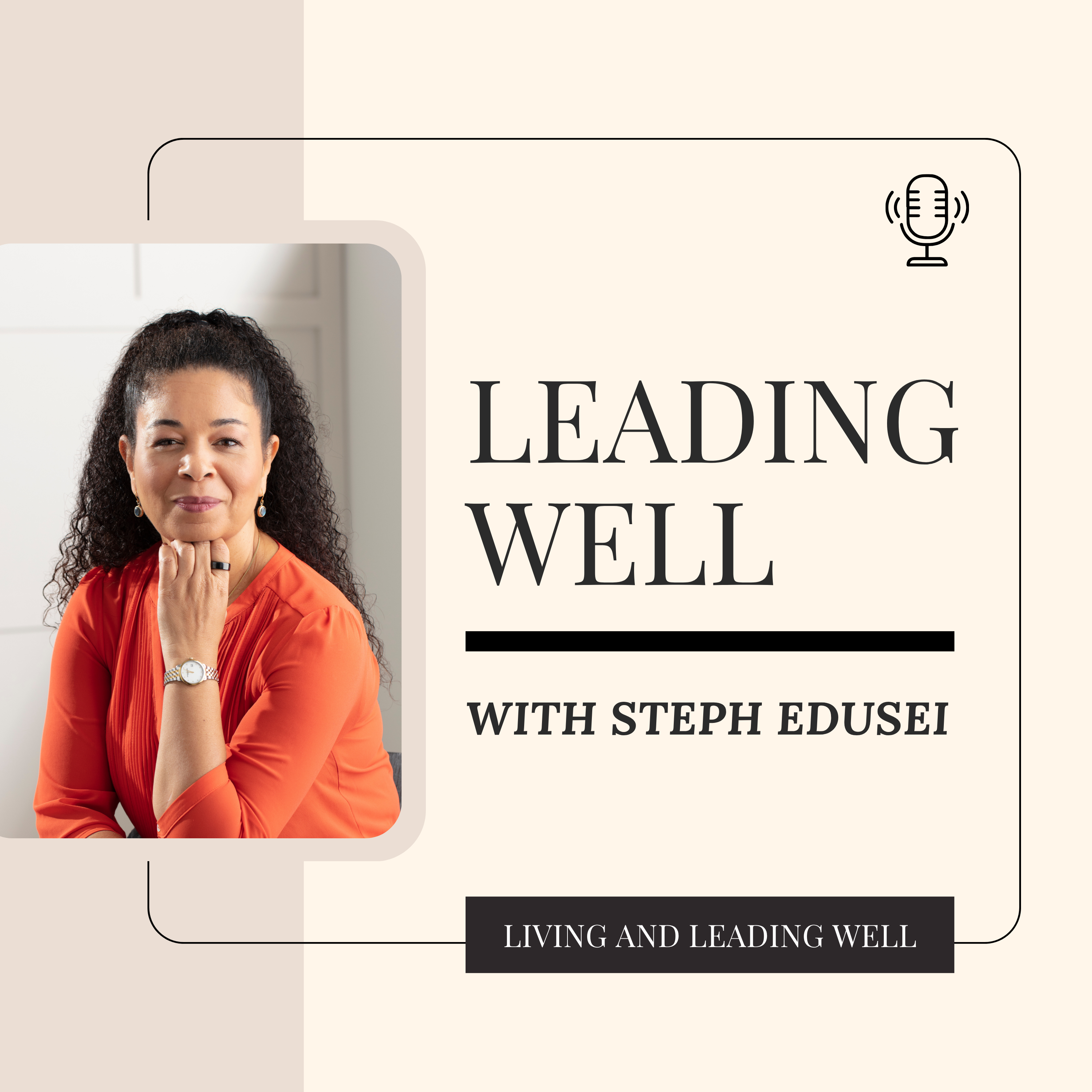
If you’ve ever felt you had to harden yourself to be credible as a leader, this first episode of Leading Well with Steph Edusei is for you. In this opening episode, Steph reflects on how trying to be the kind of leader she thought she was supposed to be almost broke her. Steph shares the honest story behind the podcast and invites you to follow or subscribe as we rethink what it means to lead well, live well and carry responsibility without losing ourselves. Drawing on her experience as a leader in the NHS and then in the voluntary and community sector, she explores the culture of overwork, constant availability, pressure, performance and emotional suppression that so often gets mistaken for strong leadership. Steph also talks about the role of imposter phenomenon and how self-doubt can make leaders overwork, over-prove and tolerate situations that work against their own values. But this episode is not just about what leadership can cost us. It is also about what becomes possible when we stop trying to perform leadership and start practising it in ways that are more human, compassionate, sustainable and true to who we are. In this episode, Steph explores: Why working hard can quietly become overworking The pressure to prove yourself as a leader Leadership cultures that reward toughness, certainty and constant availability How imposter phenomenon can shape the way leaders show up Why kindness, compassion and integrity are not alternatives to effective leadership The importance of boundaries, rest and sustainability What it means to lead well as a practice, not a performance Reflection questions from this episode: Where have I been trying to lead like someone else? What part of myself have I been taught to work against so that I can seem more credible as a leader? What would change if I trusted that kindness, compassion and integrity were not alternatives to effective leadership, but core elements of it? Leading Well is a podcast for people who want to lead with clarity, care and integrity. Follow or subscribe to Leading Well with Steph Edusei to join the conversation and be notified when new episodes are released. Leading Well - leadership support: https://www.stephedusei.co.uk/leading-well Hi. I'd love to hear your thoughts, send me a voice note.
More from Leading Well with Steph Edusei
What might someone’s behaviour be communicating that we haven’t yet been curious enough to notice? In this episode of Leading Well with Steph Edusei, Steph is joined by Dr Asha Patel, clinical psychologist and founder of Innovating Minds, to explore trauma-informed leadership and what it can teach us about behaviour, compassion, accountability and workplace culture. Follow or subscribe to Leading Well to join the conversation and be notified when new episodes are released. Asha shares how her work in forensic mental health led her to question why people were reaching services after years of trauma without having been able to access effective support earlier. That frustration eventually led her to set up Innovating Minds and focus on changing systems, rather than only supporting people once they had reached crisis. Steph and Asha explore what trauma-informed leadership actually means. Asha explains why it is not an approach reserved for people with a particular diagnosis or known history of trauma. Instead, it involves being curious about people’s experiences, recognising that behaviour is a form of communication and paying attention to how workplace processes and leadership behaviour can affect people. They also talk about compassion and accountability. Trauma-informed leadership does not mean avoiding difficult conversations, ignoring poor performance or removing boundaries. It can mean being honest about what has to happen while continuing to treat the person going through it as a human being. And the conversation turns to leaders themselves: the temptation to hold everybody else, the importance of recognising our own capacity, and why creating safer workplaces also requires leaders to notice how they are showing up. In this episode, Steph and Asha explore: What trauma-informed leadership actually means Why trauma can affect the body as well as the way we think What behaviour may be communicating beneath the surface Why leaders can be too quick to move into fixing rather than staying with someone How compassion and accountability can exist together Why workplace systems and processes deserve scrutiny too The effect a leader’s own stress and emotional state can have on others Why leaders need to recognise their own limits and create space for themselves too Leading Well is a podcast for people who want to lead with clarity, care and integrity, without losing themselves in the process. Leading Well - leadership support: https://www.stephedusei.co.uk/leading-well Find out more about Asha’s work: innovatingmindsgroup.com LinkedIn: https://www.linkedin.com/in/ashalpatel/ Hi. I'd love to hear your thoughts, send me a voice note.
When does leadership stop being hard and start becoming harmful? In this solo episode of Leading Well with Steph Edusei, Steph explores what happens when leadership gets heavy, drawing on periods in her own career when she was still functioning, still making decisions and still getting things done, but was struggling far more than she recognised at the time. Follow or subscribe to Leading Well to join the conversation and be notified when new episodes are released. Steph reflects on particularly difficult periods while working at Healthwatch and earlier in the NHS, when responsibility, long hours, personal pressures and her own determination to keep going became too much. She considers how easy it can be for capable people to mistake the ability to cope for evidence that they should simply keep coping. The episode explores some of the patterns Steph carried between roles: the need to deliver, taking responsibility for things that were not entirely hers and being the person others relied upon. These qualities had helped her throughout her career, but without boundaries they could also become liabilities. Steph considers the difference between leadership being hard and becoming harmful, and the familiar promise of “after this”: after this deadline, after this project, after this difficult period, then I will rest. But leadership rarely runs out of things that need doing. This is not an argument that leadership should always feel easy. Responsibility will sometimes be uncomfortable and demanding. It is an invitation to notice when continuing to function is no longer the same as being well, to question what we are carrying, and to recognise that how leaders treat themselves also teaches other people what is expected of them. In this episode, Steph explores: Why capable people can mistake coping for evidence that they should keep taking on more How burnout can sometimes look surprisingly productive from the outside What happens when our identity becomes tangled up with being capable and reliable Why strengths without boundaries can become liabilities The difference between leadership being hard and becoming harmful How “after this” can become a way of postponing rest indefinitely Why looking after ourselves as leaders also has a cultural impact What we might need to stop carrying rather than simply become better at carrying Leading Well is a podcast for people who want to lead with clarity, care and integrity, without losing themselves in the process. Leading Well - leadership support: https://www.stephedusei.co.uk/leading-well Hi. I'd love to hear your thoughts, send me a voice note.
What can happen when we notice something that isn't right and decide not to look away? In this episode of Leading Well with Steph Edusei, Steph is joined by Justin Morris, founder and CEO of Diver's Community CIC, to explore community leadership, purpose and what Justin has learned from turning one small act into a growing organisation supporting people experiencing homelessness in Birmingham. Follow or subscribe to Leading Well to join the conversation and be notified when new episodes are released. Justin shares the encounter that started everything: seeing a man sitting in the pouring rain while everyone around him sheltered, and deciding to buy him an umbrella. What stayed with Justin was not the umbrella itself, but the man's reaction to simply being noticed. From there, Steph and Justin talk about dignity, the stigma surrounding homelessness and why Diver's Community has chosen to tell people's stories without filming them at some of the most vulnerable points in their lives. They explore the responsibility that comes with helping people, including recognising the power that can exist even when someone has technically given consent. Justin also talks openly about the demands of purpose-led work. He reflects on boundaries, burnout, supporting the mental health of volunteers and the challenge of switching off when you care deeply about what you do. As Diver's Community has grown, Justin has also had to learn to let go. He shares his journey from trying to do everything himself to trusting his team, delegating responsibility and accepting that leadership does not mean holding everything at the centre. In this episode, Steph and Justin explore: How one small act led to the creation of Diver's Community CIC Why being noticed and treated with dignity can matter as much as practical support Challenging some of the assumptions and stigma surrounding homelessness Using social media to build trust and tell stories without exploiting vulnerable people Why boundaries and debriefing matter in emotionally demanding work The difficulty of letting go when you have created something you care deeply about Learning to trust, delegate and give other people ownership Why community leadership involves listening, learning and recognising that you do not have all the answers Leading Well is a podcast for people who want to lead with clarity, care and integrity, without losing themselves in the process. Leading Well - leadership support: https://www.stephedusei.co.uk/leading-well Connect with Justin and Diver's Community CIC: TikTok: @divers.community Instagram: @diverscommunity.cic LinkedIn: https://www.linkedin.com/in/justin-morris-38a76a325/ Diverse Community CIC: https://diverscommunitycic.com/ Hi. I'd love to hear your thoughts, send me a voice note.
What does your culture actually feel like to the people experiencing it every day? In this episode of Leading Well with Steph Edusei, Steph is joined by Ivan Hollingsworth, founder and director of Centric Consultants, to explore what it really takes to create cultures where people and teams can thrive. Follow or subscribe to Leading Well to join the conversation and be notified when new episodes are released. Ivan talks openly about his own journey from the pharmaceutical industry into work focused on leadership, teams and organisational culture, including the self-doubt that accompanied that change and why those feelings still play a part in how he learns and reflects. Together, Steph and Ivan explore what Ivan describes as “culture washing”: when organisations say the right things about values, people and culture, but those words do not necessarily hold up when pressure is applied. They discuss why values need to be visible in behaviour, decisions and the everyday experience of the people within an organisation. The conversation also questions some of our assumptions about high performance. Ivan reflects on lessons from his own sporting background and asks whether a relentless focus on performance, comparison and outputs can sometimes create conditions that work against the humans expected to deliver them. And they consider what leadership looks like when it is less about doing everything yourself and more about creating the conditions for other people to do their best work, being present, staying curious and asking what happens when you are no longer in the room. In this episode, Steph and Ivan explore: What culture washing looks like in practice Why values need to be lived rather than simply displayed What pressure reveals about an organisation’s real culture Whether our ideas about high performance always help people thrive The difference between measuring outputs and creating the right inputs and conditions Why leadership can feel like “doing nothing” when your role has shifted from doing to enabling The importance of presence, self-awareness and showing people that they matter Why leading well includes recognising that none of us has it completely worked out Leading Well is a podcast for people who want to lead with clarity, care and integrity, without losing themselves in the process. Leading Well - leadership support: https://www.stephedusei.co.uk/leading-well Connect with Ivan Hollingsworth on LinkedIn: https://www.linkedin.com/in/ivan-hollingsworth-a7271944/ Instagram and TikTok: @TheThriveGuy Hi. I'd love to hear your thoughts, send me a voice note.
What might it actually feel like to be led by you? In this solo episode of Leading Well with Steph Edusei, Steph explores the shadow leaders cast and the influence we can have even when we are not consciously trying to influence anyone at all. Follow or subscribe to Leading Well to join the conversation and be notified when new episodes are released. Beginning with a story from her teenage years in Girlguiding, Steph reflects on how seemingly small words and actions can carry far more weight because of who says them. Drawing on John Amaechi’s The Promises of Giants and her own experiences of getting things wrong, Steph considers the gap that can exist between our intentions and our impact. This episode explores the small moments that help create culture. How we respond when somebody makes a mistake. What happens when we are challenged. Whose ideas receive our enthusiasm. Where we give our attention. Even what our face communicates when somebody else is speaking. This is not about becoming anxious or trying to perform perfect leadership. It is an invitation to become more curious about our influence, listen to how others experience us, and pay attention to the shadow we cast. In this episode, Steph explores: How leaders can have an impact they cannot completely control Why ordinary words and actions can carry more weight when we hold influence The gap that can exist between intention and impact How culture is created in small, everyday moments Why positional power gives our behaviour greater significance How influence is not restricted to formal hierarchy What it means to become more curious about the experience others have of us Why leading well includes noticing the shadow we cast Leading Well is a podcast for people who want to lead with clarity, care and integrity, without losing themselves in the process. Leading Well - leadership support: https://www.stephedusei.co.uk/leading-well Hi. I'd love to hear your thoughts, send me a voice note.