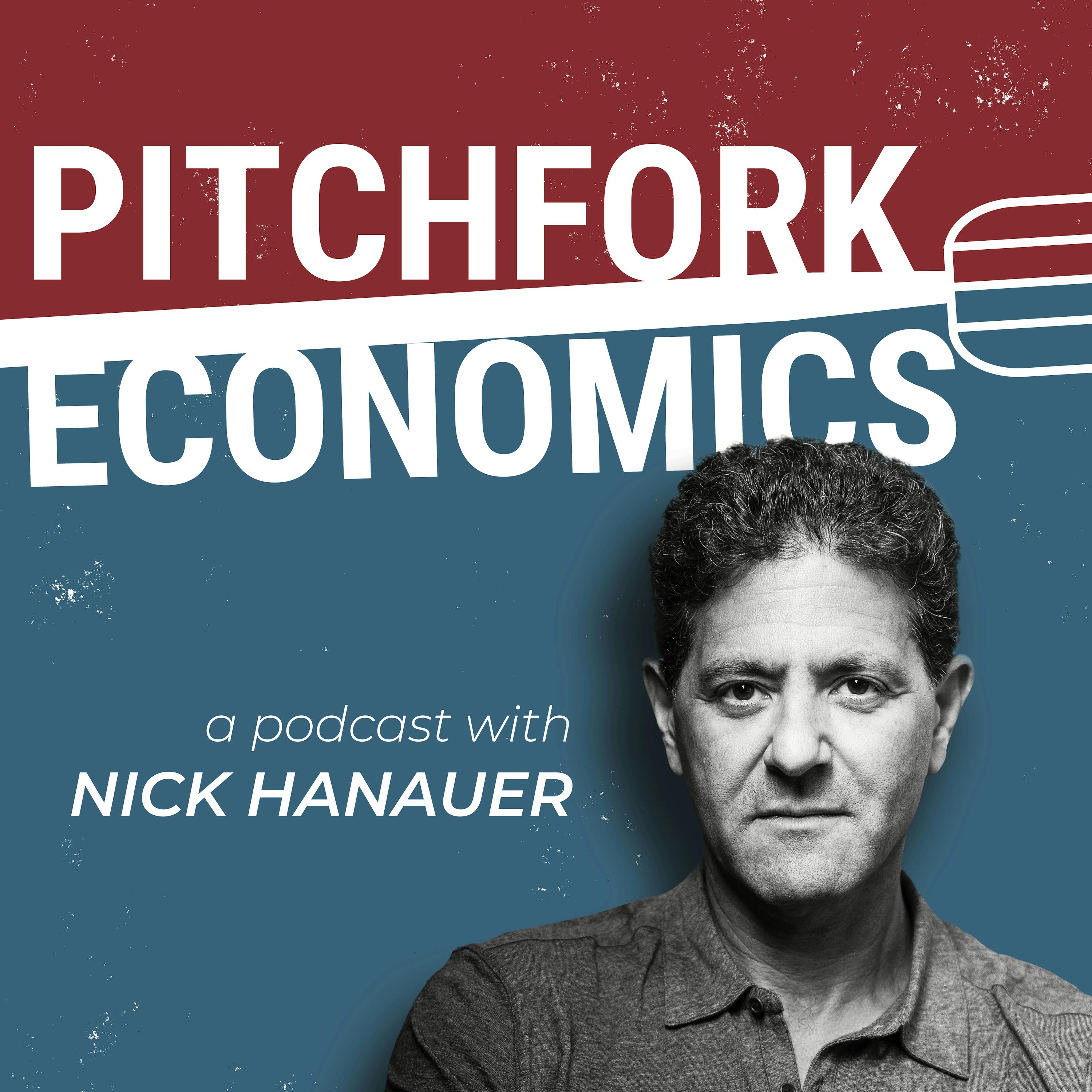
The Story That Built Today’s Economy (with George Monbiot and Binyamin Appelbaum)
Pitchfork Economics with Nick HanauerShow Notes
Most people buy the fiction that markets are “natural,” inequality is inevitable, and government should step aside — but where did that idea come from?
In this episode from 2019, Nick and Goldy talk with English journalist George Monbiot and American journalist and author Binyamin Appelbaum about how neoliberalism was deliberately built and sold — not stumbled into.
They unpack how economists, funders, and institutions rewrote the rules to favor markets over people, shifted political norms, and made extreme inequality seem inevitable — and what that history means for reclaiming an economy that works for everyone.
George Monbiot is an English journalist, author, and political/environmental activist. He writes a regular column for The Guardian and has published several books on politics, ecology, and society. He’s known for critiquing corporate power, neoliberal economics, and environmental degradation.
Binyamin Appelbaum is an American journalist and author. He is a lead writer on business and economics for The New York Times editorial board. He previously covered the Federal Reserve and economic policy for the Times and has written widely on how markets and policy shape society.
Social Media:
georgemonbiot.bsky.social
bcappelbaum.bsky.social
@BCAppelbaum
Further Reading:
The Economists' Hour: False Prophets, Free Markets, and the Fracture of Society
Website: http://pitchforkeconomics.com
Facebook: Pitchfork Economics Podcast
Bluesky: @pitchforkeconomics.bsky.social
Instagram: @pitchforkeconomics
Threads: pitchforkeconomics
TikTok: @pitchfork_econ
YouTube: @pitchforkeconomics
LinkedIn: Pitchfork Economics
Twitter: @PitchforkEcon, @NickHanauer
Substack: The Pitch
More from Pitchfork Economics with Nick Hanauer
What happens to democracy when people can no longer afford the basics of everyday life?
Housing is still ridiculously expensive, and building more housing is absolutely part of the solution. But supply alone won’t fix a system where landlords have the power to jack up rents with the assistance of algorithms, and developers make more money building for the wealthiest in the market, rather than building homes a typical family can afford.
Industrial policy is back at the center of the economic debate. But tariffs, factories, and reshoring are only part of the story. In this 2023 conversation, development economist Isabel Estevez joins Nick and Goldy to argue that industrial policy is ultimately about choices: what we produce, how we produce it, and who benefits. She explains why a smart industrial strategy has to look beyond manufacturing output to workers, communities, climate, public investment, and the broader public good.
We like to think that if a company cheats us, steals our wages, or breaks the law, we can take them to court. Unfortunately, there’s a good chance you’ve already signed that right away.
For 150 years, the price tag made a simple and universal promise: the price you saw was the price everyone saw. Now, that promise is disappearing. This week, Lindsay Owens, President and CEO of the Groundwork Collaborative returns to discuss her new book, Gouged: The End of a Fair Price — And What That Means for Your Wallet. She explains how corporations are using algorithms, personal data, and AI to figure out not what something costs, but how much you personally are willing to pay. From Instacart’s grocery experiments to the coming world of AI shopping agents, the conversation asks a basic question: If nobody knows what the real price is, can markets actually work the way we’re told they do?