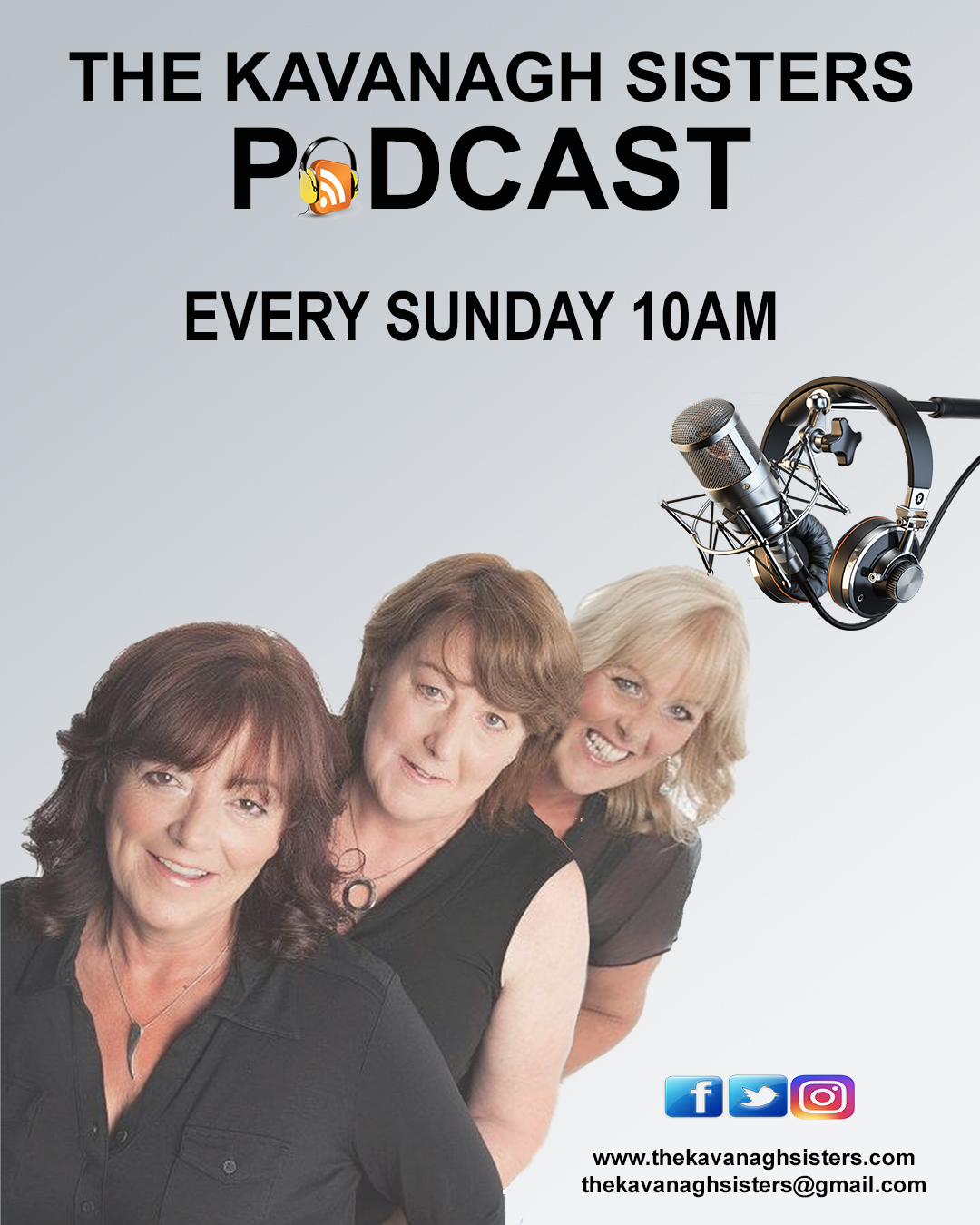
Episode 33 - Dr Lisa Cutbert - CEO - Prisoner Aid through Community Effort (PACE)
The Kavanagh Sisters PodcastShow Notes
Trigger Warning' if you or someone you know has been affected by sexual abuse please remember the Dublin Rape Crisis Centre 24-hour Helpline is open 1800 77 8888 In today’s podcast (episode 33) we will be talking to Lisa Cuthbert, CEO of Prisoner Aid Through Community Effort (PACE). Lisa has an extensive background in the criminal justice and social care field. As CEO of PACE since 1999, she has overseen the growth and development of PACE as the largest criminal justice not for profit service provider. PACE was founded in 1969 by volunteers wishing to provide solutions to the problems of men released into homelessness. Lisa believes in working inclusively, with that in mind, PACE widened their supports to provide a three-pronged approach to working with people with convictions for harmful sexual behaviours classified as being – a high risk of re-offending. The three approaches include (1) the Safer Lives treatment programme, (2) The Foothold Floating Support Service & (3) The Circles of Support & Accountability Programme (which is the first of its kind in Ireland). Although PACE has a number of other services, our focus was on how they work with sex offenders and if the work they do is successful in terms of recidivism. Knowing how few victims of sexual crimes receive any form of justice and the difficulty accessing affordable therapeutic services, we are aware that this interview could upset or anger a lot of people. Many victims, quite understandably, may not be happy with offenders receiving any supports at all. However, we believe that if we ever hope to eradicate sexual abuse from all our lives, we simply cannot continue to avoid, (no matter how distasteful it is to us) working with the perpetrators. We need to go to the cause of all this pain and suffering instead of endlessly picking up the pieces after them. The victim should always be the priority in terms of support and services, but it is all in vain if we do lot look this tiger in the eye. Sexual abuse and the reasons for it are complex. There is no ‘one’ solution, we all must work together and do whatever we can to change our societies current position in terms of the delay in recognition of the magnitude and impact it has on our world. Take Care Joyce, June and Paula
More from The Kavanagh Sisters Podcast
When Children at Risk in Ireland (CARI) got in touch with us some months ago and told us their waiting list was currently 5 years long, we were, as you can imagine, horrified. To think, any child who discloses they have been sexually abused are denied immediate help and support, is, and should be, shocking and abhorrent to everyone. These are children ranging in ages from 3 to 12 years old. Ireland has a history of failing to protect our children, yet we continue to stand by and watch those in positions of power, demonstrate that they have learnt nothing from the past. These same officials are seen delivering apologies to victims’ way after the damage is done, followed closely with empty promises that they must not let the same thing happen again. They have no difficulty finding millions to support war-torn Ukrainians, all the while ignoring the war being waged on innocent children in their own homes. “How could we not get involved?” Explaining that early intervention is vital to save a child victim of sexual abuse living a life filled with pain and suffering shouldn’t be necessary. All we can do is tell you what we feel would have been different for us if organisations like CARI were around and accessible when we were children. Back then, they couldn’t have stopped the abuse, but they could have helped us understand its impacts, and why our thoughts, beliefs and behaviours were so damaging to ourselves and those around us as a direct result of the abuse. One of the most important things we have come to understand as survivors of abuse, are the tools or techniques we used as children to survive the abuse, and the fact that using those techniques didn’t stop when the sexual abuse ended. In fact, they became more complex and embedded in our personalities. Because we were still mentally and physically developing, our response to the abuse was instinctual, borne out of fear and altering how we viewed ourselves and the world forever. These changes to our personalities had the potential to destroy us and became the very things that made moving forward almost impossible. Disassociation is how we avoided feeling the full impacts of being raped. Although we each experienced dissociation, there were some experiences that were unique to each of us. June describes on a few occasions how the trauma was so overwhelming she would leave her body, describing floating over herself looking down on what was happening. Joyce would pick a spot on the wall and focus on that. Paula describes sitting in a darkened room in her mind until the abuse was over. Disassociation helped us to not spend every waking moment thinking about the abuse. It forced us to live in the present. It wasn’t denial, but a coping mechanism. The past was painful, the future was fearful, so staying present gave us a form of escape from our feelings and protected us from going mad. Disassociation numbed all our feelings, good and bad. Because the abuse happened around the age of 3-4 and went on for over a decade for each of us, dissociation became a way of being. After the abuse ended, it was our norm, causing all sorts of relational issues and so, what saved us as children nearly destroyed us as adults. If someone had explained to us the lasting damage that this particular technique does, and that the danger was over, and it was safe to leg go, how different our lives could have been. Compartmentalisation describes how we stored the memories of our abuse. Because the levels of trauma involved were so great, the memories seemed to fragment and get stored in different parts of our minds. It was the body's way of protecting us, sadly later in life this made uncovering the whole truth about what happened to us extremely difficult. The age we were abused, and the details of the abuse were frustratingly difficult to recall. This is also why victims of abuse make really bad witnesses in court. They may recall only portions of memories and doubt themselves and think
March 15th, 2022 Welcome back everyone to our first podcast in almost 2 years. As life is returning to some semblance of normality, we felt it was time to ease back into our work. The reason we stood back from social media for so long was purely about self-preservation. We all realised quickly into the pandemic, that we were each feeling triggered by all the restrictions that were in place and so, to protect ourselves and our mental health, we felt social media, podcasts and our website was too difficult for us to manage as we each retreated into our own form of survival mode. Because the pandemic had such an impact on us, we decided we would use our first podcast to share our experience of covid with you in the hope you might find it helpful. Because although no one on this planet has not been impacted by covid to varying degrees, we believe victims of childhood sexual abuse would have found covid and all the restrictions particularly triggering but may not make the connection to their abuse. It’s important to know you are not alone and what you feel is ok and completely normal. We welcome all feedback or suggestions on topics you would like us to cover in the coming months. Take Care Joyce, June & Paula xxx
Trigger Warning' if you or someone you know has been affected by sexual abuse please remember the Dublin Rape Crisis Centre 24-hour Helpline is open 1800 77 8888 In this week’s podcast (episode 39) we will once again be joined by Leona O’Callaghan, founder of Haven Hub and Sophia Murphy both survivors of childhood sexual abuse. We will talk about our reactions to the four-part Netflix docu-series - Jeffery Epstein: Filthy Rich and how we feel he managed to evade the authorities while sexually abusing and trafficking hundreds of young girls with the assistance of his companion Ghislaine Maxwell. Today Thursday the 2nd July we hear how Ghislaine Maxwell has been arrested by the FBI and look forward to watching just how her case is managed. Will she be given a lighter sentence or even handled differently through the legal system? Will she name others involved or get to make a plea deal to evade any jail time at all? We certainly think a lot of powerful rich men will be having many uncomfortable nights moving forward. In the podcast we talk about how difficult it is for everyone to understand these particular victims of abuse. Especially those that return to the abuser time and time again. We discuss how even us as victims of abuse have struggled to explain just how this can happen and the difficulty in understanding and explaining the whole grooming process and how prolific abusers manage to select the vulnerable and normalise what they are doing, all the while surrounded by others that knowingly shield them from the authorities and take part in the abuse themselves. It is vital that we understand how victims can feel complicit and even responsible for the abuse they suffer at the hands of these men. We need to explore the many reasons why these men are allowed to continually abuse young vulnerable girls and how societies turning a blind eye is not good enough.
Trigger Warning' if you or someone you know has been affected by sexual abuse please remember the Dublin Rape Crisis Centre 24-hour Helpline is open 1800 77 8888 In today’s podcast (episode 38) we are joined by Sophia Murphy, a survivor of childhood sexual abuse and Leona O Callaghan, founder of Haven Hub and also a survivor of childhood sexual abuse. Our conversations centre around how we each found that Covid19 restrictions triggered our childhood trauma. We talk about our increasing struggle to maintain the façade of coping well around friends and family the longer the restrictions were in place, and very importantly, we now realise as a result of our talk that we were getting a glimpse of how we coped as children. We discuss how the daily and sometimes hourly announcements of the national and global death toll that was churned out on all media platforms completely traumatised everyone but in particular, the most vulnerable and how we see evidence all-around of the fear that has been instilled in particular cohorts of society. The government must be aware this approach is seriously damaging when it comes to the general public’s mental health. Our elevated anxiety meant we each fell into old thought patterns and behaviours (not always consciously) along with a growing awareness and admiration of the strength it took as children to live in that constant state of fear and anxiety. We hope these discussions help other victims of abuse and trauma recognise the connection between their abuse and the loss of autonomy through the Covid restrictions. It is important that you look after yourself and know that what you are experiencing is as a direct result of your past trauma. On a positive note, this is an opportunity to look back and heal old wounds, to forgive and be gentle with yourself now you can see clearly the strength and courage of mind and body you had as a child not only because of the abuse but also keeping it a secret. Take care Joyce, June and Paula
Trigger Warning' if you or someone you know has been affected by sexual abuse please remember the Dublin Rape Crisis Centre 24-hour Helpline is open 1800 77 8888 In todays’ podcast we talk to Maggie Oliver who is best known as the former Detective Constable in the Greater Manchester Police (GMP) who was the lead investigator and whistleblower in the Rochdale Sexual Abuse Scandal. While in the GMP, Maggie worked on two major child sex trafficking operations, Operation Augusta and later Operation Spam (more commonly known as the Rochdale Scandal). In the Rochdale operation 9 men were prosecuted for the sexual abuse and trafficking of teenage girls by mainly men of Pakistani background. Maggie claims that these convictions have barely scratched the surface of this highly organised crime group that numbers hundreds of perpetrators and countless young victims. It was whilst working these cases she witnessed the continuous failures of Senior Officers to record the children’s allegations, to prosecute the serial offenders or to even protect these young victims. In 2012 Maggie was forced to leave the police force in order to speak out publicly and expose this long-standing gross criminal neglect. Maggie was the first ever police officer to do this, she was very aware that her actions could lead to her arrest and incarceration. In 2017 Maggie featured in the BBC Documentary ‘The Betrayed Girls’, along with working as a programme consultant on a BAFTA Award Winning BBC Drama called ‘Three Girls’ that was watched by over 9 million viewers in May of the same year. Maggie is a regular guest on ‘ITV’s Loose Women’ where back in 2016 she started the ‘Never Too Late To Tell’ campaign to encourage all survivors of sexual assault to speak out. Maggie also appeared in ‘Celebrity Big Brother’ in 2018 -the year of the women hoping to share her message to a wider audience. Maggie’s more recent endeavours has led to her setting up a charity called ‘The Maggie Oliver Foundation’ to provide support to survivors of sexual abuse and help them move on with their lives. Maggie has also just published her own book ‘Survivors: My Fight to Expose the Rochdale Grooming Scandal’ that tells the story of a woman brave enough to speak out and a group of girls who found the strength to fight for justice after having their lives completely shattered by their abusers; together they show in shocking detail why this must never happen again. Maggie says that she is just an ordinary woman trying to do the right thing by these young children that have and continue to be let down by the state. In our opinion Maggie is certainly not an ordinary woman, but a brave, honest, determined woman that won’t give up until she gets justice for the tens of thousands of victims of sexually abused children. YOU CAN FOLLOW MAGGIE ON THE FOLLOWING: Facebook: https://www.facebook.com/MaggieoliverUK/ Twitter: https://twitter.com/MaggieOliverUK Foundation: www.themaggieoliverfoundation.com Email: [email protected] Website: http://maggieoliver.co.uk/about/ Linkedin: https://www.linkedin.com/in/maggie-oliver-38b58639/