Show Notes
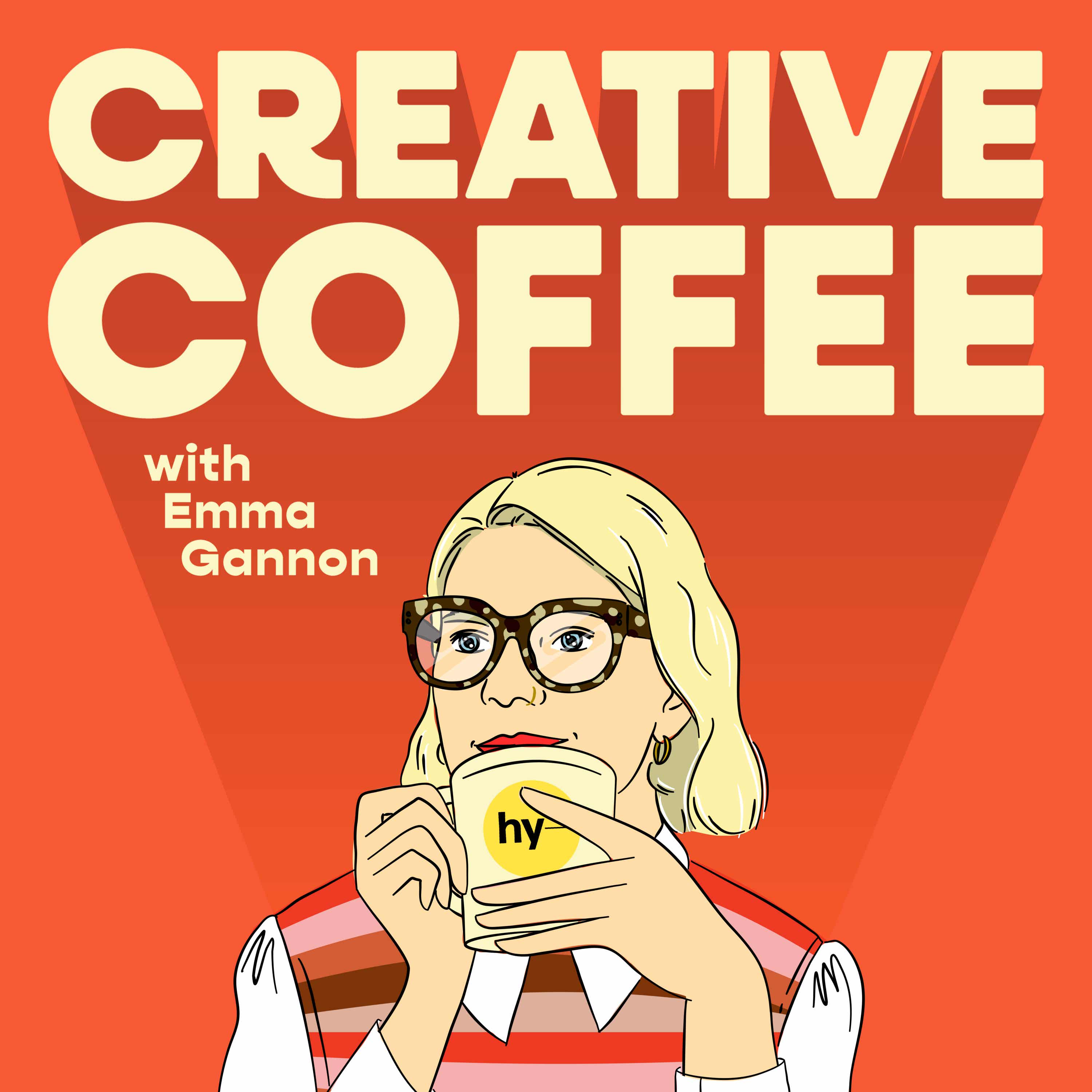
I’m back with a new podcast! 18 months after closing down my previous show Ctrl Alt Delete, I’m back in a different way. I’m starting from scratch, which may surprise some people. Why not launch my new podcast to an existing RSS feed that over the years reached thirteen million people? Because I’m not interested in reaching as many people as possible— I’m interested in building this community here on Substack, as organically as possible. I’m interested in sharing honest conversations, making something a bit rougher round the edges; less of a formal interview, less of a script/schedule and just embracing more of an open dialogue on how we make creative work in this economy. (You know everything I wrote in my book The Success Myth about my definitions of success changing… I meant it.) This new podcast will be for Hyphen paid subscribers only. Even the most basic of podcasts usually require some upfront investment (artwork design, illustration, editing services, music license, occasional travel expenses for guests etc) so your support is how this newsletter keeps its lights on (thank you!) The illustration is the work of Natalie Harney and the design is by Paul Storrie. The new podcast is called Creative Coffee because that’s simply what it is: I will be talking to my guests about creativity as though we are having a coffee together. It’s all about the big and small things that make up a creative life. You can listen to the trailer here and the first episode will be shared on Sunday. (If you want to receive and listen to the first episode — sign up as a member to The Hyphen now.) This is a laid back, honest, no-frills podcast with fellow creatives/writers— simply an extension of this newsletter on the themes of The Hyphen: creativity, wellbeing, work, how to live a fulfilling and content life. Writing is my number one love and my creative priority — but it’s also pretty solitary being a writer and can be a bit lonely at times when you’re in the middle of a difficult project, so it’s really nice to chat away with a fellow writer over a coffee — and it turns out I don’t want to leave podcasting behind completely. The first episode will be available on Sunday. It was recorded live on stage with writer and former editor-in-chief Farrah Storr — with many brilliant Hyphen readers in attendance. It was a really special evening, so thank you to everyone who came along. We recorded it in a beautiful library room at Conway Hall in central London. It’s been a while since I’ve done something of that nature, and everyone was so kind and welcoming. A friend produced it, who recorded my first ever live episode of Ctrl Alt Delete in the basement of Tottenham Court Road Waterstones back in 2016. I’m so lucky to have amazing friends who I’ve met along the way, who I am so grateful for. It’s all a bit full circle, really. Now — some housekeeping! Do you want to receive each new episode as a standalone post in your inbox — or would you just prefer me to tell you about new episodes in my Sunday Scroll round-ups (i.e less emails for you). I’ll go with the most popular vote: Excited to bring you this! ♡
This is a public episode. If you'd like to discuss this with other subscribers or get access to bonus episodes, visit thehyphen.substack.com/subscribe
More from Creative Coffee
Thank you for tuning into my live video with Debbie Weil!
I went on Freya Bromley’s new podcast called Character Study and she asked me to read a favourite passage from my new book A Creative Compass which launches officially into the world on June 25th 2026. She is kindly letting me share this passage with you here too. Someone described A Creative Compass as “Emma’s first creativity guide” in a review and I thought: first?! The implication that there will be many. I quite liked that. But yes, this is my FIRST creativity guide. It is a book of essays and stories about creativity, my creative process, how and why I do it, all the inspiration I’ve gathered over the years. I don’t want to be dramatic but I think, over the next decade or so as the world goes absolutely berserk: CREATIVITY and our CONNECTION TO IT— IS GOING TO BE A LIFELINE. A Creative Compass is an empowering guide for artists, makers, writers and anyone seeking to live more creatively, with confidence, calm and joy.We all possess creativity, whether it’s in the clothes we wear, the way we arrange flowers, or the patterns we choose for our bedroom walls. However, in today’s fast-paced world, many of us have lost touch with our innate creative abilities. By chasing trends, productivity hacks and protocols, we forget to trust ourselves… instead relying on algorithms to dictate what we like, what we make, and crucially, how we feel. Not anymore! We can take back control by rediscovering and prioritising our pure connection to our creative source.I understand just how essential creativity is for survival. (If you’ve read A Year of Nothing you’ll know why). Through necessity I have had to forge my own creative compass to rekindle my spark when it’s running low. *if you’re in the U.S. hang tight, a pre-order link coming for you too, soon. Now, I need to talk about Freya Bromley. I have one of those creatively sparked connections to Freya. I read her memoir A Tidal Year during my burnout episode and mention it in A Year of Nothing. I think she’s a huge literary talent. I love her work, and it is so easy to champion it, and tell everyone to read it. She has written her debut novel called A Real Piece of Work and it is so clever and funny and introspective and sincere in the best possible way. It’s out on June 11th - go pre-order it. Her brand new podcast, Character Study, has a brilliant premise: it is all about how writers, artists and performers shape their character online and offline. How we perform a character, and how we distinguish between our different selves. Fascinating topic. I am endlessly curious about how others make it work too—how we tiptoe between ‘public’ and ‘private’. Some people have a divide down the middle, and some people merge it all together. I can’t wait to listen to the other episodes — and I’m honoured to have been the first guest! Each episode, I’ll be talking to creatives of every discipline about the delicate art of finding inspiration in the everyday. From memoir to standup via autofiction and Instagram, I want to know what happens when we blur the lines between fact and fiction. These conversations will explore how seeing yourself as a ‘character’ in your own story can unearth unexpected courage, compassion and curiosity. And maybe even a bit more self-reflection! This podcast isn’t just for writers, it’s for anyone trying to make sense of their own story. - Freya Bromley Join Freya’s fabulous Substack: Hope you enjoy this extract! I cannot wait to bring A Creative Compass to you. A reminder that I am also running a creativity retreat focused on the prompts in the book, in Greece, in September. Details here.
One of the joys of my creative life is knowing other creative women, and growing alongside them. I’d followed Lydia Pang’s work for years before we finally met in person in 2019—back when she was creative director at Refinery29, about to move to Portland to become creative director at Nike. Our first friend-date was at a restaurant in New York, in the middle of our younger hustle years—bold, ambitious, HUNGRY and painting on our lipstick every morning with a smile. I was in New York to record a Skillshare workshop, meet with my new PR team and record a live episode of Ctrl Alt Delete podcast at WNYC Studios. Life was different, then. It was so fun reconnecting for this conversation. Lydia dialing in from her home in rural Wales with her husband and young baby; me from my quiet leafy corner of London. I have always loved Lydia’s confidence, one of those women who stands up tall, feet on the ground, rooted in herself. I had no doubt that her first book, Eat Bitter, would be excellent. She’s a creative powerhouse: I could go on about her academic background studying at The Courtauld Institute of Art, or being a judge at various big industry awards like Cannes Lions, or running her own successful creative studio MØRNING—but basically, Lydia Pang doesn’t do things by halves. The Eat Bitter project began as a self-published zine, and was available as a one-time pre-order back in 2020. It wasn’t just recipes; it also embodied the “struggles of her Hakka ancestors… whose ingenuity produced a distinct food culture based on fermenting and foraging.” It gained traction, and people wanted more. Then, the publisher Chatto & Windus won a ‘competitive eight-way auction’ to publish Eat Bitter as her debut memoir. It launches this week. Structurally, it has eight recipes from the ‘most painful and formative moments’ of Pang’s life—and there is a generosity of spirit, as though she’s welcoming you into her home and laying it all out on a glorious platter to be shared and consumed. ‘Eat Bitter’ is a Chinese proverb that means ‘to endure pain before tasting sweetness’—aka: we can do hard things and things take time. The idea of slowing down, enduring, surrendering.
Amy Suto’s book Write for Money and Power has an arresting cover. It’s bold. It’s not messing around. It asks: can you be an artist — and want money and power? Inside a system that doesn’t often grant artists much power? How many of us have been sold the starving artist myth? That to be an artist, you should be living off nothing, and never ever “sell out”? I met Amy last year at a writing retreat I was leading in Tuscany, and she mentions it in the book. It was such a lovely surprise to come across some of the reflections and takeaways from the week we spent together. I enjoy watching Amy deliver her work with confidence and generosity. The book is well laid out. The main headline of the book: “This is the golden age of writers who know how to sell their work without apology.” I underlined so many things with my yellow highlighter. It is structured in a kind of addictive way—each section gives you resourceful tips and advice, there is no fluff. Amy introduces the book explaining where she came from: Hollywood writer’s rooms. The Hollywood writer strikes happened. Work dried up. Contracts ended. Then, she gets diagnosed with Rheumatoid arthritis and needs to figure out a way to manage her symptoms and, hopefully, heal. Amy’s career pivot and health problems led her towards the world of freelancing, ghost-writing and self-publishing. She’s leaves the Hollywood system behind her. Why write for the gatekeepers, when you could write for potential readers instead? She says: “A self-published book gives you something to sell. It’s your intellectual property. It earns while you sleep. It helps your newsletter audience go deeper and gives you a chance to build long-term assets instead of waiting on publishers or agents.” Amy delivers some great phrases in the book. She says she noticed “the fear underneath the champagne toasts” at industry parties. She believes “the dream isn’t real if you can’t own it”. She describes traditional book contracts or a staff writer job on a TV show as “a very fancy cage.” It’s not a business model that suits the writer. She isn’t afraid to critique The System in this book. The same system that floats corporate publishing or Hollywood: “The system itself is not designed to make you rich, powerful or free. It’s meant to benefit the people at the top. It’s designed to keep you grateful. It’s designed to keep you waiting.” How long have you been WAITING to receive a reply about something? It’s common in big industries. It’s slow, slow slow. She asks the reader practical questions. Say your industry dries up tomorrow. What are you left with? “No email list. No reader connection. No platform you control.” It is a call to arms to writers: Own Your Stuff. Her message is clear: we believe in the ‘starving artist myth’ because it benefits all the middlemen. The book reads as a huge permission slip to writers who want to try out making things on their own terms. She says we used to need validation, “now we need a laptop and the guts to hit ‘publish’.” Another myth explored in the book is the idea that the cream rises to the top. She believes we’re sold this story that the good stuff will just magically get discovered. This myth of ‘getting discovered’ stops writers and creatives from making their stuff. They sit around waiting, instead of putting things out there to be discovered by readers, or the Internet, instead. She says “the creator economy doesn’t reward polish, it rewards participation.” I love how she says to the writers brave enough to hit publish: “Welcome to the arena.” Amy shares success stories which read as very inspirational. She makes a lot of money herself. Not everyone is going to have this worldwide success, but isn’t it fun to think “ooooh what if?” in a self-publishing world of no limitations? She writes about Andy Weir, who had self-published The Martian on Amazon for 99p before it went mad with readers. She tells stories of the newsletter Stratechery which apparently makes $3.2 million a
After reading Kathy Slack’s Rough Patch: How a Year in the Garden Brought Me Back to Life, I immediately wanted to speak with her. I had a feeling we’d have a good conversation, not least because her book shares so many themes with my own, A Year of Nothing, which launched this week. We both write about deeply personal years in which, against our will, we were forced to let go, opt out, and go underground—years that made very little sense at the time. Mine unfolded recently; Kathy’s took place more than a decade ago. Our situations differed in many ways, and we used different language to describe our experiences—and while I’m not sure the word burnout ever fully captures what the soul moves through in these dark times, it remains an easy shorthand for the culture around us. Beneath the surface, there were striking similarities in our stories. We were both looking back on particularly challenging years in our lives, and we both chose to write them down and open up. We both lived through turbulent periods in which our worlds were turned upside down, and later wrote about the slow process of coming back to life: emerging from dark, fallow seasons and digging our hands back into the soil of life. In Rough Patch, Kathy writes about leaving her glossy advertising career in London—a life that looked like a ‘dream’ but was quietly draining her soul: and discovering unexpected solace in her vegetable patch. Her book offers a brilliant exploration of the healing power of nature and the practice of self-compassion, and along the way, I picked up some useful gardening tips and nourishing recipes. In this honest chat, we discuss the differences between depression and burnout, the importance of deep rest, kindness toward ourselves, how a memoir isn’t a manual, abundance vs ‘success’, choosing to be child-free, and the deeply satisfying feeling of growing your own vegetables from scratch. Hope you enjoy. 🌱 Other books/links mentioned: * Kathy’s Substack ‘Tales from the Veg Patch’ * Kathy’s cookbook: From the Veg Patch: 10 favourite vegetables, 100 simple recipes everyone will love * The Success Myth: Letting go of having it all