Show Notes
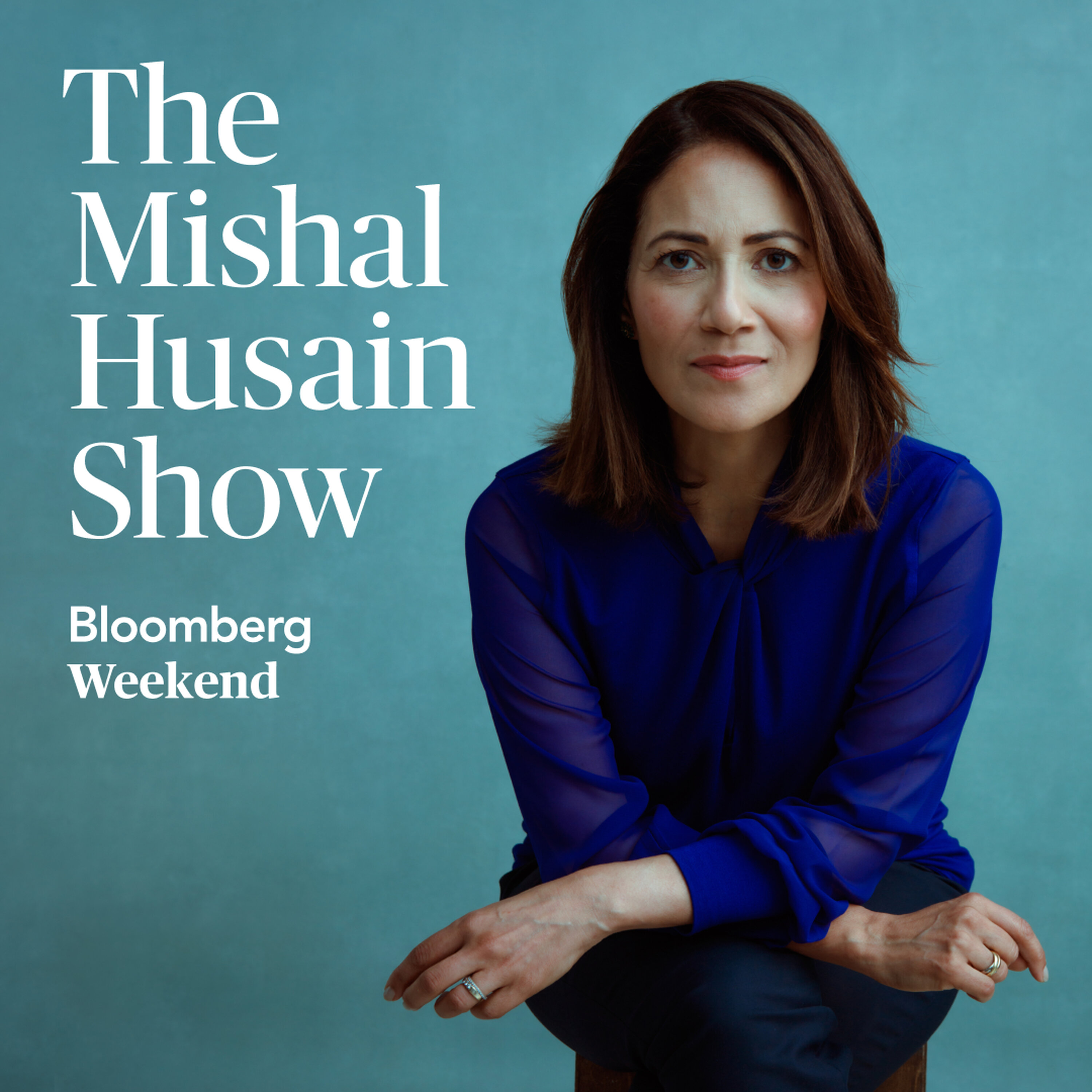
“Our region has experienced what I can only describe as an earthquake.” That was how Sheikh Mohammed bin Abdulrahman Al Thani, Qatar’s prime minister, began remarks at a special UN General Assembly edition of the Qatar Economic Forum. Seven months of the US-Israel war with Iran have ravaged Qatar’s gas exports, which rely on passage through the Strait of Hormuz. While the country has long prided itself on conflict mediation, this time its own economy and stability are at stake. In front of an audience in New York, Sheikh Mohammed discussed with Mishal Husain recent pressures his country has experienced as a result of the conflict. He has also unveiled a new investment initiative, part of a bid to focus on the future even as Qatar grapples with the current crisis. Contact The Mishal Husain Show [email protected] Subscribe today on Apple Podcasts and Spotify. See omnystudio.com/listener for privacy information.
More from The Mishal Husain Show
In this conversation recorded at Bloomberg’s New Economy Forum in New Delhi, Mishal Husain talks to Rory McIlroy about his career as one of the world’s top professional golfers. McIlroy is one of a very small group of men to have achieved a career grand slam, winning all four major golf tournaments. Now he’s looking to what might be next. They also discuss the LIV Golf breakaway league, the behavior of fans and the future of the game. Contact The Mishal Husain Show [email protected] Subscribe today on Apple Podcasts and Spotify. See omnystudio.com/listener for privacy information.
Best known as a member of Monty Python, Michael Palin has been many things — sketch writer, comedian, actor, and for almost four decades, world traveler. In his latest series, “Michael Palin in the Philippines” - on UK channel 5 - Palin meets the nation’s president, Ferdinand Marcos Jr., visits an overcrowded prison and witnesses firsthand rising tensions in the South China Sea. In his conversation with Mishal Husain, he speaks about what his travels have taught him, the realities of seeing the world in his 80s and Monty Python’s unlikely diplomatic power. Contact The Mishal Husain Show [email protected] Subscribe today on Apple Podcasts and Spotify. See omnystudio.com/listener for privacy information.
As US journalist Azadeh Moaveni was writing her latest book, ‘The East Wing’, a history of America's first ladies and their staff, President Donald Trump’s demolition of that very part of the White House was underway. Moaveni presents her book as a “parallel women’s history,” tracing how the wives of US presidents, who traditionally had offices in the now-vanished annex, helped shape alliances at home and abroad. Moaveni, a journalism professor at New York University, is a longtime reporter on Iran and the Middle East. She explains in her conversation with Mishal Husain how when she took on the project, Iran seemed unusually quiet. Then the US and Israel attacked. Here, she reflects on a seismic year in the US and around the world. Contact The Mishal Husain Show [email protected] Subscribe today on Apple Podcasts and Spotify. See omnystudio.com/listener for privacy information.
Amid the furious debate over the pace and potential risks of AI development, top tech executives have publicly united around a call for their industry to be regulated. As Google's senior vice president of technology and society, James Manyika says his role is to help ensure artificial intelligence turns out well for the company and the rest of us. But with US President Donald Trump rejecting new guardrails and public skepticism about the motivations of AI giants calling for them, proponents of the technology face an increasingly tough room. In this conversation with Mishal Husain, Manyika explains why he hopes that worries about AI – from job destruction to the more existential – won’t dampen enthusiasm about its possibilities. Read Mishal’s notes on this conversation https://www.bloomberg.com/mishal Contact The Mishal Husain Show [email protected] Subscribe today on Apple Podcasts and Spotify. See omnystudio.com/listener for privacy information.
Few journalists have watched Donald Trump as closely or for as long as Maggie Haberman. The New York Times reporter first encountered him as a tabloid fixture in the 1990s and has since chronicled his ascent to the White House, the period between his presidencies and the transformation of the office itself. Her book, Regime Change: Inside the Imperial Presidency of Donald Trump, written with Jonathan Swan, examines the Republican’s second term through the first weeks of the US-Israel war with Iran. In this conversation with Mishal Husain, Haberman looks ahead to the US midterm elections. She discusses Trump’s “unreality bubble,” his attitude to the war, his complex relationship with Vice President JD Vance and why she sees a “black hole” ahead. Read Mishal’s notes and reflections on this conversation https://www.bloomberg.com/mishal Listen to Mishal’s interview with Tucker Carlson Contact The Mishal Husain Show [email protected] Subscribe today on Apple Podcasts and Spotify. See omnystudio.com/listener for privacy information.