Show Notes
As of 2026, the UK space industry is a significant and strategic driver of the national economy, contributing over £19 billion in revenue and supporting tens of thousands of high-skilled jobs. Satellite-based services and data underpin roughly 18% of UK GDP, equivalent to approximately £454 billion of the wider economy. And the sector is growing exponentially.
But this is just the tip of the iceberg. For the space industry to fully realise its potential it needs more of the right people to understand what’s happening and get involved. People like policy makers, investors, regulators, planners, communicators, lawyers and consultants.
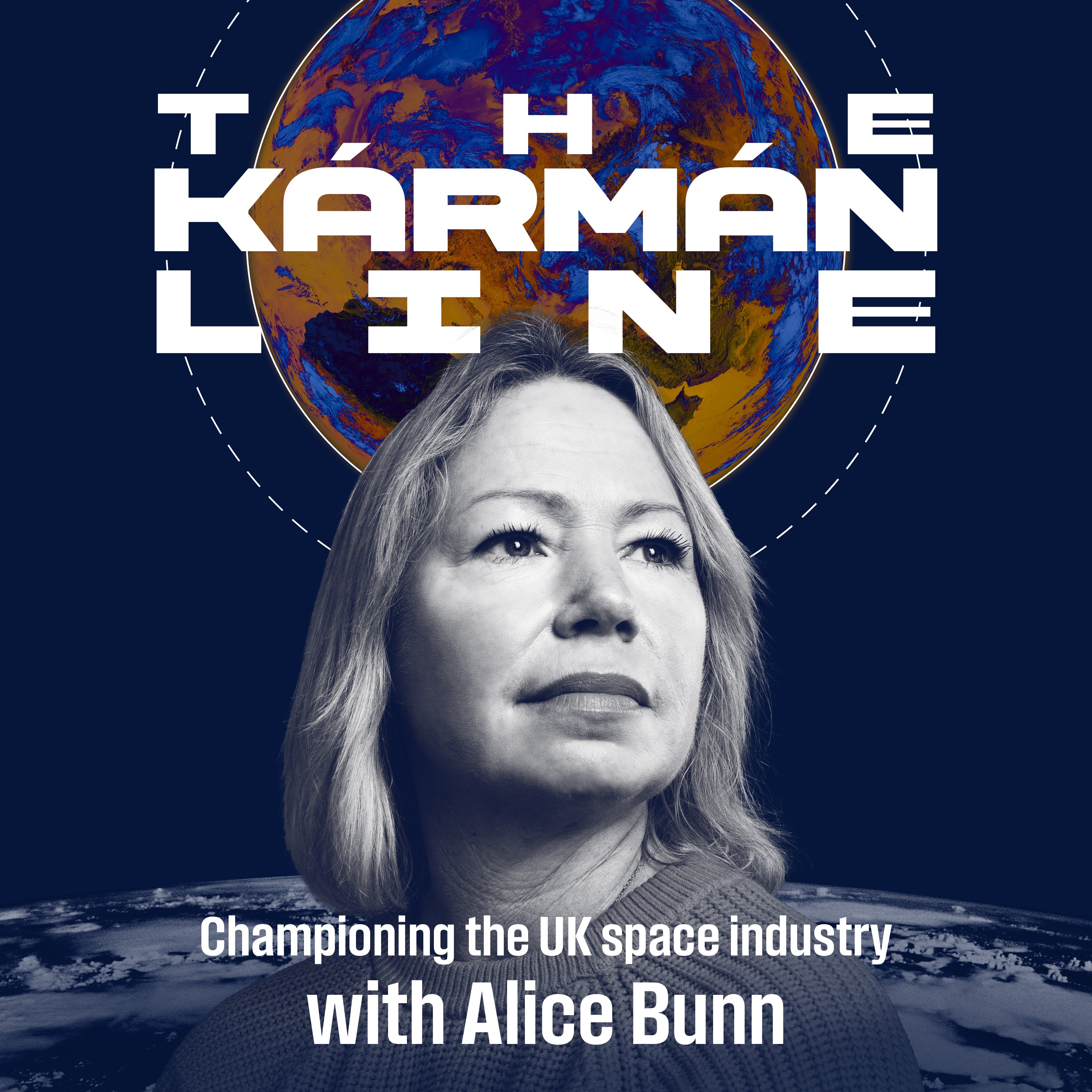
Dr Alice Bunn, the president of UK Space, and her panel of guests, Sam Adlen co-CEO of Space Solar, Nick Shave managing director of Astroscale and Anushka Sharma founder of Naaut, discuss the surprising, awe inspiring business of space and make the compelling case for why more companies and investors should get involved.
Contributors: Host: Alice Bunn, President of UKspace Dr Alice Bunn OBE FIMechE FRAeS CEng | LinkedIn UKspace: Overview | LinkedIn
Guests: Nick Shave, Managing Director of Astroscale Nick Shave FRAeS | LinkedIn Astroscale: Overview | LinkedIn
Sam Adlen, CEO of Space Solar Sam Adlen | LinkedIn Space Solar: Overview | LinkedIn
Anushka Sharma, founder of Naaut Anushka Sharma | LinkedIn Naaut: About | LinkedIn
Key topics covered: Impact of Space on Everyday Life
Practical Applications Environmental Monitoring Global Security
Sustainability and Innovation in Orbit
Space Debris Manufacturing in Microgravity Space-Based Solar Power
Economic and Regulatory Landscape
Cost Reduction Investment and Finance Regulation and Policy
The Future of Space Exploration
New Platforms Academic Contribution Hosted on Acast. See acast.com/privacy for more information.
More from The Kármán Line
A blockbuster cast of industry leaders debate the UK’s new space strategy with invited guests live at the Harwell Campus. What do they all think about the government as a procurer and facilitator of private growth capital? Why does Sam Adlen argue that the strategy lacks forward-looking economic ambition? What are the real benefits of alignment between DSIT, MOD and UKSA, as well as the explicit decision to prioritise four capability pillars – Satcoms, space domain awareness (SDA), ISAM and launch?
How does winning the UK Space Agency's Active Debris Removal (UK ADR) contract position ClearSpace to capture defunct satellites? How do their multi-arm robotics and advanced machine-learning algorithms match up to the task? How does active debris removal establish a long-term national capability and commercial service layer in space? And what does a transition from R&D grants to major anchor contracts mean for hyper-scaling UK In-Orbit Servicing, Assembly, and Manufacturing (ISAM)?
How does Metalysis strip oxygen as a captured gas from metal oxides and convert the oxide into pure metal alloys? How will this help us to supply life support for lunar bases or create rocket propellant for deep-space refuelling? Once the oxygen is stripped away how can the remaining metal alloys be repurposed for 3D-printed infrastructure, landing pads or road surfaces? And how can Metalysis’ research help regolith inks to print electronic components directly in space?
Does sub-centimetre, non-trackable space debris pose an existential threat to satellites and orbital infrastructure? How can ultra-lightweight "black box" sensors turn a spacecraft's surface into an impact detector to diagnose anomalies? What do satellite operators need to unlock affordable, named-peril collision insurance through Lloyd's of London? And how can a "neighbourhood watch" network of sensor-equipped satellites build live space domain awareness to protect the space economy?
What is the true balance between human spaceflight and robotic exploration when it comes to science, inspiration, and decision-making capabilities? How is space transitioning from a niche frontier to an everyday commercial workplace? What role do regulatory frameworks, such as the United Nations, the Artemis Accords, and the Astra Carta, play in keeping orbit and the lunar surface safe and sustainable? And how can the UK Government act as an "anchor customer" to bridge the commercial "valley of death" for domestic space startups?