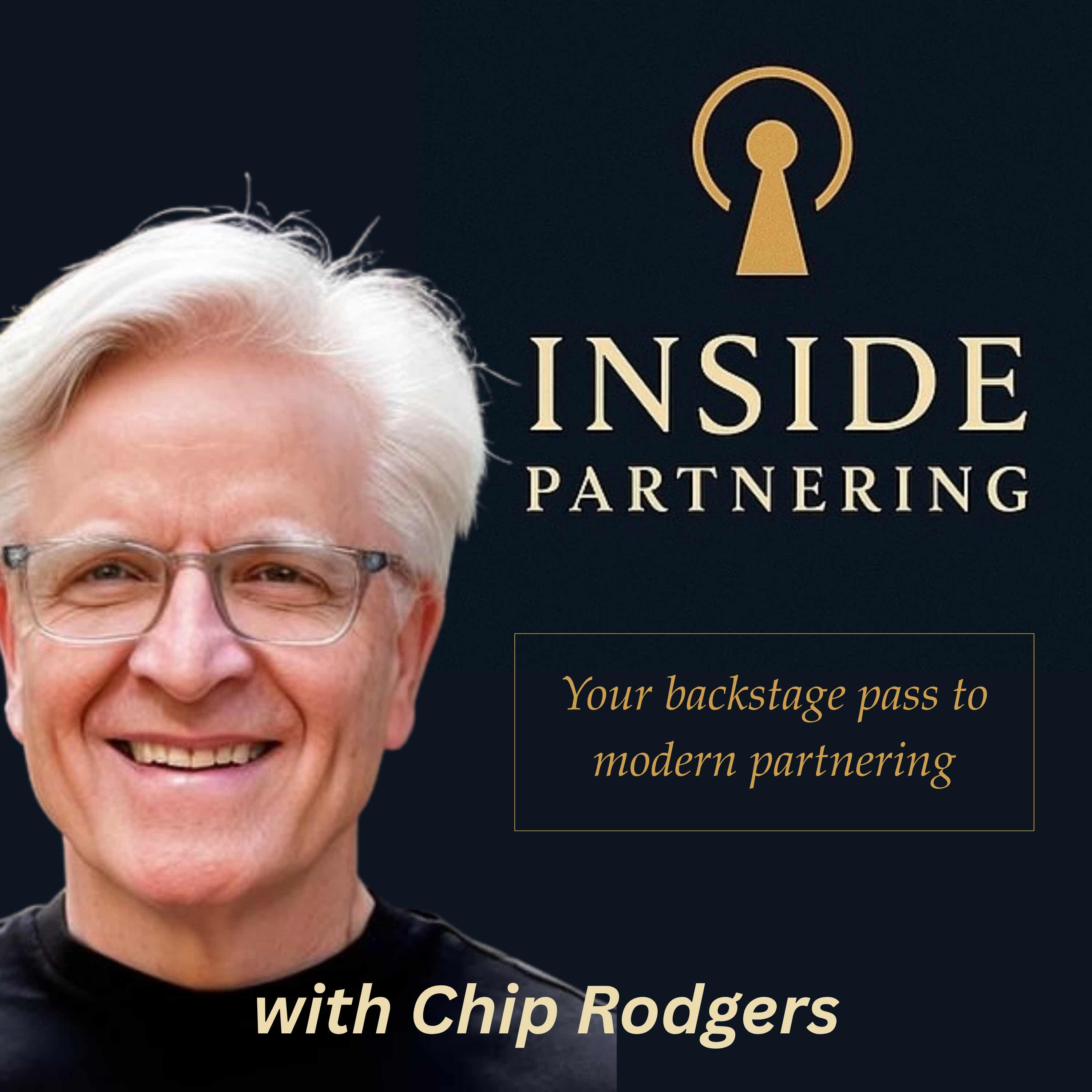
Show Notes
When Drew Neisser walked on stage at the CMO Huddles SuperHuddle dressed head to toe in a penguin suit, the room erupted. It wasn’t just comic relief - it was a perfect metaphor for everything the CMO Huddles community stands for: boldness, courage, and the power of the flock. As Drew puts it, “A group of penguins is called a huddle. That’s what we’re about - caring, sharing, and daring together.” From Crisis to Community The origin story of CMO Huddles goes back to April 1, 2020. The world was in lockdown. Marketing leaders were isolated, events were canceled, and uncertainty was everywhere. Drew gathered 18 CMOs on a Zoom call. They met 55 times in six months. What began as a survival mechanism quickly became a thriving peer community - and a business built on purpose. Inside Partnering is a reader-supported publication. To receive new posts and support my work, consider becoming a free or paid subscriber.
Fast forward to 2025, and the SuperHuddle in Palo Alto brought together over a hundred CMOs from some of the most admired B2B brands on the planet - Snowflake, Gong, Lovable, and more. The energy was palpable as leaders leaned into one another for ideas, strategies, and perspective. A Culture of Flocking Awesomeness What makes the Huddles unique is how they combine structure with spontaneity. Each session puts CMOs in table groups of eight to ten to tackle real-world problems together - live, in the room. These “mini-huddles” simulate the virtual peer huddles that define the community, bringing them to life in an immersive, high-energy format. And yes, there’s the penguin. “It’s part of our brand,” Drew says. “Because a group of penguins is a huddle. We try to be bold, courageous, and have fun. I wore the penguin suit to inspire CMOs to lead with a little more courage.” Authentic Differentiation One of the major themes that emerged from the event was the idea that true differentiation starts with culture, not campaigns. Drew noted that the top CMOs from companies like Snowflake, Gong, and Lovable all shared a similar insight: culture drives brand, and authenticity drives trust. “What would work for Lovable won’t necessarily work for Snowflake,” Drew explained. “It’s not just about marketing - it’s about who you are as an organization. The culture is the difference.” That theme resonated across sessions - whether CMOs were discussing AI, storytelling, or customer experience, it all came back to authenticity. Alignment as the Superpower Another major takeaway was alignment. CMOs face constant pressure to balance relationships in three directions: upward to the CEO and board, sideways with peers like the CRO and CFO, and downward to their teams. “Peer alignment was probably the most profound theme of the day,” Drew shared. “The partnership between Denise Persson and Chris Degnan at Snowflake is a perfect example - nine years together, four CEOs, and they built a scalable, repeatable revenue engine.” Their story, from $3 million to over a billion in revenue, is a masterclass in partnership and trust between marketing and sales. As Drew put it, “There’s not one size fits all in marketing - and that’s why it’s so damn hard.” Beyond Best Practices A recurring phrase throughout the day was that “best practices are boring.” True innovation comes from judgment and creativity. One CMO shared how they use AI to generate campaign ideas - not to copy them, but to identify what not to do. “We put the AI-generated ideas on the wall and say, ‘That’s the obvious stuff. Let’s skip it,’” Drew laughed. “That’s where judgment comes in. Great marketing leadership is about developing judgment in your people.” Care, Share, Dare At its heart, the CMO Huddles mantra - Care. Share. Dare. - is about building a culture of generosity and courage. Care deeply about your peers. Share knowledge freely. Dare to lead differently. For Drew, the penguin suit wasn’t just a gag - it was a statement. Leadership today requires both boldness and empathy. And if y
More from Inside Partnering
Samrah Khan on partner specialization, faster customer outcomes, and Google Cloud’s evolving ecosystem strategy The system integrator business is undergoing a fundamental transformation. For years, the traditional model was relatively straightforward. Technology vendors sold platforms, customers selected implementation partners, and SIs delivered projects that could stretch across multiple years. AI is changing that equation. Customers want more than technology implementation. They’re looking for partners who can help define their AI strategies, identify business opportunities, develop specialized solutions, and deliver measurable results in months rather than years. In my latest Inside Partnering conversation, I welcomed back Samrah Khan, Director of Google Cloud SI/GSI Ecosystem North America, to explore how these changes are reshaping the partner ecosystem. Samrah leads Google’s SI/GSI partner relationships at a particularly interesting moment. Google Cloud’s business experienced an amazing 82% year-over-year growth in Q2! But the more interesting story isn’t the growth itself. It’s how the expectations of customers, technology providers, and partners are changing. Here are six insights from our conversation. 1. Customers Want a Unified AI Strategy, Not Another Technology Implementation One of Samrah’s clearest observations is that enterprise customers are approaching AI very differently from previous technology transitions. They’re no longer simply shopping for infrastructure or selecting a systems integrator after choosing a platform. Instead, they expect technology providers and partners to work together from the beginning, bringing a comprehensive perspective on business transformation. “Customers are looking at both the partners as well as the hyperscalers or technology providers to come in and look at the whole enterprise from A to Z.” Thanks for reading Inside Partnering! Subscribe for free to receive new posts and support my work.
For partner leaders, one of the hardest questions isn’t identifying your best-performing partners. Most organizations already know who they are. The harder question is: Who should you invest in next? That question sits at the center of my conversation with Kenneth Fox, CTO and founder of ChannelScaler. Kenneth has spent his career in channels and partnerships, and his perspective combines the technology side of partner management with the practical realities of running partner programs. Inside Partnering is a reader-supported publication. To receive new posts and support my work, consider becoming a free or paid subscriber.
At Sage FUTURE in San Francisco, I sat down with Dan Miller, EVP of Financials and ERP at Sage, to talk about how Sage is thinking about AI, ecosystem partnerships, and the future of ERP platforms. One of the clearest themes from the conversation was this: finance leaders are not resisting AI. They simply want transparency, accountability, and confidence in the outputs. For partner leaders, ISVs, and ecosystem builders, that creates a very different opportunity than the generic “AI transformation” messaging dominating the market right now. Dan framed it around trust. “What finance and operations professionals really want is confidence in the tools that they’re deploying are doing exactly what they are expected to do.” That requirement shapes how Sage is building both its AI capabilities and its broader partner ecosystem. Inside Partnering is a reader-supported publication. To receive new posts and support my work, consider becoming a free or paid subscriber.
This is a free preview of a paid episode. To hear more, visit insidepartnering.substack.com
At Sage FUTURES in San Francisco, Gretchen O’Hara delivered a clear message to partners: the market is shifting fast - and the opportunity is massive. But despite the noise around AI, one thing hasn’t changed. Partners are still at the center of how businesses win. “The channel is one of the most important things because our partners are the ones that have the deepest industry expertise and are closest to customers that can really solve their unique, unique business challenges.” AI may accelerate execution, but it doesn’t replace the need for domain expertise, customer proximity, and trusted advisory. In fact, it amplifies it. Inside Partnering is a reader-supported publication. To receive new posts and support my work, consider becoming a free or paid subscriber.