Show Notes
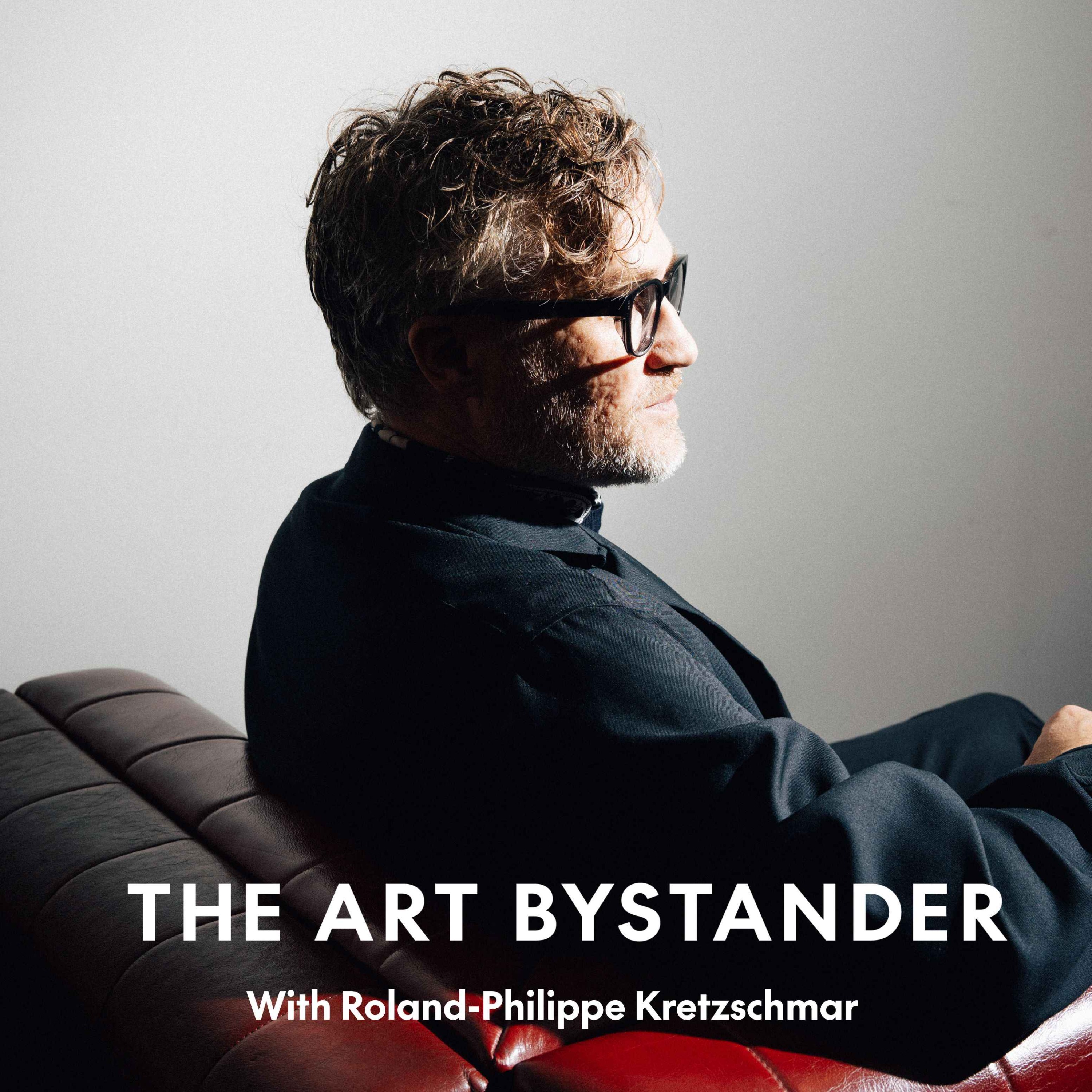
The Art Bystander No27: Marcus Jansen. In this episode our host Roland-Philippe Kretzschmar, sit down with internationally acclaimed artist Marcus Jansen whose work has been exhibited at the Bronx Museum of the Arts, the Smithsonian Institution, and Documenta among others. From his early years between the Bronx and Germany to serving in the U.S. Army and later becoming one of the most important painters of his generation, Jansen’s journey is as compelling as his art.
His new exhibition Faceless at CFHILL, Stockholm, in collaboration with Almine Rech and the Marcus Jansen Foundation, dissects power structures, anonymity, and the systems that shape our lives. Jansen’s raw, gestural abstraction meets a deeply political and emotional narrative, making his work a powerful lens through which to view contemporary society.
We talk about: His transition from soldier to artist; the unseen forces of control in today’s world; how his art challenges historical narratives; the intersection of street art in his practice and the socialist structure of the military.
Jansen’s work has been described as a 21st-century response to Jackson Pollock and Robert Rauschenberg, but his voice is distinctly his own—urgent, fearless, and unfiltered. Hosted on Acast. See acast.com/privacy for more information.
More from The Art Bystander
You can love a work of art and still question its price. You can support an artist and still want to understand what happens when you need to sell.
What happens when you spend enough time with a painting to imagine living with it? In this episode of The Art Bystander, our host Roland-Philippe Kretzschmar speak with David Rothschild, Sotheby’s Head of Contemporary Art Private Sales in the UK and Global Lead for Private Sales Exhibitions, and Valerio Polimeno, founder of _POLIMENO, about Chez Sotheby’s.
Collector Karen Boros joins Roland-Philippe Kretzschmar in the latest episode of The Art Bystander podcast. Karen Boros and her husband Christian began by collecting artists of their own generation. As they grew older, they made a deliberate decision to keep following younger artists, eventually those of their son’s generation. Collecting became a way of staying engaged with experiences and ideas beyond their own.
Lidewij Edelkoort on how long trends really take “Most of the time we only work on the long-term trend. Because the short TikTok things, for a few weeks, are not really interesting in the long run. They just give shape to the big movement. Recently, I showed my books to a publisher and we came to the conclusion that most trends take 20 to 25 years to arrive and to really blossom.”
What changes when an artist runs a gallery? Recorded inside 2 Mira Archiv in Madrid, this episode of The Art Bystander Podcast brings Roland-Philippe Kretzschmar together with Spanish artist and gallerist Mira Bernabeu, founder of 1 Mira Madrid and an archive space dedicated to conserving, digitising and exhibiting cultural material.