Learning from the Dark Side, Part II: 5 - or is it 7? - Tricks from News
Can We Have Your Attention?Show Notes
You can also watch this episode on our YouTube channel!
https://www.youtube.com/@CanWeHaveYourAttention
We all know what the news is. But how is it put together, and why? What makes the news news, and what can we learn from the decisions journalists make on a daily basis - and how do we apply those to brands?
Join Claire and James this week as they talk tricks of the trade - live, in the same room, for only the second time in twenty years (and two weeks).
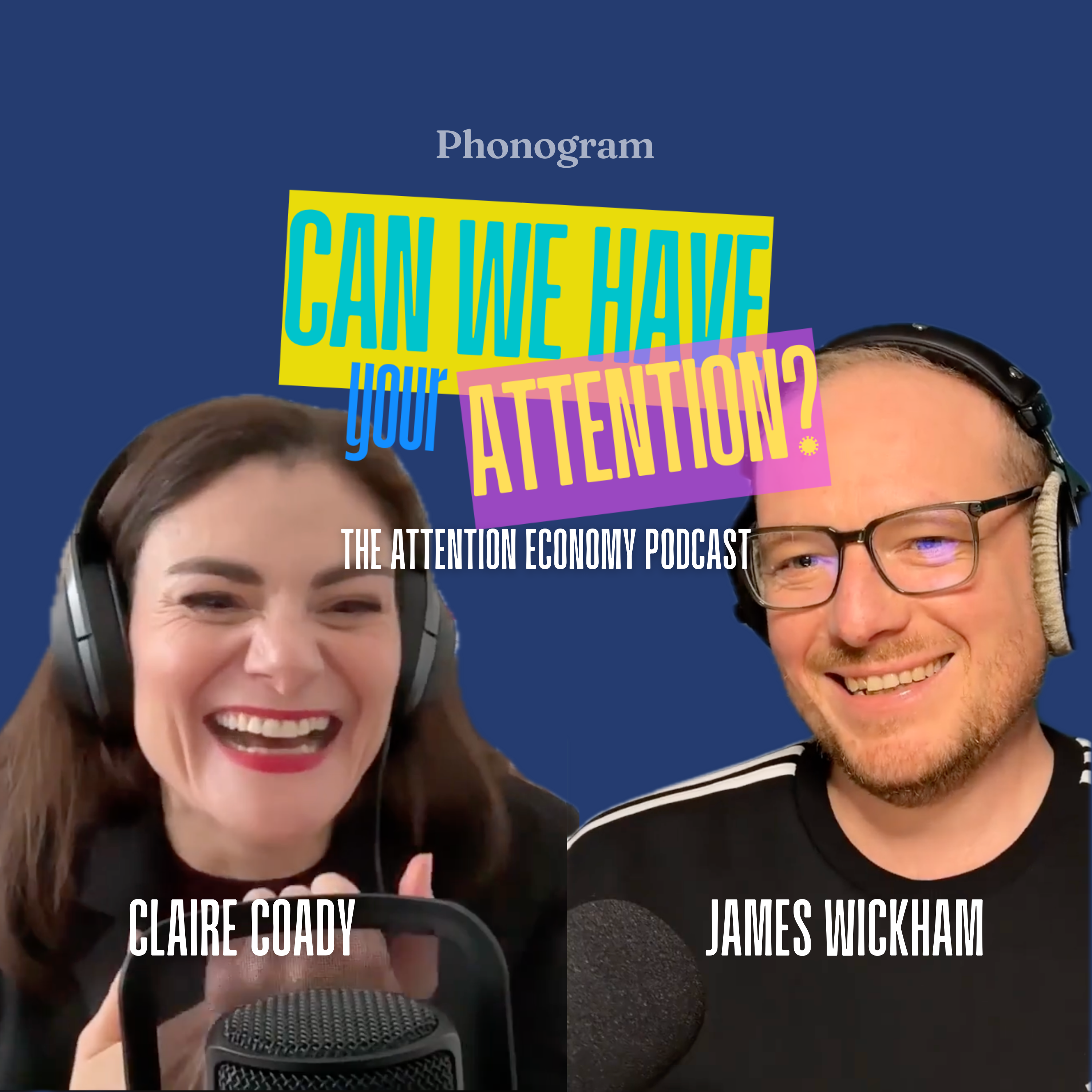
Can We Have Your Attention? is a podcast all about attention. Join hosts Claire Coady and James Wickham as they dive into how your attention is attracted, tracked, traded, and manipulated in the modern attention economy.
Hosted by: Claire Coady & James Wickham
Produced by: Phonogram https://www.phonogram.co.uk in conjunction with The Attention Practice https://www.theattentionpractice.com
Find out more on our website https://canwehaveyourattention.com
Got a story for us? Email us: [email protected]
Like this episode? If you enjoyed this episode, please click subscribe. If you really liked it, please leave a rating - every rating helps this podcast reach more listeners like you.
More from Can We Have Your Attention?
Claire and James discuss Aaron Sorkin’s film, The Social Reckoning, a companion to The Social Network.
You can also watch this episode on YouTube!
Ad tech, the backbone of digital advertising, is a lucrative business. But why? Who is profiting from it? And at what cost? Claire and James are joined this week by Claire Atkin, Co-founder and CEO of the Check My Ads Institute. They discuss ad tech: what it is, how it works, why it makes money, for whom it makes money - and what the consequences are.
For the past 25 years, claims on packets of crisps have been subject to more regulation than claims in election campaigns. But that could finally be about to change. Amendments to the Representation of the People Bill promise to apply some of the UK’s strenuous - and effective - advertising standards to election advertising. We are joined by Alex Tait, ad industry veteran and founder of the non-partisan campaign organisation Reform Political Advertising, one of the groups advocating these changes. Alex, together with Benedict Pringle, set up Reform Political Advertising to change the law. What does fact-based election advertising mean in practice? How can regulation that applies to commercial brand advertising improve political trust? How long does it take to turn an idea into a law? And can turkeys really vote for Christmas?
We're told the news is an important part of a functioning society. But is our 24-hour, always-on news culture, with bad news to the fore, actually harming us and our institutions?