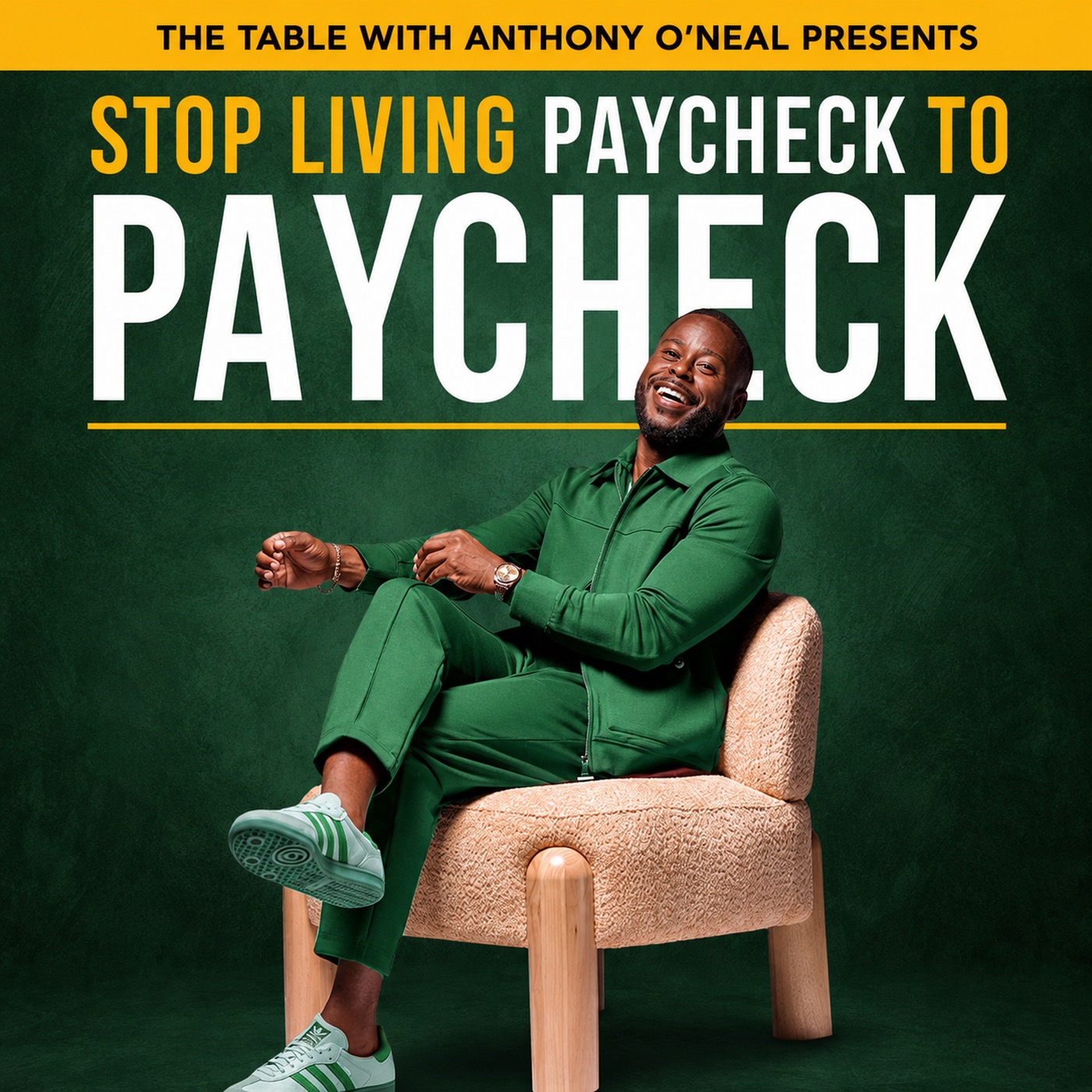
55% of Americans Are Getting Poorer in 2026... The Other 45% Are Doing THIS!
The Table with Anthony ONealShow Notes
55% of Americans say they're getting poorer. That's the highest number Gallup has recorded since 2001 — higher than the pandemic, higher than 2008. But 45% aren't.
In this episode, I'm breaking down the 5 things separating the people quietly building wealth from the people quietly drowning in 2026. This isn't theory. This is the exact framework I used to go from broke and living in my car to a net-worth millionaire.
Get the book "Stop Living Paycheck to Paycheck" (over $275 in free bonuses): https://anthonyoneal.com/book
🔗 RESOURCES MENTIONED: • Pre-Order "Stop Living Paycheck to Paycheck": https://anthonyoneal.com/book • Compare Top Investing Platforms: https://anthonyoneal.com/invest • Download the In The Black App: https://anthonyoneal.com/app
CHAPTERS: 0:00 - Why 55% of Americans Are Getting Poorer 3:15 - How Bad It Really Is (The Numbers) 6:30 - Thing #1: Give Your Money a Mission 11:00 - Thing #2: Marry the Vision, Date the Method 16:45 - Thing #3: Hold Family Wealth Meetings 22:30 - Thing #4: Declare War on Consumer Debt 26:00 - Thing #5: Invest On Purpose 30:15 - The Truth That Will Set You Free
Subscribe & join the In The Black family. We're better together than apart.
#StopLivingPaycheckToPaycheck #BuildWealth #FinancialFreedom
Advertising Inquiries: https://redcircle.com/brands
Privacy & Opt-Out: https://redcircle.com/privacy
More from The Table with Anthony ONeal
What happens to your investments when the stock market crashes? And should you sell everything, hold cash, or keep investing? In this episode of The Table, Anthony O’Neal sits down with investing expert Courtney Hale to break down 5 stocks and ETFs that could help protect your portfolio during a market downturn. From Walmart and Coca-Cola to dividend and utility ETFs, Courtney explains how defensive investing works, why panic-selling can cost you thousands, and how to start building protection with just $100. They also reveal why missing just five of the market's best days could dramatically reduce your long-term returns, how wealthy investors prepare for economic uncertainty, and why protecting your money matters as much as growing it. The goal isn't to predict the next crash. It's to have a strategy before it happens.
A $500 course helped Rodney go from earning $41,000 in healthcare to a $120,000 construction career without a four-year degree, but the investment was only the beginning.
In this episode, Anthony breaks down his five-phase escape plan to get out of the paycheck-to-paycheck cycle, eliminate consumer debt, build your Freedom Exit Number, invest consistently, and ultimately create a legacy. Using the example of a woman earning $60,000 a year with $43,000 in consumer debt, he shows how changing the order of your money can turn $1,700 a month in payments into money working toward your future. If you’re earning money but still don’t feel financially free, Anthony explains the order he believes can help you get your paycheck back, create margin and finally start building wealth that serves you and your family.
What if the financial goal you’re chasing is actually costing you the life you’re trying to build? Anthony O’Neal gets personal about making $1 million in year one, $2 million in year two, and realizing he had no target, no finish line, and no idea what he was really running toward. In this episode, Anthony breaks down how to calculate your own financial number using the 300 rule, determine whether you can realistically get there, shrink the number by eliminating consumer debt, and decide what your life should look like once you reach it. Financial freedom isn’t about chasing more forever. It’s about knowing your number, counting the cost, and building a life where your money gives you back your time, family, faith, and freedom.
A bigger paycheck can make you look successful, but it does not automatically make you wealthy. Anthony breaks down the difference between income and net worth, sharing how he once made six figures and still had nothing left by the end of the month. He explains how lifestyle creep, car payments, and consumer debt quietly eat every raise, then lays out the order for turning income into actual wealth: build margin, create a 3–6 month freedom fund, eliminate consumer debt, and start buying assets that work for you. Financial freedom isn't about how much money passes through your hands; it is about how much stays and what you do with it.