Show Notes
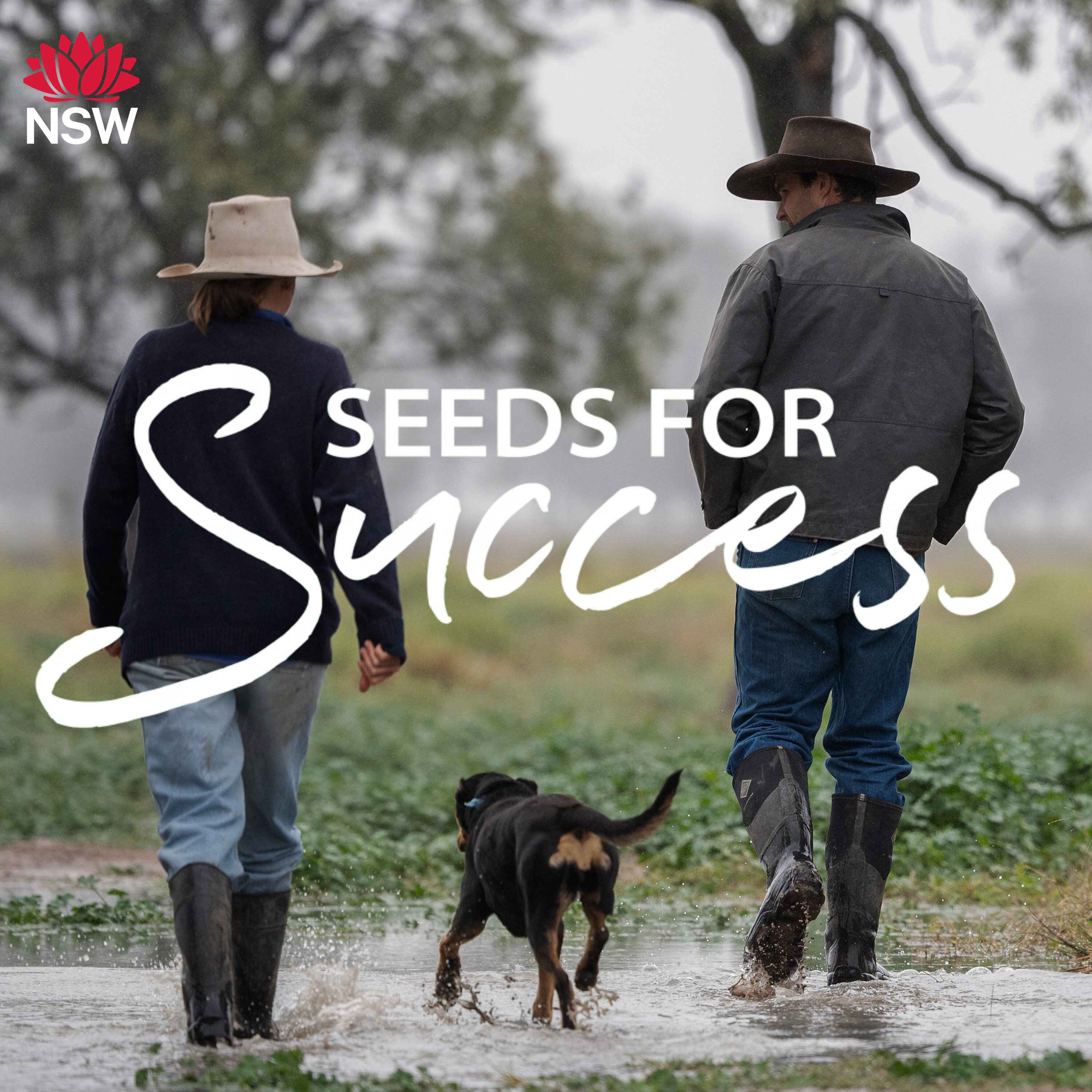
Col Clapham is a beef and sheep producer in the Ilford area of NSW. Col runs three properties with his wife and uncle across 5700 acres, using the variable elevation as part of their pest management strategies to protect their 1600 breeding ewes, 200 cows, and 400 steers. In this episode, Col discusses the challenges of managing soil that ranges from sandy to rich basalt to achieve his production goals, how he tackles managing native and improved pastures in the cooler, elevated country of his properties, and how he’s implemented technology to allow him to monitor his animals and make better decisions about when to sell. Local Land Services Senior Ag Advisor, Lauren Costin, caught up with Col on a rainy day in his woolshed.
Nominate a Mate: If you'd like to nominate a mate (or yourself) as a potential future guest on the podcast, you can do so here: Nominate a Mate for 'Seeds for Success'.
Connect: Central West LLS website Central West LLS on Facebook Central West LLS on Twitter Central West LLS on YouTube
The views contained in this podcast series are not necessarily endorsed by Central West Local Land Services. Listeners are advised to contact their local office to discuss their individual situation.
This show is produced in collaboration with Wavelength Creative. Visit wavelengthcreative.com for more information. See omnystudio.com/listener for privacy information.
More from Seeds for Success
What if better results in the feedlot start with knowing your numbers, controlling your risk and making decisions based on data? In this episode, Local Land Services Livestock Extension Officer Chelsea Koch speaks with Hamish Pennington, who runs his family farming enterprise alongside Conqueror Milling in Cootamundra, about the practical decisions behind his sheep and cattle operation and feedlot. Hamish shares how the feedlot began as a way to test the performance of the pellets produced by the family business, why he prefers to lock in a margin before buying livestock, and how using data helps him track individual animal performance and make more informed decisions. Hamish also discusses transitioning lambs onto pellets, the role of genetics and feed quality in achieving performance, and why he prefers a performance-based approach rather than simply trying to produce the cheapest feed. He explains how the family has used diversification, including an irrigation farm and feed mill, to help drought-proof the business, as well as the importance of keeping capital costs under control so the feedlot can be scaled back when the opportunity isn't there. He also shares his approach to risk, traceability and data, working with family, and why automation could be the next step in making feeding more efficient. Resources and links: Conqueror Milling Company Nominate a Mate: If you'd like to nominate a mate (or yourself) as a potential future guest on the podcast, you can do so here: Nominate a Mate for 'Seeds for Success'. Connect: Central West LLS website Central West LLS on Facebook Central West LLS on X Central West LLS on YouTube The views contained in this podcast series are not necessarily endorsed by Central West Local Land Services. Listeners are advised to contact their local office to discuss their individual situation.
What if getting more value from silage starts with making better decisions before you even cut the paddock? In this episode, Local Land Services Livestock Extension Officer Chelsea Koch speaks with Scott Angel, of Broula and Angels Livestock Services, in Tarcutta near Wagga Wagga in southern NSW, about the practical decisions that go into producing and storing high-quality silage. Scott shares how he uses grazing to help offset the costs of establishing silage crops, why timing can have a major impact on protein levels, and how he works with his agronomist to make decisions based on the season rather than simply following a set calendar date. Scott also discusses choosing the right species, managing dry matter, and deciding between quality and quantity when it's time to cut. He explains the pros and cons of different storage options, from pits and bunkers to tube-line and bales, and why storage and sealing are just as important as producing good-quality silage in the first place. Whether you're already making silage or considering it for the first time, Scott shares practical lessons from years of experience, including why you should start with what your farm needs and make the most of the infrastructure you already have. Resources and links: Scott Angel: LinkedIn Nominate a Mate: If you'd like to nominate a mate (or yourself) as a potential future guest on the podcast, you can do so here: Nominate a Mate for 'Seeds for Success'. Connect: Central West LLS website Central West LLS on Facebook Central West LLS on X Central West LLS on YouTube The views contained in this podcast series are not necessarily endorsed by Central West Local Land Services. Listeners are advised to contact their local office to discuss their individual situation.
What if the key to the future of farming isn't buying more land, but making better use of the land and data you already have? In this episode, Senior Land Services Officer Lauren Roberts speaks with fifth-generation farmer and agtech entrepreneur Hamish Munro at his property, Springwood, near Molong in the Central Tablelands of NSW. Hamish shares his journey from working across cattle and cropping on his family's large-scale farming operation to cattle trading, industry representation and developing Pairtree, an agtech platform designed to connect farm data and make it more useful for farmers and agronomists. Hamish also discusses why timing is everything in farming, how technology can support better decisions around livestock, pastures and inputs, and why farmers should start collecting digital records now to prepare for the future. He shares lessons from succession planning, the changing role of technology in family farms, and his vision for the next 200 seasons of Australian agriculture — where good data can improve productivity, profitability, compliance and the long-term resilience of farming businesses. Resources and links: Hamish Munro: LinkedIn Pairtree Farms of the Future overview | Department of Primary Industries Nominate a Mate: If you'd like to nominate a mate (or yourself) as a potential future guest on the podcast, you can do so here: Nominate a Mate for 'Seeds for Success'. Connect: Central West LLS website Central West LLS on Facebook Central West LLS on X Central West LLS on YouTube The views contained in this podcast series are not necessarily endorsed by Central West Local Land Services. Listeners are advised to contact their local office to discuss their individual situation.
How can farmers build resilience and find new income opportunities without simply buying more land? In this episode, Local Land Services Mixed Farming Advisor Rohan Leach speaks with Kristen Hegarty, who farms with her family on a 1,000-hectare livestock property in the Upper Hunter of NSW. Kristen shares her journey into the family business, regenerative grazing, and how the farm responded to a challenging season through destocking, early weaning, and a new cattle trading opportunity in the desert. Kristen also discusses her flower-growing enterprise and Nuffield Scholarship research into value-adding opportunities for livestock farms. She shares lessons from her international travels, exploring agritourism, agroforestry and other ways farmers can diversify income, reduce reliance on land and build a more resilient farm business. Resources and links: Kristen Hegarty: LinkedIn Nuffield Farming Scholarship Future Drought Fund Nominate a Mate: If you'd like to nominate a mate (or yourself) as a potential future guest on the podcast, you can do so here: Nominate a Mate for 'Seeds for Success'. Connect: Central West LLS website Central West LLS on Facebook Central West LLS on X Central West LLS on YouTube The views contained in this podcast series are not necessarily endorsed by Central West Local Land Services. Listeners are advised to contact their local office to discuss their individual situation.
How can farmers balance profitability, sustainability and productivity in a changing agricultural landscape? In this episode, Local Land Services Sustainable Agriculture Facilitator, Bonnie Mitchell, speaks with Iain MacLennan, Orchard and Farm Manager at his family farm in Orange, NSW, about apple production, sustainable farming and building a resilient agricultural business. Iain shares his journey from working as an agronomist in broadacre agriculture to managing a family-owned apple orchard, including the challenges of redeveloping an established orchard and learning the complexities of fruit production. He discusses the seasonal demands of orchard management, from tree health and pollination through to pest management, marketing and making decisions about future varieties. You'll also hear about Iain’s Nuffield Scholarship research into the intersection of profitability and sustainability in apple orchards, the lessons he’s learned from visiting agricultural businesses around the world, and why focusing on efficiency, diversity and strong production systems is essential for creating a more resilient future for Australian farms. Resources and links: Iain MacLennan: LinkedIn | Instagram Nominate a Mate: If you'd like to nominate a mate (or yourself) as a potential future guest on the podcast, you can do so here: Nominate a Mate for 'Seeds for Success'. Connect: Central West LLS website Central West LLS on Facebook Central West LLS on X Central West LLS on YouTube This podcast was supported by Central West Local Land Services’ Sustainable Agriculture Facilitator. Sustainable Agriculture Facilitators are supported by the Australian Government through funding from the Natural Heritage Trust under the Climate-Smart Agriculture Program. Views and opinions expressed herein do not necessarily reflect those of Local Land Services or the Australian Government.