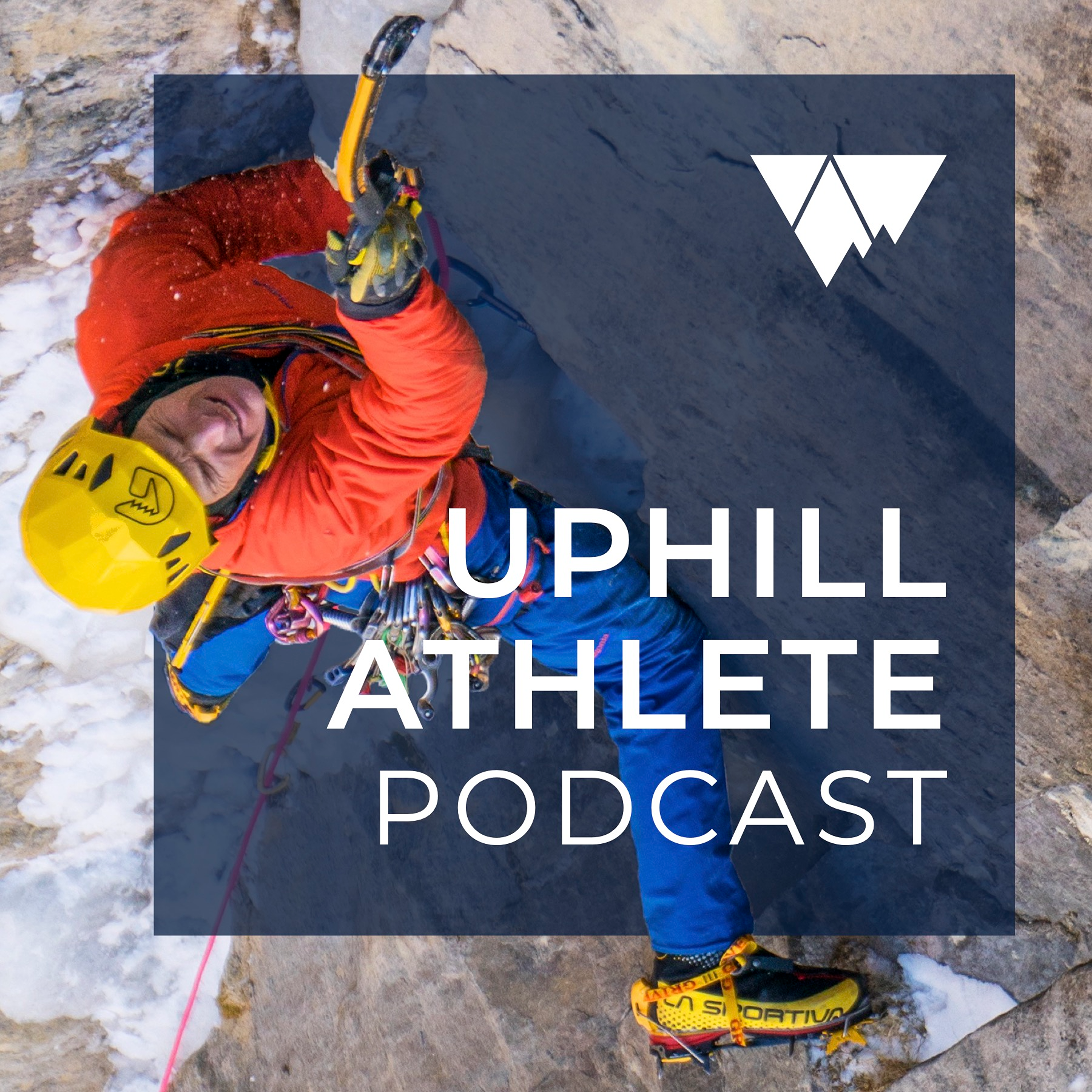
Voice of the Mountains: Shift Your Understanding with Lydia Bradey (Replay) Video
Uphill Athlete PodcastShow Notes
Voice of the Mountains revisits one of its most memorable conversations (originally recorded in 2024, with a new intro from Steve House): Lydia Bradey, the New Zealand alpinist who in 1988 became the first woman to climb Mount Everest without supplemental oxygen and who would go on to guide six successful Everest summits, more than any other woman in history. We're re-releasing this episode because the conversation was simply too good not to share again. Their discussion centers on a single, deceptively simple distinction: the difference between doing what people say you cannot do and doing what people say you should not do. Bradey traces her path from a self-described "wild child" raised by a single mother in New Zealand, through formative big-wall climbs in Yosemite and a near-fatal, avalanche-riddled epic in the Indian Himalaya, to the slopes of Everest itself, where she describes climbing "super altitude" not with dread but with pure curiosity. She and House dig into the bitter aftermath of her ascent — when senior male climbers on her own expedition publicly called her a liar, and half her teammates died descending the mountain — and how she navigated the threat of a ten-year climbing ban while quietly building a new life and career. Throughout, Bradey returns to themes of curiosity over fear, rejecting blame culture in favor of personal agency, and the idea that mastery of small, unglamorous tasks — sharp crampons, melted snow, a well-organized tent — is what earns a climber the right to take real risks. Asked how she wants to be remembered, her answer is unexpectedly modest: not for the summits, but simply as good company.
More from Uphill Athlete Podcast
Signed up for your first ultra? Coach Alexa Hasman, who has run 40+ ultras including seven 200-milers, joins Steve House to cover what first-timers need to know: why you don't need a road marathon first, how much runway to give yourself, why hiking is part of the plan, the minimum strength training that works, fueling, poles, dress rehearsals, and the two keys she wants you to remember: consistency and adaptability.
Buzz Burrell coined the term "fastest known time," and he's spent his life honoring the athletes who never tell anyone what they did. Steve House talks with Buzz about his 1969 run to Lake Michigan with no food, no water, and no one to tell; pushing multi-day FKTs on the Colorado Trail and the John Muir Trail; surviving a "widowmaker" heart blockage his doctors kept missing; and why, once goals and expectations fall away, what's left is simple: keep moving.
Trail running, climbing, skiing, riding: can you train for all of them without getting worse at each? Steve House and Director of Coaching Chantelle Robitaille share the framework Uphill Athlete coaches use with multi-sport athletes. Pick one priority per season, run an honest gap analysis, and harmonize your sports instead of balancing them. They also cover the interference effect, layering sports through the year, when to set one aside, and why strength training is non-negotiable.
Steve House talks with Dr. Eliza Sampey, a Doctor of Physical Therapy specializing in brain injury rehab, former professional endurance athlete, and concussion survivor herself about why mountain and endurance athletes so often underestimate head injuries, and what science-backed recovery actually looks like.
Steve House sits down with elite mountain athlete Kílian Jornet, calling in from his home in Norway, for a wide-ranging conversation about what draws people to high-risk mountain pursuits. They explore mountains not as a destination but as a sense of home and identity, the fine line between earned confidence and dangerous complacency, and how fear and euphoria can each distort decision-making in exposed terrain. Jornet reflects on his upbringing; being "born into the mountains," his mother's nighttime forest walks, a family trek across the Pyrenees; and how he's now passing that connection to nature on to his own children with his wife, Emily. The two discuss the blurred lines between mountaineering, alpinism, and running as labels; the philosophy behind going fast and light versus slow and immersive; and the particular psychology of "accepting" mortal risk versus fighting to survive an emergency. The conversation turns deeply personal as Kílian opens up about the loss of his friend and climbing partner Stefane Brosse and how grief and loss reshapes friendships, risk tolerance, and one's relationship with death across cultures. They close on parenthood, legacy, and the freeing realization that, ultimately, no one will be remembered. What matters is being present, honest, and good to the people around you now.