Show Notes
Welcome to the Convivial Society, a newsletter about technology and culture. It’s been a bit longer than usual since our last installment, but I’m glad to report that this has been in part a function of some recent developments, which I’m delighted to tell you about. Many of you are reading this because you caught my interview with Ezra Klein back in August. That interview was based on an installment of this newsletter in which I offered 41 questions through which to explore the moral dimensions of a given technology. Well, as it turns out, I’ve sold my first book, based on those questions, to Avid Reader Press, an imprint of Simon & Schuster. As you might imagine, I’m thrilled and immensely grateful. Naturally, I’ll keep you posted as I write the book and publication day approaches. There’s more than a little work to be done before then, of course. And, in case you were wondering, the newsletter will continue as per usual. In fact, I’ve got about five drafts going right now, so stay tuned. For now, here is a rather long and meandering, but certainly not comprehensive, discussion of models and metaphors for ordering knowledge, memory, the ubiquity of search, the habits and assumptions of medieval reading, and how information loses its body. I won’t claim this post is tightly argued. Rather, it’s an exercise in thinking about how media order and represent the world to us and how this ordering and representation interacts with our experience of the self. Here’s a line that struck me recently: “It’s an idea that’s likely intuitive to any computer user who remembers the floppy disk.” Is that you? It’s definitely me. I remember floppy disks well. But, then, it occurred to me that the author might have the 3.5-inch variety in mind, while I remember handling the older 8-inch disks as well. In fact, I am even old enough to remember this thing below, although I never did much but store a few lines of code to change the color of the TV screen to which my Tandy was hooked up. In any case, the idea that is supposedly intuitive to anyone who remembers floppy disks is the directory structure model, or, put otherwise, “the hierarchical system of folders that modern computer operating systems use to arrange files.” In a recent article for The Verge, “File Not Found: A generation that grew up with Google is forcing professors to rethink their lesson plans,” Monica Chin explored anecdotal evidence suggesting that, by somewhere around 2017, some significant percentage of college students found this mental model altogether foreign. The essay opens with a couple of stories from professors who, when they instructed their students to locate their files or to open a folder, were met with incomprehension, and then proceeds to explore some possible causes and consequences. So, for example, she writes, that “directory structure connotes physical placement — the idea that a file stored on a computer is located somewhere on that computer, in a specific and discrete location.” “That’s a concept,” she goes on to add, that’s always felt obvious to Garland [one of the professor’s supplying the anecdotal evidence] but seems completely alien to her students. “I tend to think an item lives in a particular folder. It lives in one place, and I have to go to that folder to find it,’ Garland says. ‘They see it like one bucket, and everything’s in the bucket.” This suggests, of course, the reality that metaphors make sense of things by explaining the unknown (tenor) by comparison to the known (vehicle), but, when the known element itself becomes unknown, then the meaning-making function is lost. Which is to say, that files and folders are metaphors that help users navigate computers by reference to older physical artifacts that would’ve been already familiar to users. But, then, what happens when those older artifacts themselves become unfamiliar? I happen to have one of these artifacts sitting in front of me in my office, but, in truth, I never use it. Of c
More from The Convivial Society
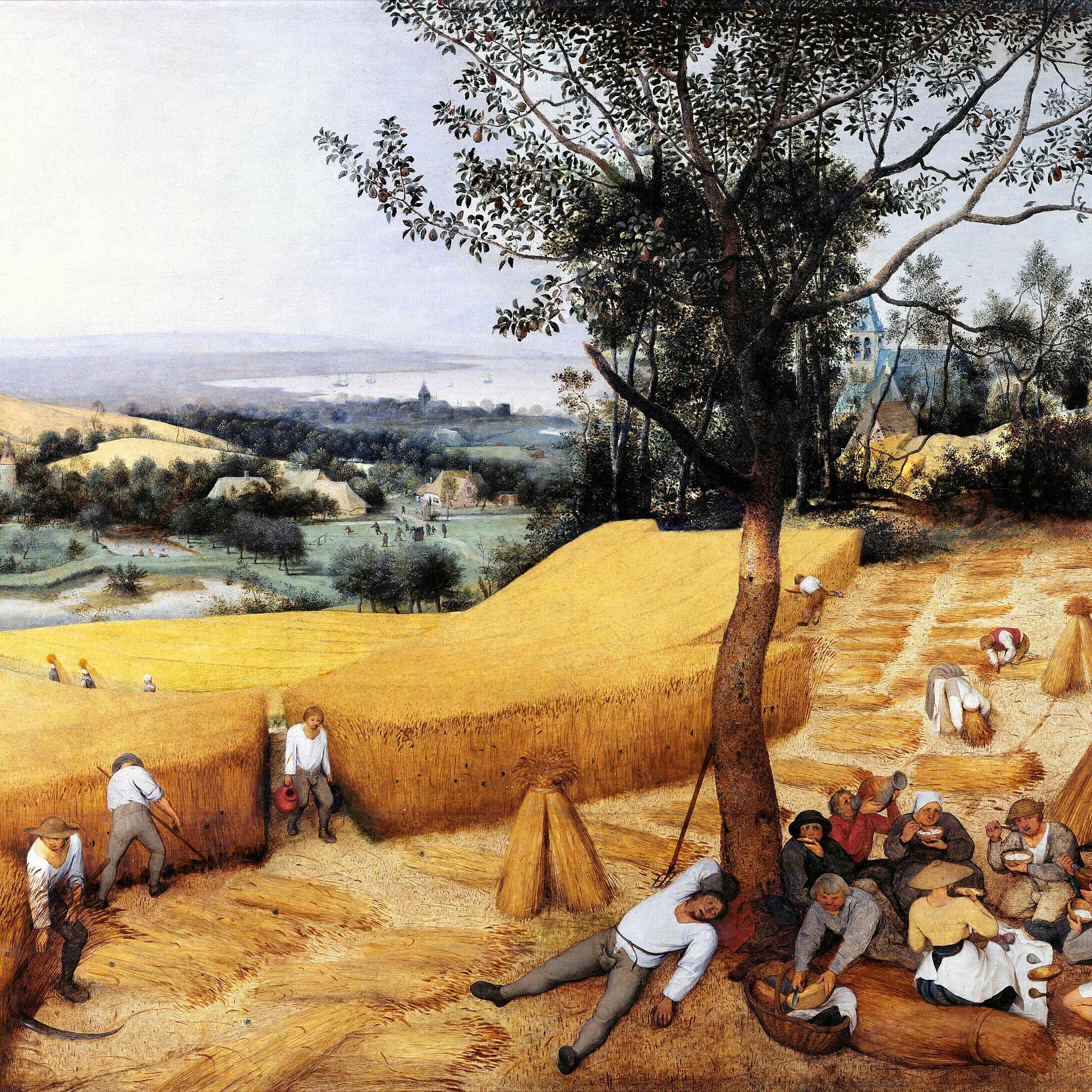
Hello all, The audio version keep coming. Here you have the audio for Secularization Comes for the Religion of Technology. Below you’ll find a couple of paintings that I cite in the essay. Thanks for listening. Hope you enjoy it. Cheers, Michael
I continue to catch up on supplying audio versions of past essays. Here you have the audio for “Vision Con,” an essay about Apple’s mixed reality headset originally published in early February. The aim is to get caught up and then post the audio version either the same day as or very shortly after I publish new written essays. Thanks for listening!
Just before my unexpected hiatus during the latter part of last year, I had gotten back to the practice of recording audio version of my essays. Now that we’re up and running again, I wanted to get back to these recordings as well, beginning with this recording of the first essay of this year. Others will follow shortly, and as time allows I will record some of the essay from the previous year as well. You can sign up for the audio feed at Apple Podcasts or Spotify.
At long last, the audio version of the Convivial Society returns. It’s been a long time, which I do regret. Going back to 2020, it had been my practice to include an audio version of the essay with the newsletter. The production value left a lot to be desired, unless simplicity is your measure, but I know many of you appreciated the ability to listen to the essays. The practice became a somewhat inconsistent in mid-2022, and then fell off altogether this year. More than a few of you have inquired about the matter over the past few months. Some of you graciously assumed there must have been some kind of technical problem. The truth, however, was simply that this was a ball I could drop without many more things falling apart, so I did. But I was sorry to do so and have always intended to bring the feature back. So, finally, here it is, and I aim to keep it up. I’m sending this one out via email to all of you on the mailing list in order to get us all on the same page, but moving forward I will simply post the the audio to the site, which will also publish the episode to Apple Podcasts and Spotify. So if you’d like to keep up with the audio essays, you can subscribe to the feed at either service to be notified when new audio posts. Otherwise just keep an eye on the newsletter’s website for the audio versions that will accompany the text essays. The main newsletter will, of course, still come straight to your inbox. One last thing. I intend, over the coming weeks, to post audio versions of the past dozen or so essays for which no audio version was ever recorded. If that’s of interest to you, stay tuned. Thanks for reading and now, once again, for listening. Cheers, Michael The newsletter is public and free to all, but sustained by readers who value the writing and have the means to support it.
Welcome back to the Convivial Society. In this installment, you’ll find the audio version of the latest essay, “What You Get Is the World.” I try to record an audio version of most installments, but I send them out separately from the text version for reasons I won’t bore you with here. Incidentally, you can also subscribe to the newsletter’s podcast feed on Apple Podcasts and Spotify. Just look up The Convivial Society. Aside from the audio essay, you’ll find an assortment of year-end miscellany below. I trust you are all well as we enter a new year. All the best to you and yours! A Few Notable Posts Here are six installments from this past year that seemed to garner a bit of interest. Especially if you’ve just signed up in recent weeks, you might appreciate some of these earlier posts. Incidentally, if you have appreciated the writing and would like to become a paid supporter at a discounted rate, here’s the last call for this offer. To be clear, the model here is that all the writing is public but I welcome the patronage of those who are able and willing. Cheers! Podcast Appearances I’ve not done the best job of keeping you all in loop on these, but I did show up in a few podcasts this year. Here are some of those: With Sean Illing on attention With Charlie Warzel on how being online traps us in the past With Georgie Powell on reframing our experience Year’s End It is something of a tradition at the end of the year for me to share Richard Wilbur’s poem, “Year’s End.” So, once again I’ll leave you with it. Now winter downs the dying of the year, And night is all a settlement of snow;From the soft street the rooms of houses show A gathered light, a shapen atmosphere, Like frozen-over lakes whose ice is thin And still allows some stirring down within. I’ve known the wind by water banks to shakeThe late leaves down, which frozen where they fell And held in ice as dancers in a spell Fluttered all winter long into a lake; Graved on the dark in gestures of descent, They seemed their own most perfect monument. There was perfection in the death of ferns Which laid their fragile cheeks against the stone A million years. Great mammoths overthrown Composedly have made their long sojourns, Like palaces of patience, in the grayAnd changeless lands of ice. And at Pompeii The little dog lay curled and did not rise But slept the deeper as the ashes roseAnd found the people incomplete, and froze The random hands, the loose unready eyes Of men expecting yet another sunTo do the shapely thing they had not done. These sudden ends of time must give us pause. We fray into the future, rarely wroughtSave in the tapestries of afterthought.More time, more time. Barrages of applause Come muffled from a buried radio.The New-year bells are wrangling with the snow. Thank you all for reading along in 2022. We survived, and I’m looking forward to another year of the Convivial Society in 2023. Cheers, Michael