Show Notes
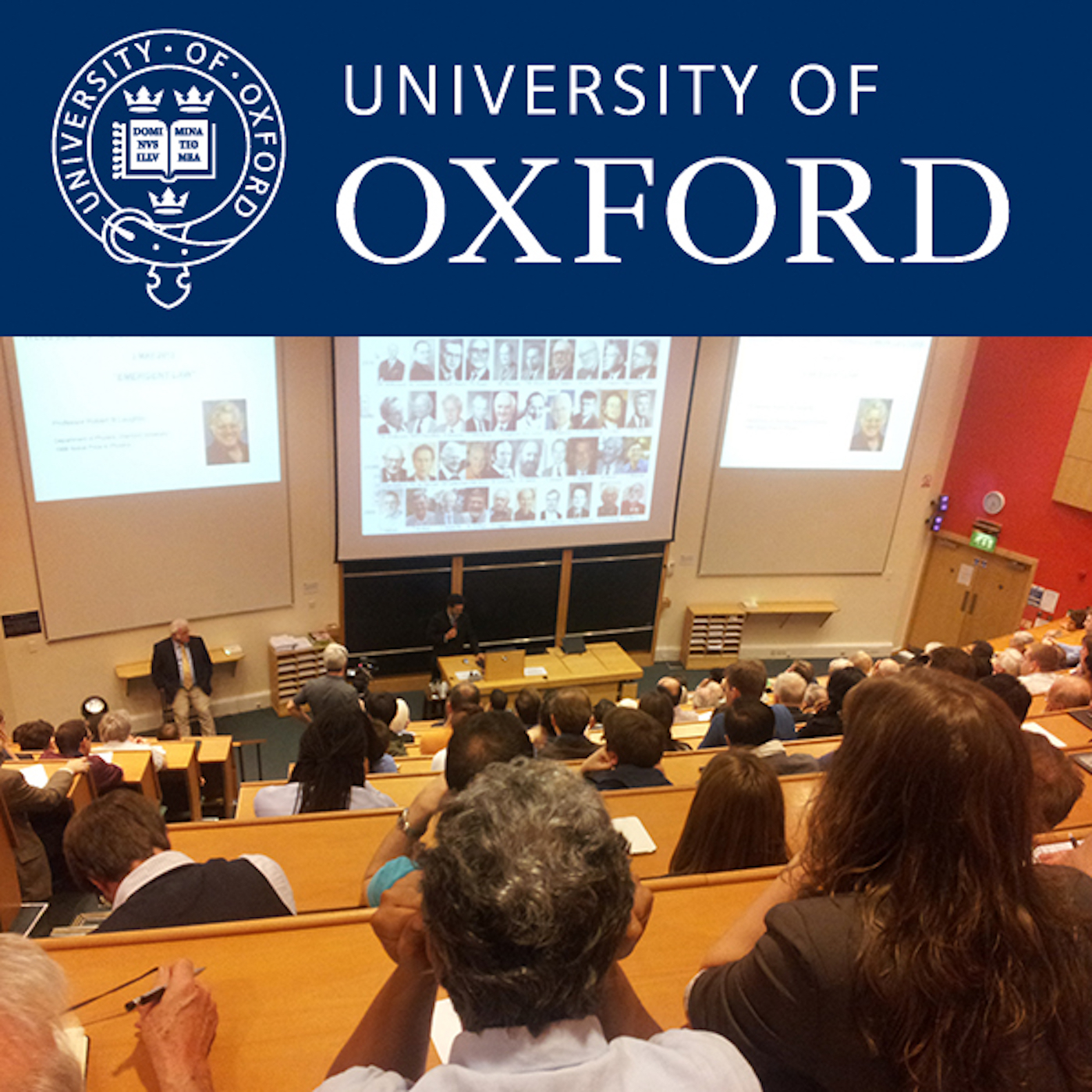
Inaugural Lecture by Professor Steven Balbus looking at the history of the universe A one sentence summary of much of the history of our Universe might be that it is the formation of ever more complex and compact structure from a diffuse background. The build-up of a compact core of material from more tenuous surroundings is known as accretion, and it is a process common to much of astrophysics, from the early creation of giant clusters of galaxies to current star, planet, and black hole formation. In this Lecture, I will give a general and personal overview of accretion physics. I will discuss some of the theoretical successes the community has enjoyed in its struggle to understand accretion, together with ongoing challenges. Above all, I will try to convey a sense of the richness of accretion as a physical process, and the role it has played in enhancing a deeper understanding of many astrophysical phenomena.
More from Oxford Physics Public Lectures
Delve into history with Dr Rob Johnson, Director of The Changing Character of War Centre at Oxford, as he explores a pivotal question.
A lecture by Prof Stephen Blundell, Professor of Physics – Condensed Matter - (Department of Physics and Mansfield College).
Explore the history of atomic bomb development with Dr. Georg Viehhauser, Particle Physics Research Lecturer at St John's College, Oxford.
Particle Physics Christmas Lecture, hosted by Prof. Daniela Bortoletto, Head of Particle Physics and senior members of the department with guest speaker, Professor Francis Halzen. Professor Francis Halzen is Wisconsin IceCube Particle Astrophysics Center and Department of Physics, University of Wisconsin - Madison.
Our Universe was created in 'The Big Bang' and has been expanding ever since. Professor Schmidt describes the vital statistics of the Universe, and tries to make sense of the Universe's past, present, and future.