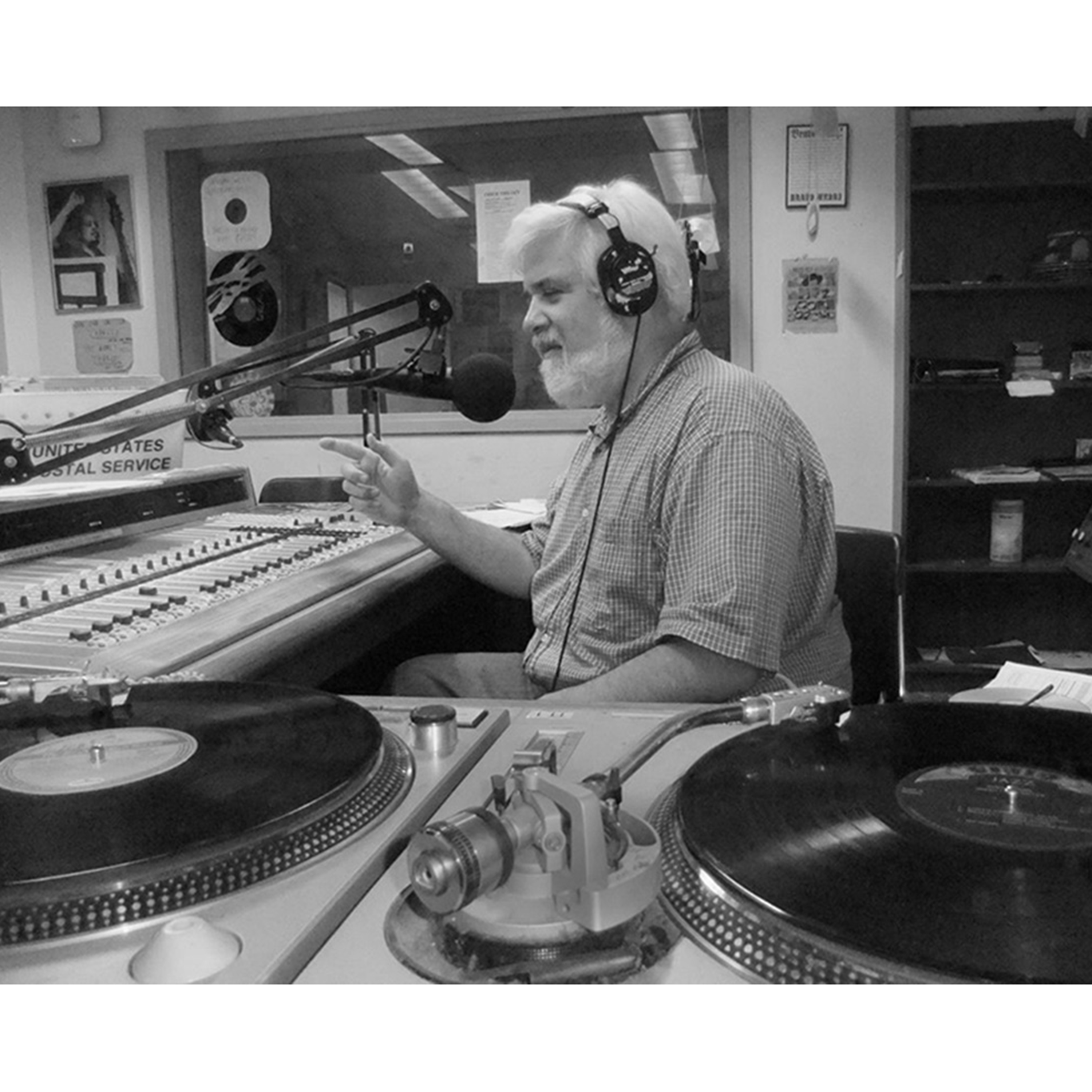
Show Notes
Saxophonist Teddy Edwards was born in Jackson, Mississippi on April 26, 1924. His grandfather and other family members were leading local musicians, and Teddy began playing the alto sax as a youth. By age 12 he had played in some professional settings himself. As a teenager he went to Detroit to live with an uncle and began participating in the vital Motor City scene. In his development, he forged connections with many young jazz artists, among others notably Wardell Gray with whom he became a close friend. Edwards toured with R&B and jazz bands and ended up in Los Angeles in 1945. There he teamed up with Howard McGhee and switched to tenor sax. With his sophisticated harmonic sense and free flowing sound, Edwards became a leading figure in the early bebop days on the West Coast. He was a key member of the Central Avenue scene, participating in duels with Dexter Gordon and Wardell and making notable records such as “Blues In Teddy’s Flat”. Prominent on the West Coast, Edwards was one of the original Lighthouse All Stars and an early choice to be in the Clifford Brown-Max Roach Quintet. By the late fifties and sixties, he recorded notable LPs with compatriots such as McGhee, Leroy Vinnegar and Gerald Wilson for the World Pacific, Contemporary, and Prestige labels (“It’s All Right”). An accomplished arranger, Edwards wrote for brass and string ensembles and contributed to many projects. Additionally, he was an important accompanist for vocalists such as Jimmy Witherspoon, Helen Humes, King Pleasure and numerous others. Edwards never ventured to the major New York limelight, but he was an important and influential figure in Los Angeles. In later years he spent time in the Netherlands and elsewhere in Europe, where he enjoyed admiration and popularity. Edwards gained some publicity in the popular field when he toured regularly with Tom Waits for a time in the 1980s.. Edwards had a powerful and pulsating sound on the sax, always tinged with emotional warmth and insight. I always liked this encomium to Edwards from Tom Waits: “He can sound like a train, or he can sound like he's drinking champagne on that same train." Edwards had various health problems in later life, and he died of cancer at the age of 78 in 2003. originally broadcast April 19, 2026
More from The Gone Sounds of Jazz with Sid Gribetz
The "Bird-Prez Birthday Broadcast", a 72 hour (and some years longer) marathon celebrating Lester Young and Charlie Parker around their birthday anniversaries, August 27 and August 29, is a long standing tradition at WKCR, and it is among our listeners' favorites. On the middle, swing, date, August 28, we play mixtures of Bird and Prez. Here’s a 183 minute long shift from the 2026 edition. Included are special segments of a half hour or so of Bird and Prez sharing the stage at the January 28, 1946 Jazz At The Philharmonic concert, and one contrasting their solos in classic big band recordings (Bird with Jay McShann and Prez in the original Count Basie orchestra), 65 minutes. There are also some portions for general listening, among which are a sampling of some Parker features with large ensembles.
Celebrating the great songwriter of Americana, Johnny Mercer, for five hours. The program starts with a review of his early career as an actor and singer. It also includes a look at his impact as a founder of Capitol Records. But of course the essence and core of the show are his hip and magnificent songs that endure forever. As one of my “Jazz Profiles” presentations, the main focus is observing jazz influences on his art. We explore his collaborations with Harold Arlen, Hoagy Carmichael and other great composers, and his legendary pieces which have become jazz standards in addition to their place in the great popular songbook – ranging from Blues In The Night, Skylark, Come Rain or Come Shine, One For My Baby, Jeepers Creepers, Too Marvelous For Words, That Old Black Magic, I Remember You, Laura, I Thought About You, and so many more. The final three hours is a cornucopia of listening pleasure to recordings of Mercer classics by great jazz artists. Billie, Ella, Louis, Dinah, Carmen, Jackie Paris, Johnny Hartman, Aretha Franklin, Cassandra Wilson, Etta Jones, and Etta James, to name just a few. originally broadcast November 15, 2009re-broadcast May 23, 2021
From the August 4, 2026 Louis Armstrong WKCR special on his baptismal birth date, here’s a show with two separate features, about an hour each -- Pops in duets (with Duke, Ella, Bing, Carmen, Billie and Lotte Lenya); and another focusing on Armstrong with the Luis Russell band in the late 1930s on Decca. These two thematic segments are interspersed with some unstudied tracks for general listening appeal.
This program presents the masterwork collaborations of John Coltrane with Miles Davis, in context. It can serve as a history primer “Jazz 101" for the jazz lay person; for the aficionado, it can simply be an opportunity to submerge oneself in five hours of intense musical enjoyment. Miles Davis was a teenage trumpet prodigy who came to fame during the bebop years of the 1940's. Despite this reputation and additional successful endeavors, such as with the Birth of the Cool band and other post bebop ensembles, by the mid-1950's Miles had fallen from popularity and was also in ill health. Saxophonist John Coltrane had some accomplishments as a professional jazz musician but in the mid-1950's was mostly performing around his home turf in Philadelphia and searching to develop his sound. Miles Davis regained notoriety with his captivating performance at the 1955 Newport Jazz Festival. In its wake, he was signed to a lucrative contract by major record label Columbia and was booked for many significant concerts and tours. Assembling a new band for these engagements, Davis hired Coltrane for the saxophone chair, and had the stellar rhythm section of Red Garland piano, Paul Chambers bass, and Philly Joe Jones at the drums. From the fall of 1955 through the spring of 1957 this group performed regularly and made numerous now-classic recordings to finish Miles’s existing Prestige Records obligations. When released to begin fulfilling his new Columbia contract, Davis made sessions to constitute the acclaimed “‘Round About Midnight” album on Columbia. Later in 1957 Miles fired Coltrane and Philly Joe, and he moved on to orchestral projects with Gil Evans and a sojourn in France where he did film scores for Louis Malle. Meanwhile Thelonious Monk combined with Coltrane in their legendary association and six month long Five Spot gig, which helped Coltrane’s musical growth to new heights. In 1958, Miles Davis re-formed his combo, bringing back Coltrane, adding the alto sax of Cannonball Adderley, experimenting with different pianists in addition to Garland, such as Bill Evans and later Wynton Kelly, and drummers such as Art Taylor and Jimmy Cobb, to add further textures and flavors to the ensemble. The 1958 band produced great Columbia recordings “Milestones” and the Green Dolphin Street session with Evans, among others. With their continued advances, and adaptation of “modal” styles, the Davis-Coltrane musical collaborations hit its zenith in early 1959. The Miles Davis group created the most famous jazz album of all time, “Kind Of Blue”. At the same time, Coltrane, preparing to leave Davis and emerge in his own stardom, broke out with his “Giant Steps” LP, and moved on in his own career. Finally, as a savory dessert, Coltrane would reunite with Davis for special concert tours in Europe and elsewhere in 1960, and he sat in on Davis’s 1961 “Someday My Prince Will Come” album.
The "Bird-Prez Birthday Broadcast", a 72 hour (and some years longer) marathon celebrating Lester Young and Charlie Parker around their birthday anniversaries, August 27 and August 29, is a long standing tradition at WKCR, and it is among our listeners' favorites. From the 2026 edition, here's a segment that includes a survey of Lester Young's recordings with small groups during the Big Band years of the 1936-1940 period when he was in the Count Basie orchestra.